Command Palette
Search for a command to run...
Pickers Earn $100,000 a Month but No One Is Hiring, so Farms in Britain and Australia Turn to AI for Help
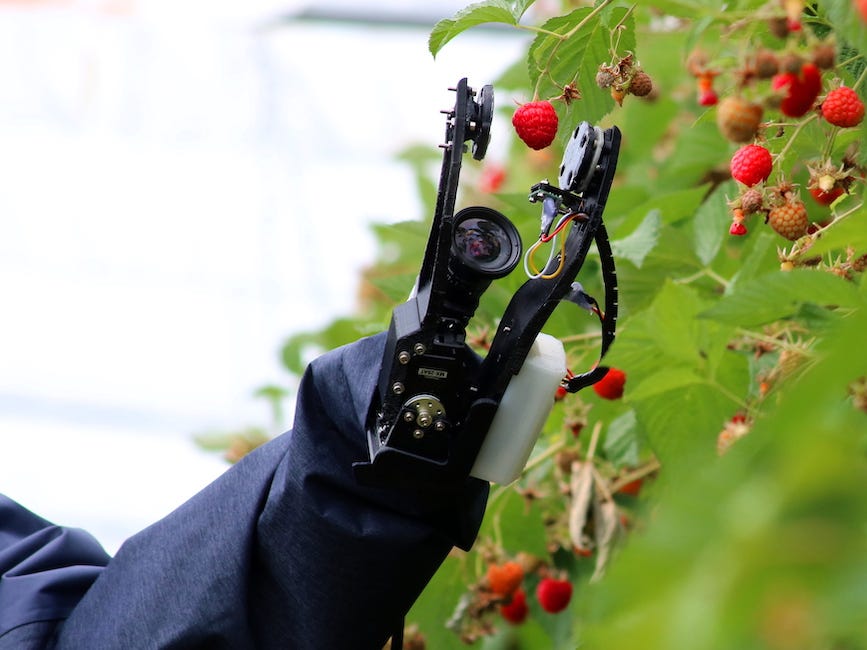
The UK is facing a shortage of 90,000 fruit and vegetable pickers this year due to Brexit and the pandemic. As the labor shortage becomes increasingly serious, robots that can pick fruits and vegetables autonomously have emerged, and their picking efficiency even exceeds that of manual labor. The application of robots in the agricultural field will also become a future trend.
Autumn is the harvest season, but fruit farmers in the UK, Australia and other places are worried.
Seeing that the fruits are about to rot in the fields, but there are still no workers to pick them. The lack of workers has become an urgent problem that fruit farmers need to solve.
Although large-scale combine harvesters have long been popular, manual operation is still required for some small and special-shaped production areas, varieties that require plant or fruit protection, and fine picking.

Orchards in Britain and Australia have difficulty recruiting workers, leaving millions of tons of fruit unharvested
In previous years, fruit and vegetable picking in the UK was mainly done by seasonal workers from Eastern Europe, with a stable scale of about 70,000 to 80,000 people.
This year, due to the impact of Brexit, the free movement of foreign workers in the UK has been restricted. Coupled with the impact of the COVID-19 pandemic, the source of labor in Eastern Europe has been almost completely cut off.
Local British workers are unwilling to do these hard and boring jobs, and cannot guarantee the complete construction period, which has led to the current labor shortage situation.
Even though the farm offered a salary of 500 pounds per week (about 4,300 yuan per week), few people were interested.
In this way,Millions of tonnes of produce on UK farms could be left to rot in the fields because no one is picking them.
So, starting from May this year, people across the UK have been mobilizing to go to orchards to pick fruit.

Even Prince Charles posted a video on Twitter, calling on students and workers on pay cuts to join the movement. He said: "Only by mobilizing more people to pick the fruits can Britain enjoy the fruits of this year's bumper harvest."
 The same thing happened in Australia in the southern hemisphere.
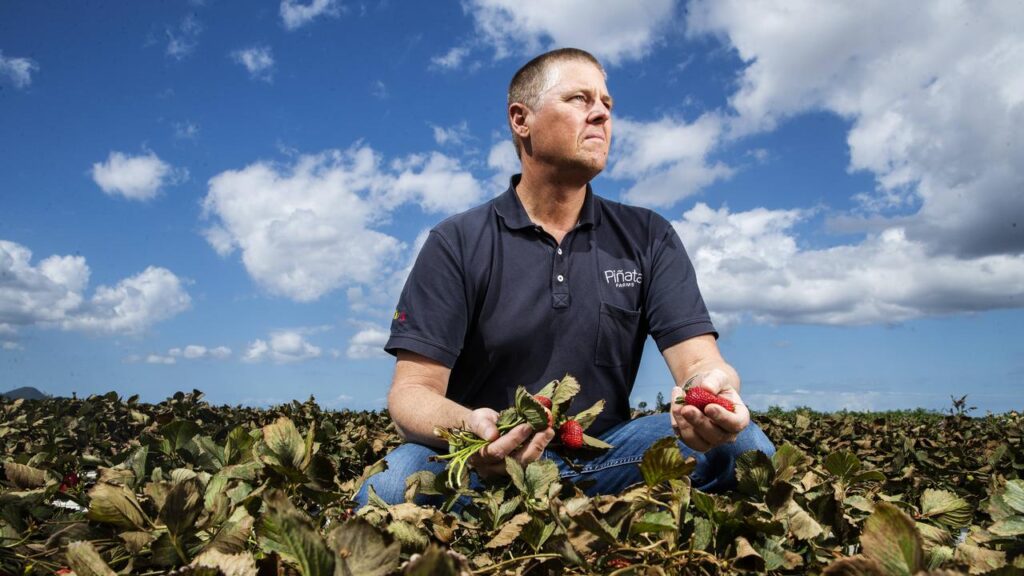
In previous years, a large number of fruit pickers were backpackers from abroad, working part-time and traveling part-time. However, due to the impact of the epidemic this year, the number of backpackers is more than 60% less than in previous years.
**Some farms even offer high salaries of $3,800 per week (about RMB 25,800 per week) to recruit workers.**This salary level is more than three times the average income of full-time employees in Australia (according to recent statistics, the average income in Australia is around RMB 7,760 per week). Even with such a considerable income, no young Australians are willing to go there.
If there is not enough manpower, robots will fill the gap
In fact, putting aside the impact of the epidemic, labor shortage has long been a problem faced by many countries in recent years, especially in the agricultural sector.
To fill the labor gap, the industry is also actively developing various types of agricultural robots, covering multiple agricultural production links such as planting, fertilizing, spraying and harvesting.
In May last year,Robocrop, the world's first raspberry picking robot, has already begun "practice" in the fields.
Robocrop was developed by Dr. Martin Stoelen, a robotics expert at the University of Plymouth, UK, in collaboration with British berry grower Hall Hunter. It is 1.8 meters tall and has four claws that can pick berries at the same time.
Guided by sensors and 3D cameras, Robocrop's claws can find the fruit, then use machine learning technology to identify ripe fruits and open its claws to align with the fruit for picking.

Therefore, although the robot's picking speed cannot yet match that of manual labor, it is tireless and can work for long hours.
The developers say that when Robocrop is running at full speed,It takes less than ten seconds to pick a fruit intact, place it in a tray and sort it according to its ripeness.
It is reported that the current cost of each robot is about 700,000 pounds (about 6.05 million yuan).Although expensive, the cost incurred by fruit farmers through leasing is actually lower than the cost of hiring workers.
With the continuous iteration of technology, the picking speed of raspberry picking robots is also increasing, and is expected to accelerate to 2.5 seconds per piece next year.
This successful experiment gave the team a huge boost in confidence, and the government and industry also provided strong funding.The team then collaborated with Shanghai Jiao Tong University to develop cauliflower and tomato picking robots based on the prototype of the raspberry picking robot.
It is reported that the cauliflower picking machine has a gripper and a cutter, which can cut the cauliflower neatly.

Can agricultural harvesting be entirely entrusted to robots?
In fact,**With the disappearance of the demographic dividend, the domestic agricultural production sector is also facing a labor shortage.**Farmers in various places often give up picking the fruits and let them rot in the fields.
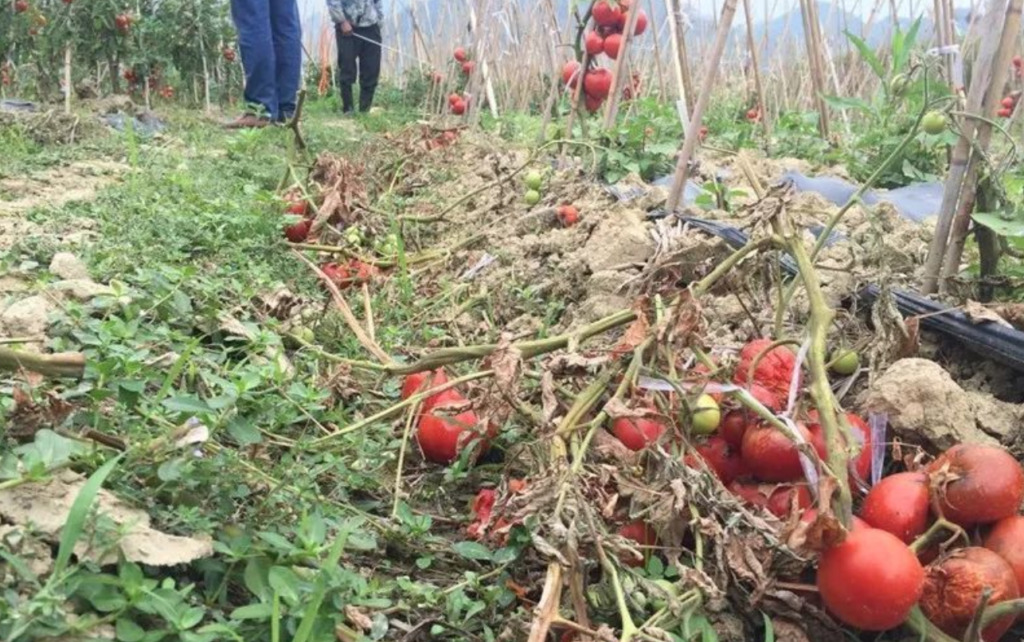
According to a domestic harvesting robot developer, thanks to the development of AI technologies such as computer vision, the accuracy of robot harvesting is even higher than that of manual labor. In addition, robots work for a long time and can better ensure timeliness. Therefore, agricultural harvesting robots have great potential and market demand in the future.
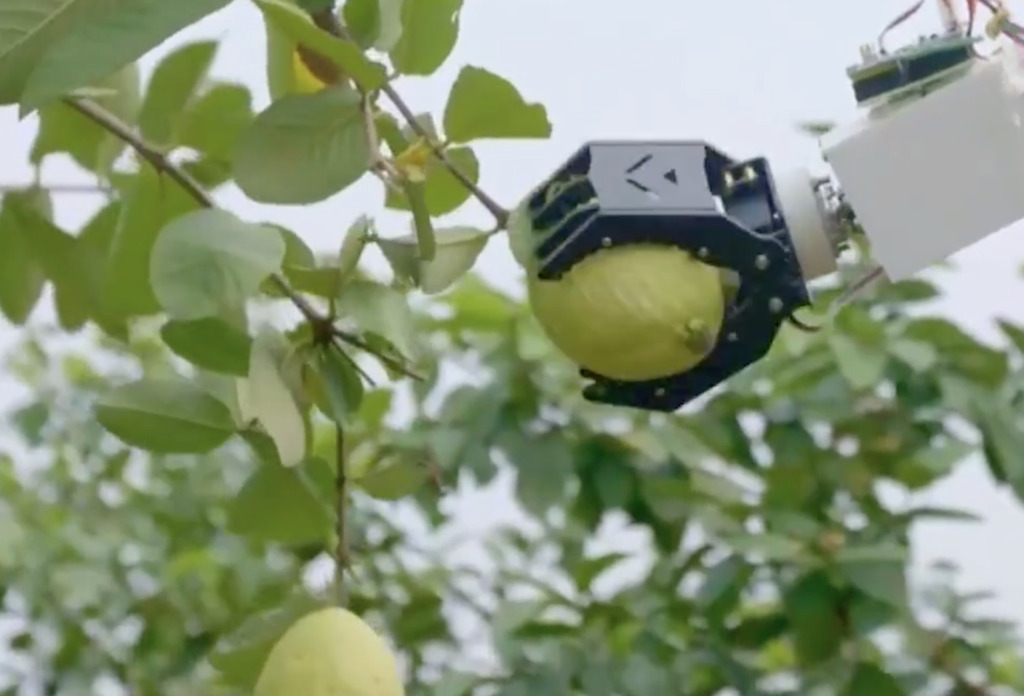
In the future, it is necessary to further improve the production efficiency and accuracy of fruit and vegetable picking robots, while reducing manufacturing costs, so that they can be accepted and recognized by the majority of fruit farmers.
In time, the traditional farming method of "facing the earth and back to the sky" will become a thing of the past, and we will be able to "sit back and enjoy the fruits of our labor."

The Guardian: "Robocrop: world's first raspberry-picking robot set to work"
"Robots gear up to march to the fields and harvest cauliflowers"
"Fruit and veg 'will run out' unless Britain charters planes to fly in farm workers from eastern Europe"
-- over--