Command Palette
Search for a command to run...
Paper Compilation | Over 100 Key AI for Science Achievements: A Quick Overview of Technological Innovations by 2025

Over the past year, the relationship between AI and scientific research has undergone a profound yet quiet transformation. From experimental design and data modeling to theoretical deduction, artificial intelligence is penetrating the core aspects of the scientific research process at an unprecedented pace, giving rise to a number of groundbreaking results that are difficult to explain using traditional paradigms. By 2025, AI for Science will no longer be just a series of scattered technological applications, but will gradually evolve into a clear, systematic, and reusable path for scientific research and innovation.
Unlike earlier attempts at "AI-assisted scientific research," a significant change in 2025 is that:**AI is no longer just a tool, but is becoming part of the scientific research paradigm.**More and more research is being designed from the outset around "how to involve models in scientific discovery," which has led to a large number of high-quality results that combine methodological innovation with scientific value.
HyperAI focuses on the progress and breakthroughs in the AI4S field, recording key moments in this wave by systematically interpreting cutting-edge papers. On the one hand, we hope to organize the latest research results and methodologies in a structured and universally applicable way, lowering the understanding threshold for readers in different fields; on the other hand, we also hope to promote a deeper understanding of the profound impact of AI on scientific research productivity among more researchers, engineers, and institutions through continuous output.
At this time of year-end and beginning of new year, it is a crucial moment for reflection and looking ahead. This article discusses "HyperAI SuperNeural" in...Cutting-edge AI for Science papers analyzed in 2025The book has been systematically organized and categorized, covering multiple fields such as biomedicine, healthcare, materials chemistry, meteorological research, and astronomy, making it convenient for readers with different backgrounds to quickly search and review.
View more cutting-edge papers:
View the relevant dataset for the research:
AI+ Biomedicine
New generative models and new benchmarks reshape the predictive power of disordered protein assemblies.
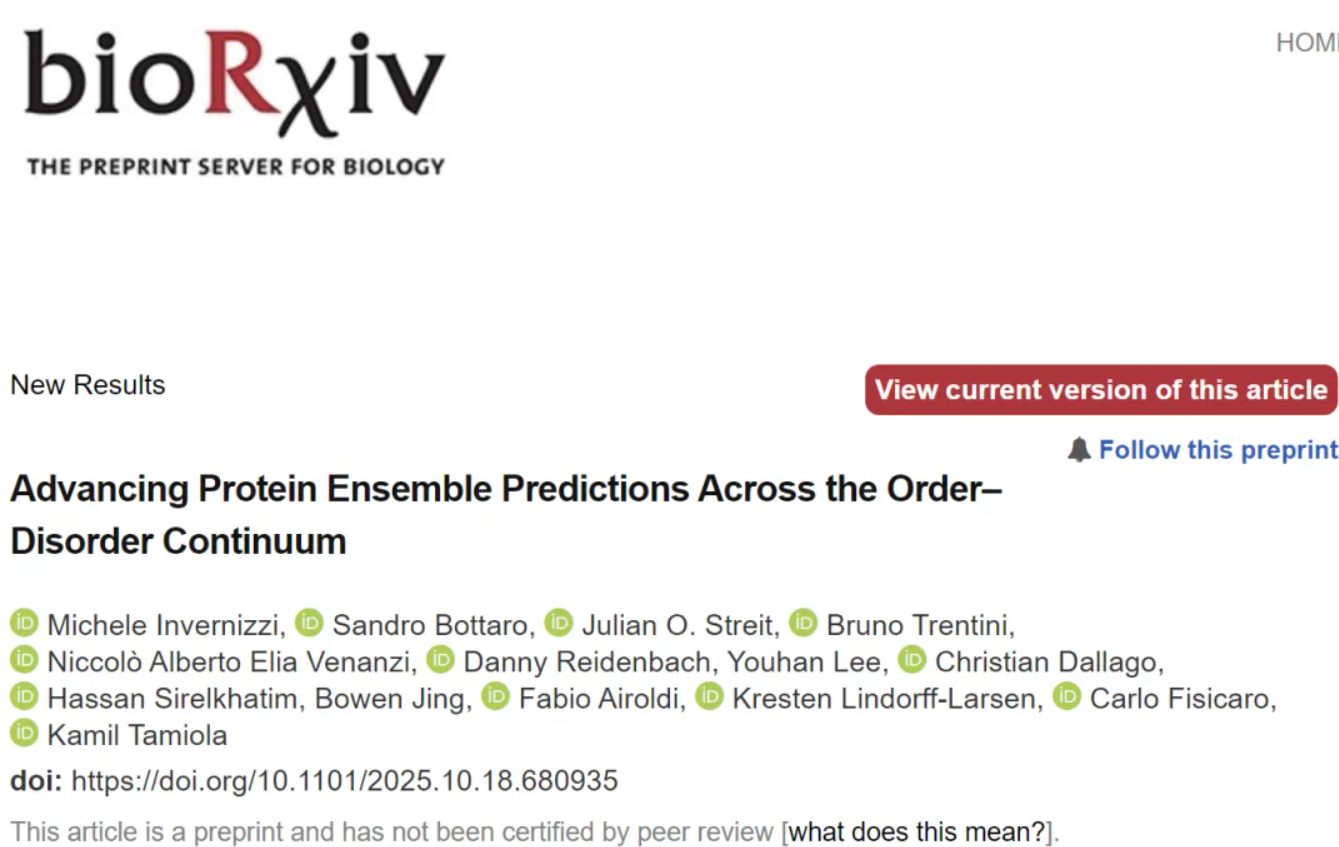
Advancing Protein Ensemble Predictions Across the Order-Disorder Continuum
 *****source:bioRxiv
*authorA joint team comprised of Peptone, Nvidia, MIT, and others.
*paper:
https://www.biorxiv.org/content/10.1101/2025.10.18.680935v1
The first human skinLayer data verificationNOBLE, a neuron modeling framework****4200 times faster than traditional speeds
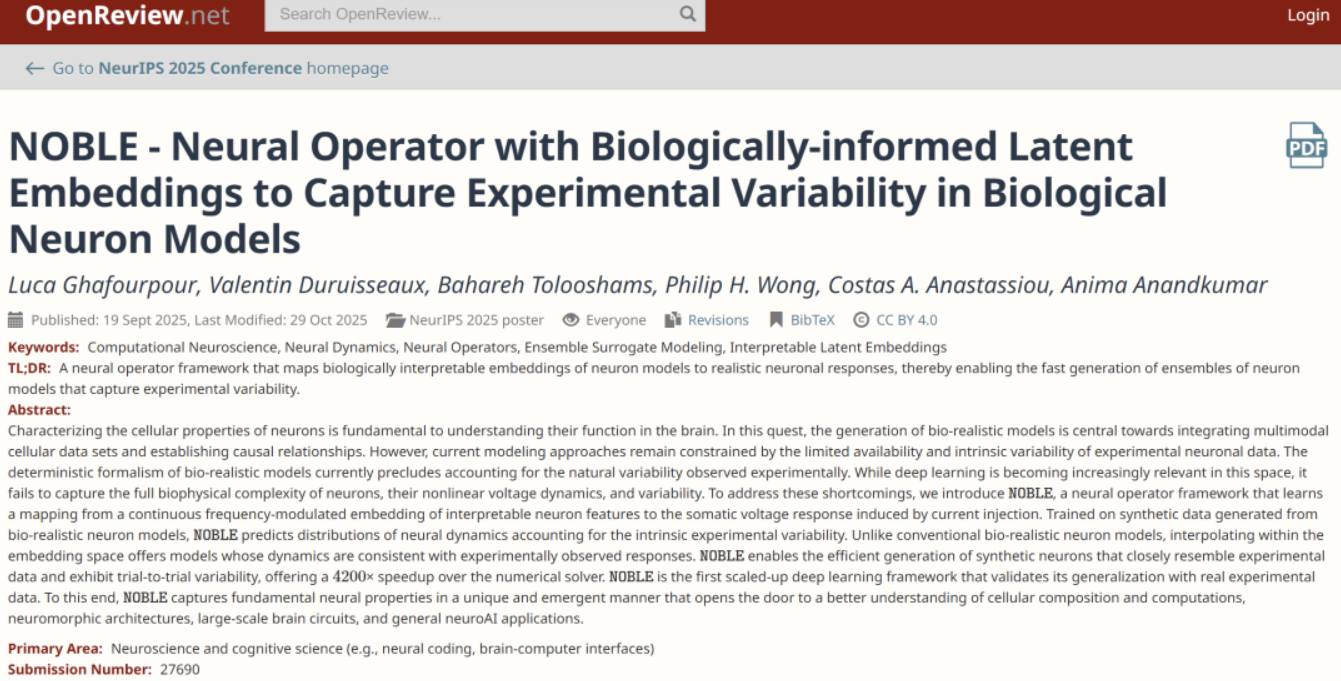
NOBLE – Neural Operator with Biologically-informed Latent Embeddings to Capture Experimental Variability in Biological Neuron Models
 *sourceNeurIPS 2025
*authorA joint team from ETH Zurich, Caltech, and the University of Alberta, among other institutions.
*Interpretation:4200 times faster than traditional methods! ETH Zurich proposes NOBLE, the first neuronal modeling framework validated with human cortical data.
*paper:
PLACER, a graph neural network, addresses protein conformational heterogeneity.
Modeling protein-small molecule conformational ensembles with PLACER
 *sourceProceedings of the National Academy of Sciences (PNAS)
*authorThe research team of Professor David Baker at the University of Washington
*Interpretation:Solving the Atomic-Level Modeling Challenge of Protein Conformation Heterogeneity! David Baker's Team's PLACER Framework Analysis
*paper:
https://www.biorxiv.org/content/10.1101/2024.09.25.614868v2
Squidiff enables transcriptome simulation across multiple scenarios, contributing to the development of precision medicine and space medicine. Squidiff: predicting cellular development and responses to perturbations using a diffusion model
 *source:Nature Methods
*authorA joint research team from Columbia University and Stanford University
*paper:
https://www.nature.com/articles/s41592-025-02877-y
Blood cell image classifier and diffusion model aid in leukemia detection, surpassing the capabilities of clinical experts.
Deep generative classification of blood cell morphology
 *source:Nature
*authorResearch team from the University of Cambridge, UK
*paper:
https://www.nature.com/articles/s42256-025-01122-7
The Ctrl-DNA framework enables "targeted control" of gene expression in specific cells.
Ctrl-DNA: Constrained Reinforcement Learning for Cell-Specific Cis-Regulatory Element Design
 *sourceNeurIPS 2025
*authorUniversity of Toronto team in collaboration with Changping Laboratory
*paper:
https://arxiv.org/abs/2505.20578
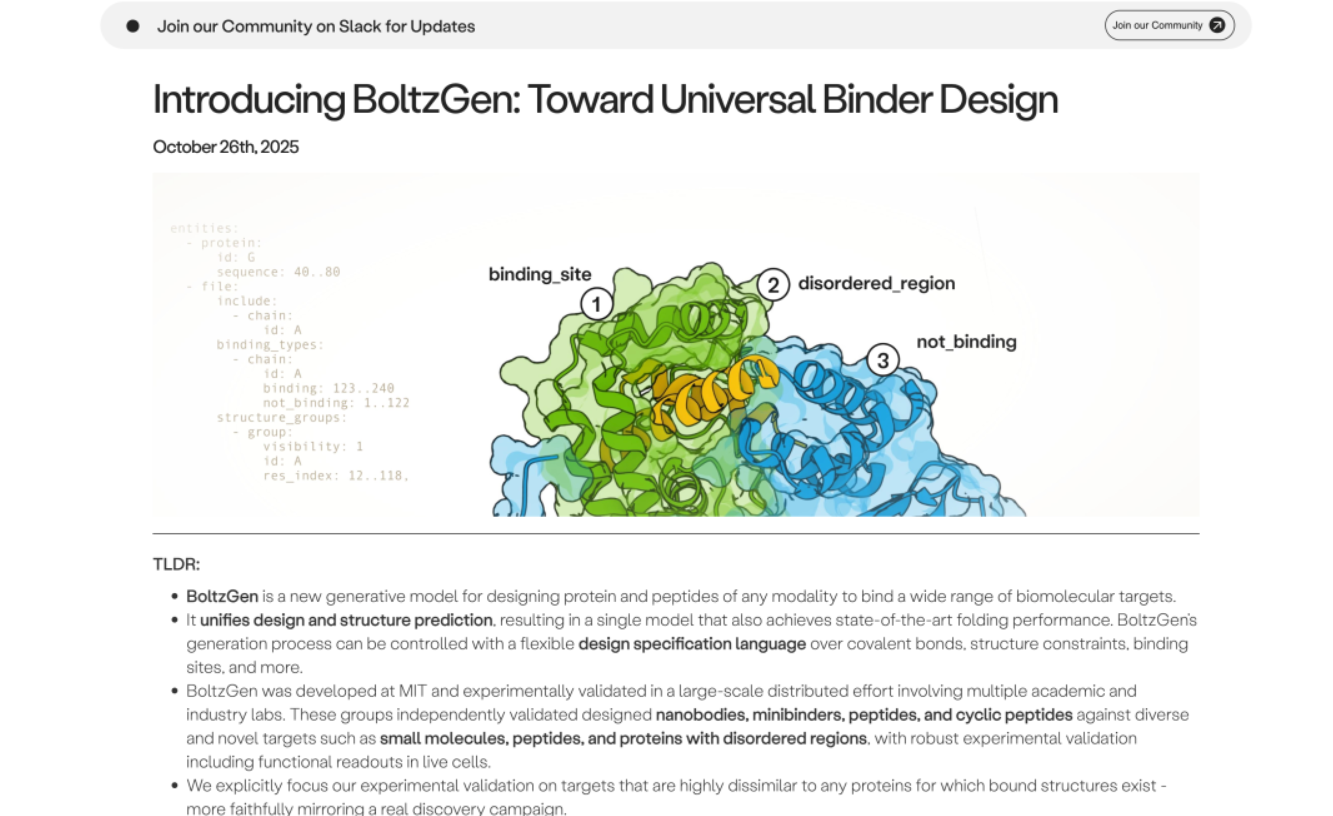
BoltzGen enables the design of protein conjugates across molecular types, achieving nanomolar affinity for the 66% target.
BoltzGen: Toward Universal Binder Design
 *source:
*authorMIT and Boltz, among other institutions
*Interpretation:MIT team open-sources BoltzGen, enabling the design of protein binders across molecular types, achieving nanomolar affinity for the 66% target.
*paper:
FusionProt, a novel protein dynamic fusion characterization framework, enables iterative information exchange and achieves state-of-the-art performance on multiple tasks.
FusionProt: Fusing Sequence and Structural Information for Unified Protein Representation Learning
 *source:bioRxiv
*authorResearch team from the Technion – Israel Institute of Technology in collaboration with Meta AI
*paper:
MorphDiff, a transcriptome-guided diffusion model, accelerates phenotypic drug development.
Prediction of cellular morphology changes under perturbations with a transcriptome-guided diffusion model
 *source:Nature Communications
*authorResearchers from institutions such as the Chinese University of Hong Kong and the Mohammed bin Zayed University for Artificial Intelligence
*paper:
https://www.nature.com/articles/s41467-025-63478-z
AlphaPPIMI, a method for predicting PPI interface modifiers, outperforms existing methods.
Alphappimi: a comprehensive deep learning framework for predicting PPI-modulator interactions
 *sourceJournal of Cheminformatics
*authorJoint research team from China University of Petroleum and Yonsei University
*paper:
https://jcheminf.biomedcentral.com/articles/10.1186/s13321-025-01077-2
scSiameseClu achieves state-of-the-art performance in unsupervised single-cell clustering tasks.
scSiameseClu: A Siamese Clustering Framework for Interpreting single-cell RNA Sequencing Data
 *sourceIJCAI 2025
*authorResearch team from the Chinese Academy of Sciences, Northeast Agricultural University, University of Macau and Jilin University
*Interpretation:IJCAI 2025 | 7 datasets validation: scSiameseClu achieves SOTA performance in unsupervised single-cell clustering tasks
*paper:
Integrating neural network frameworks to efficiently predict multi-metal binding sites in protein sequences
A Modular Fusion Neural Network Approach to Efficiently Predict Multi-Metal Binding Sites in Protein Sequences
 *source:bioRxiv
*authorResearch team from the Hong Kong University of Science and Technology
*paper:
ReaSyn draws inspiration from thought chains to analogize molecular synthesis, achieving ultra-high reconstruction rates and pathway diversity.
Rethinking Molecule Synthesizability with Chain-of-Reaction
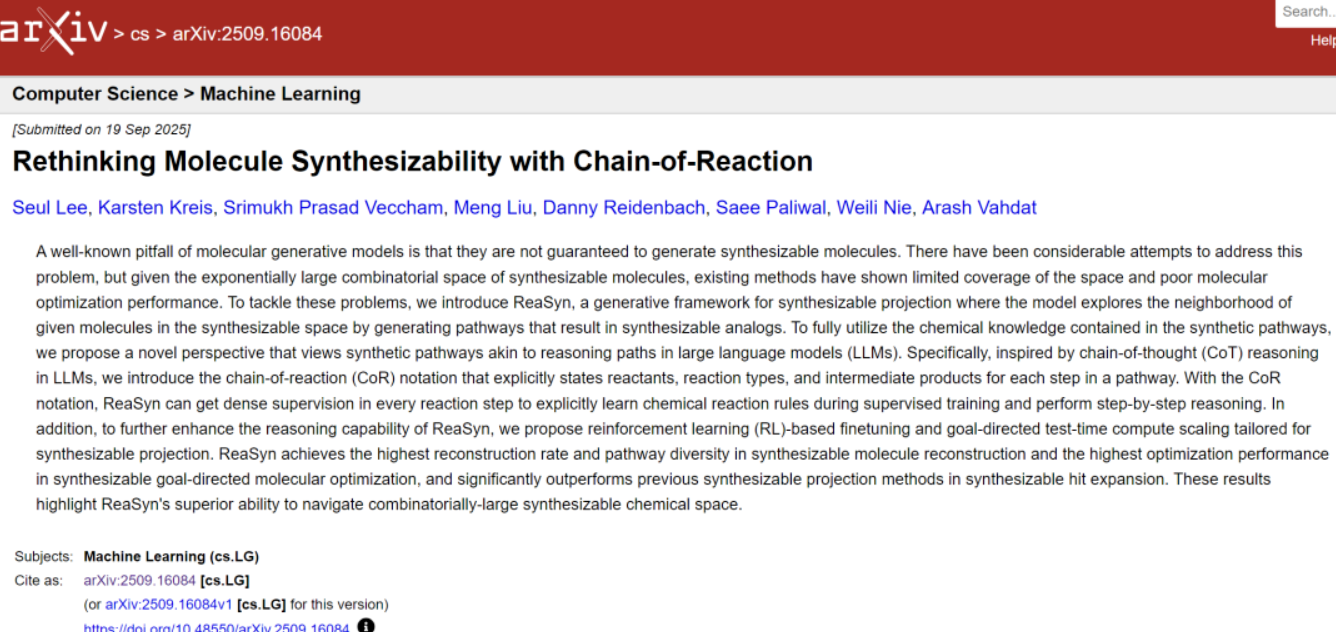 *source: arXiv
*authorNVIDIA Research Team
*paper:
https://arxiv.org/abs/2509.16084
A novel approach to designing proteins that bind to disordered regions, targeting undrugable targets.
Design of intrinsically disordered region binding proteins
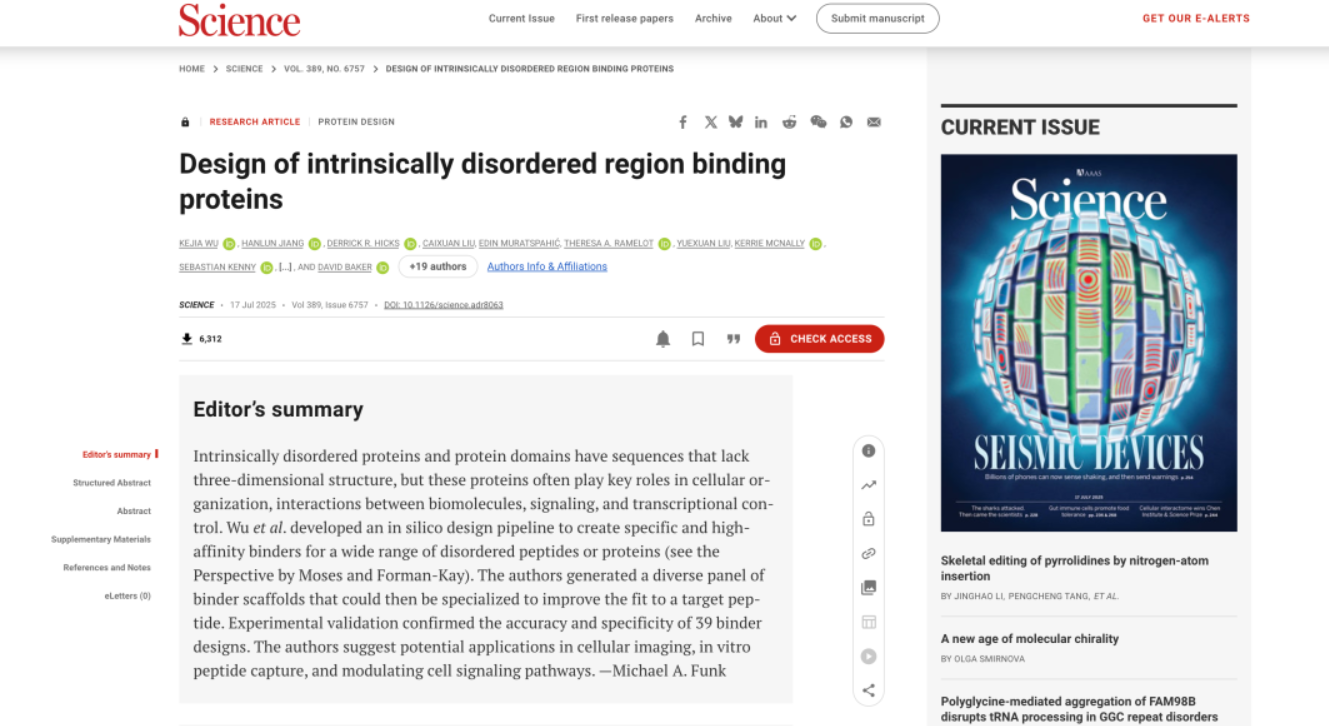 *source:Science
*authorDavid Baker and his team
*paper:
https://www.science.org/doi/10.1126/science.adr8063
AMix-1 enables scalable and universal protein design, resulting in protein variants with 50x increased activity.
AMix-1: A Pathway to Test-Time Scalable Protein Foundation Model
 *source: arXiv
*authorThe research group of Professor Zhou Hao at the Institute for Intelligent Industry (AIR) of Tsinghua University, in collaboration with the Shanghai Artificial Intelligence Laboratory
*paper:
The two-way Brownian bridge diffusion model significantly reduces the output variance, improving the reproducibility of virtual staining results.
Virtual staining of label-free tissue in imaging mass spectrometry
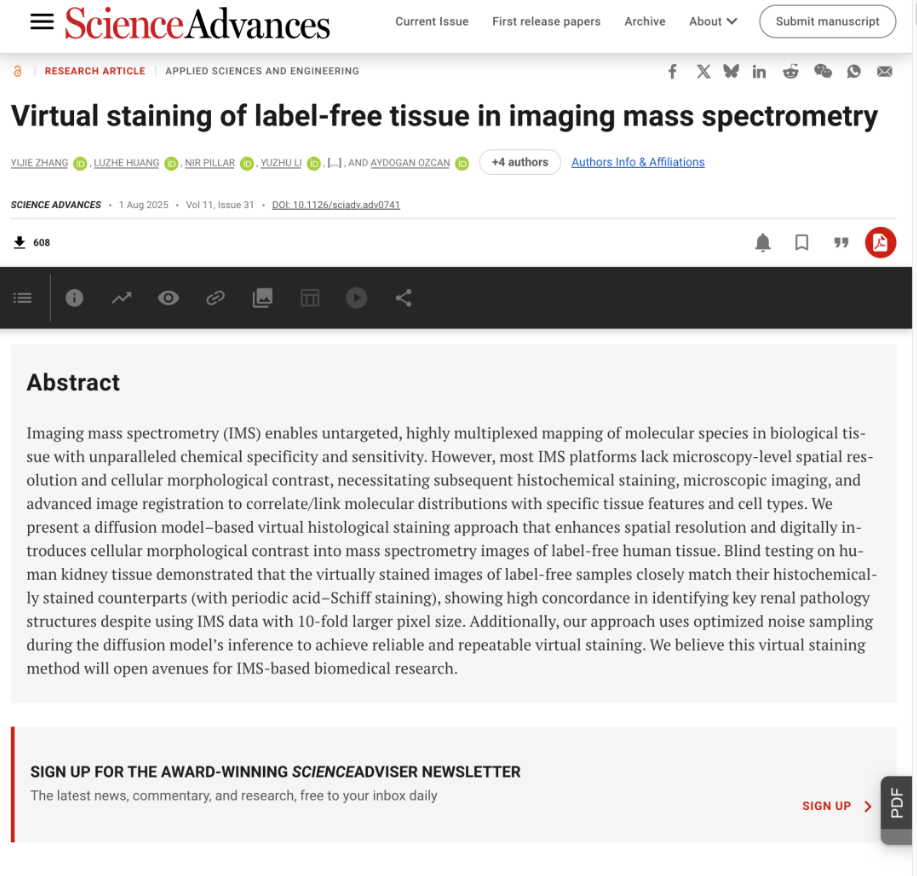 *source:Science Advances
*authorUCLA Research Team
*paper:
The all-atom diffusion Transformer ADiT breaks down the modeling barriers between periodic and aperiodic systems.
All-atom Diffusion Transformers: Unified generative modeling of molecules and materials
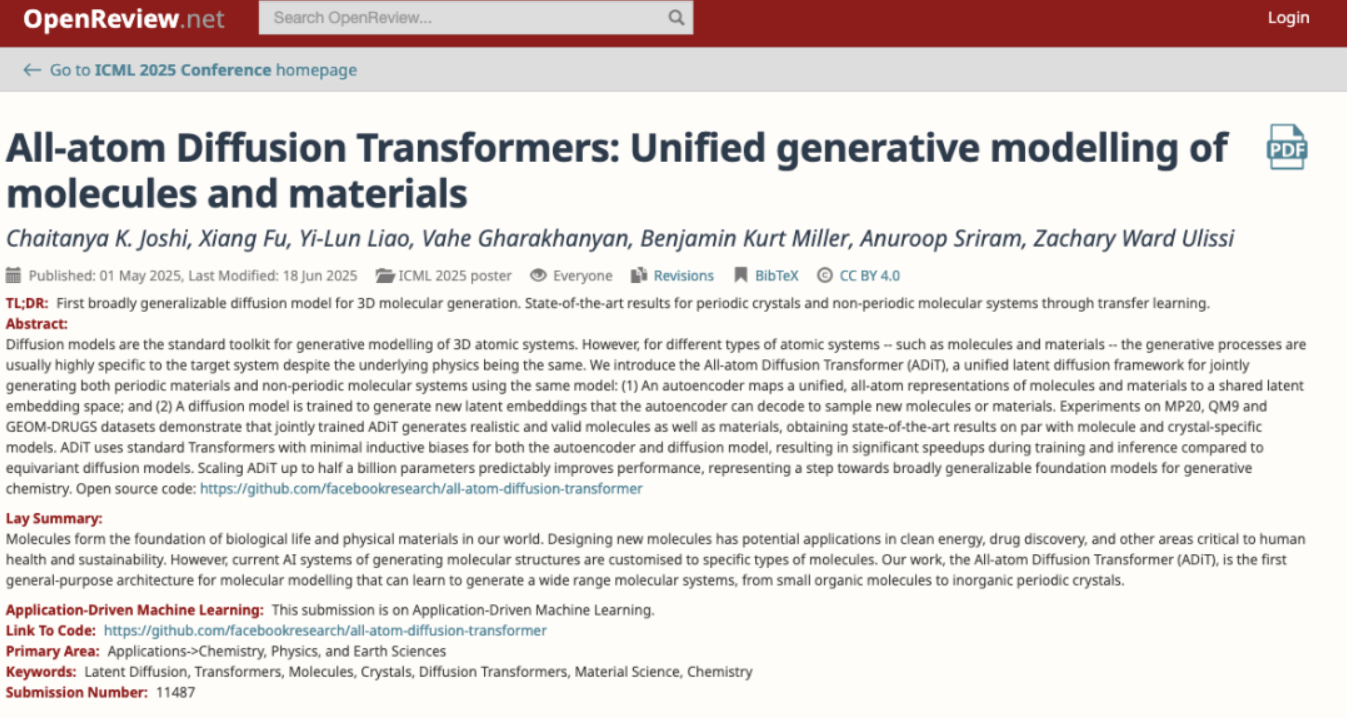 *sourceICML 2025
*authorA joint research team from MetaFAIR, the University of Cambridge, and MIT
*paper:
Full-Atom MPNN explicitly models the sequence identity and side chain structure of each amino acid residue.
Sidechain conditioning and modeling for full-atom protein sequence design with FAMPNN
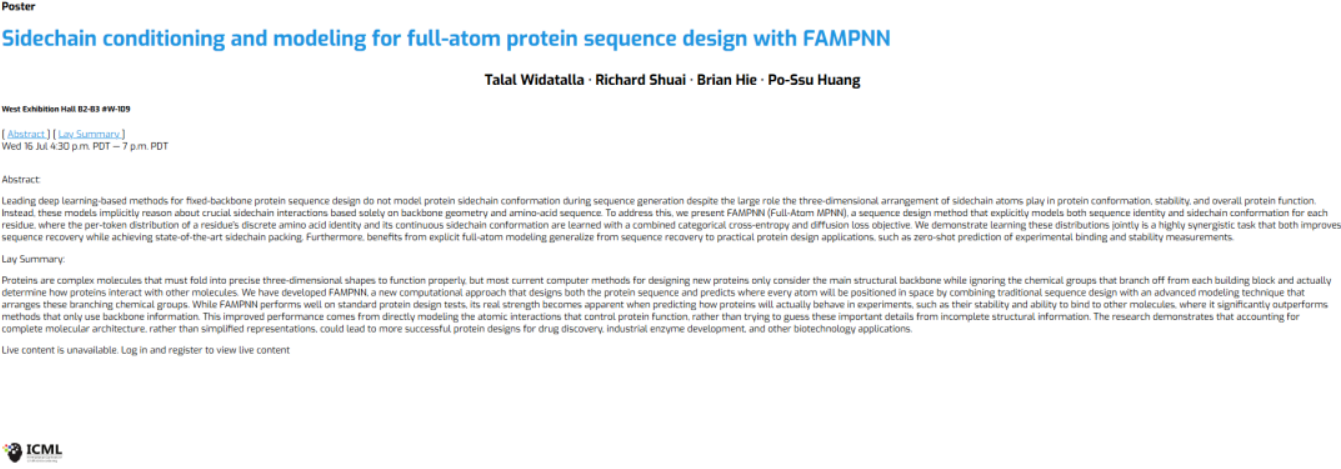 *sourceICML 2025
*authorA team from Stanford University, in collaboration with the Arc Institute in Palo Alto, California.
*paper:
La-Proteina achieves a breakthrough in atomic-level protein design, enabling the high-precision generation of proteins with up to 800 residues.
La-Proteina: Atomistic Protein Generation via Partially Latent Flow Matching
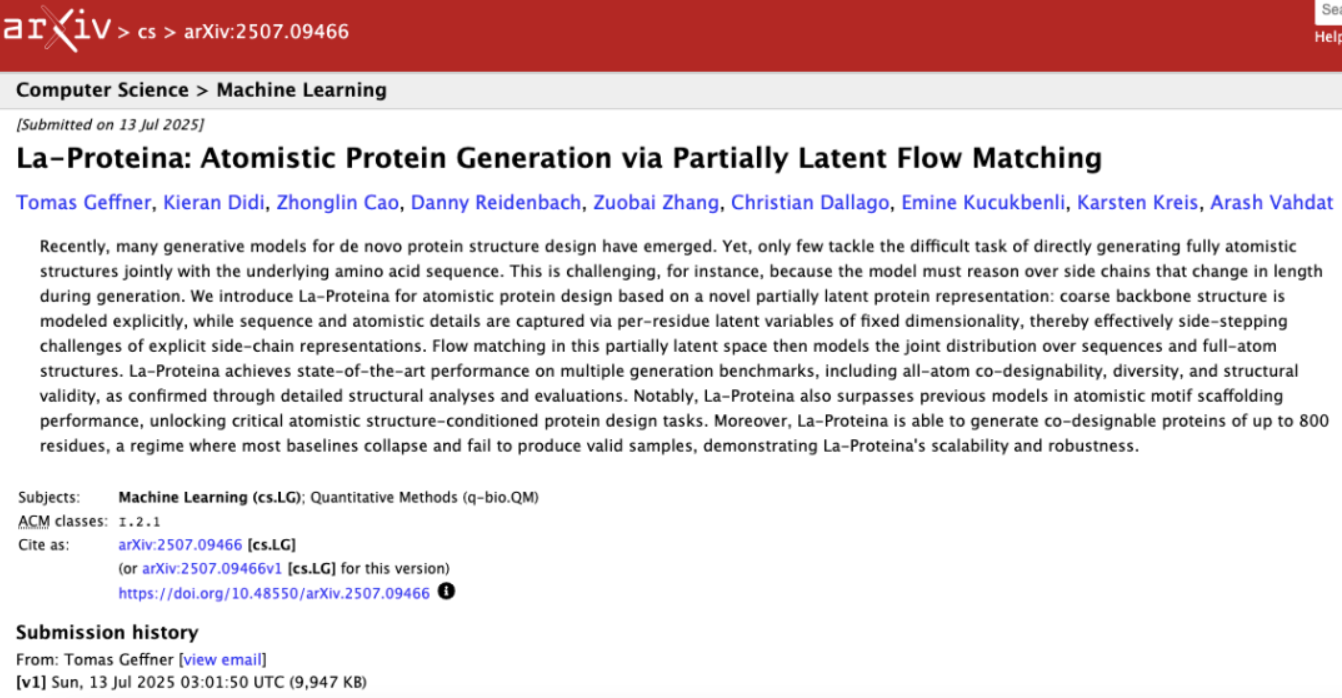 *source: arXiv
*authorNVIDIA's research team collaborated with Mila, the Quebec Institute for Artificial Intelligence in Canada.
*Interpretation:NVIDIA achieves breakthrough in atomic-level protein design, generating proteins of up to 800 residues with high accuracy
The deep learning model SUICA can predict gene expression at any location in a spatial transcriptome slice.
SUICA: Learning Super-high Dimensional Sparse Implicit Neural Representations for Spatial Transcriptomics
 *sourceICML 2025
*authorGroup led by Professor Zheng Yinqiang at the University of Tokyo, and group led by Professor Ding Jun at McGill University.
*paper:
A novel all-atomic protein generation model (APM) enables all-atomic design and functional optimization.
An All-Atom Generative Model for Designing Protein Complexes
 *sourceICML 2025
*authorHunan University, in collaboration with the University of Chinese Academy of Sciences and ByteDance's Seed team
*paper:
APEX, a deep learning model, is used to screen potential antibiotic candidates.
Computational exploration of global venoms for antimicrobial discovery with Venomics artificial intelligence
 *source:Nature Communications
*authorResearch team from the University of Pennsylvania, USA
*paper:
[https://www.nature.com/articles/s41467-025-60051-6[*]](https://www.nature.com/articles/s41467-025-60051-6[*])
The protein language model Prot42 enables long sequence modeling and high-affinity binding agent generation.
Prot42: a Novel Family of Protein Language Models for Target-aware Protein Binder Generation
 *source: arXiv
*authorA joint research team from the Inception AI Institute in Abu Dhabi and Cerebras Systems in Silicon Valley.
*Interpretation:8k long sequence modeling, protein language model Prot42 can generate high affinity binders using only the target protein sequence
*paper:
UniSim, a biomolecular time-coarsening dynamics simulator, has for the first time achieved unified time-coarsening dynamics simulation across molecular types and chemical environments.
UniSim: A Unified Simulator for Time-Coarsened Dynamics of Biomolecules
 *sourceICML 2025
*authorTsinghua University and Renmin University Gaoling School of Artificial Intelligence
*Interpretation:Selected for ICML 2025, Tsinghua University/Renmin University proposed UniSim, a unified biomolecular dynamics simulator
*paper:
SimplifiedBondfinder, based on 86,000 protein structure data, uses machine learning methods incorporating quantum mechanical computation to discover 69 novel nitrogen-oxygen-sulfur bonds.
Revealing arginine-cysteine and glycine-cysteine NOS linkages by a systematic re-evaluation of protein structures
 *sourceCommunications Chemistry
*authorTeam from the University of George August
*paper:
https://www.nature.com/articles/s42004-025-01535-w
Using protein sequence generation models to design overlapping genes has an extremely high success rate.
Design of overlapping genes using deep generative models of protein sequences
 *source:bioRxiv
*authorDavid Baker's team at the University of Washington
*Interpretation:David Baker's team's latest research uses protein sequence generation models to achieve overlapping gene design with a very high success rate
*paper:
https://doi.org/10.1101/2025.05.06.652464
The prediction framework PUPS innovatively combines protein language models and image inpainting models to achieve single-cell-level protein localization.
Prediction of protein subcellular localization in single cells
 *source:Nature Methods
*authorTeams from MIT and Harvard University
*paper:
UniMoMo, the first unified generative framework across molecular species, enables the design of multiple types of drug molecules.
UniMoMo: Unified Generative Modeling of 3D Molecules for De Novo Binder Design
 *sourceICML 2025
*authorThe Tsinghua University Professor Liu Yang's group collaborated with the Renmin University Professor Huang Wenbing's group and the ByteDance AI Pharmaceutical Team.
*paper:
The deep learning framework STAIG reveals detailed genetic information in the tumor microenvironment.
STAIG: Spatial transcriptomics analysis via image-aided graph contrastive learning for domain exploration and alignment-free integration
 *source:Nature Communications
*authorResearch team from the Institute of Medical Science, University of Tokyo, Japan
*paper:
https://www.nature.com/articles/s41467-025-56276-0
The DRAKES algorithm introduces a reinforcement learning framework and, for the first time, achieves differentiable reward backpropagation for complete generated trajectories in a discrete diffusion model.
Fine-Tuning Discrete Diffusion Models via Reward Optimization with Applications to DNA and Protein Design
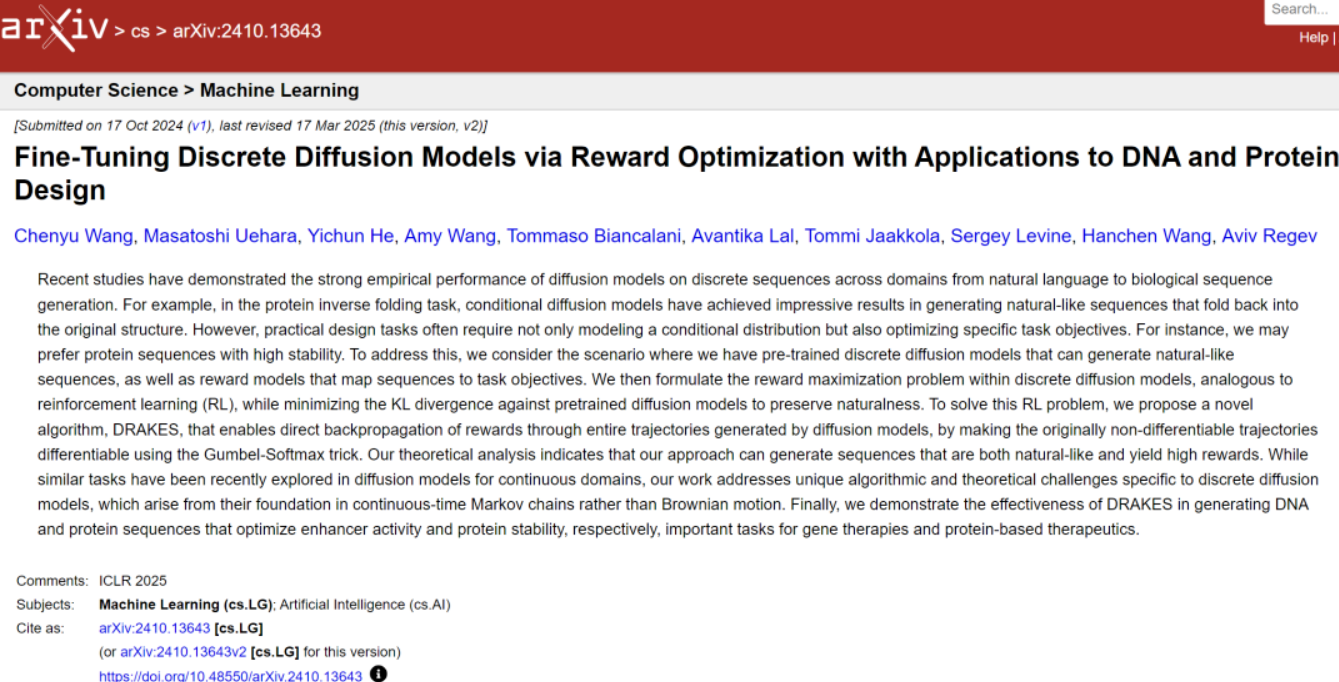 *****sourceICLR 2025
*authorResearchers from MIT, Harvard University, Stanford University, UC Berkeley, and Genentech, a US-based genetic engineering technology company.
*paper:
https://doi.org/10.48550/arXiv.2410.13643
Machine learning-assisted ultraviolet absorption spectroscopy: Constructing a microbial contamination detection model based on SVM.
Machine learning aided UV absorbance spectroscopy for microbial contamination in cell therapy products
 *****source:Scientific Reports
*authorA joint research team from the Singapore-MIT Research Consortium, the A*SRL Lab in Singapore, the National University of Singapore, and MIT.
*Interpretation:Output results within 30 minutes, National University of Singapore/MIT and others build a microbial contamination detection model based on SVM
*paper:
https://doi.org/10.1038/s41598-024-83114-y
A new paradigm for protein pre-training: Unraveling the evolution of protein families
Steering Protein Family Design through Profile Bayesian Flow
 *****sourceICLR 2025
*authorThe AIR GenSI research group at Tsinghua University, in collaboration with the School of Pharmaceutical Sciences at Tsinghua University
*paper:
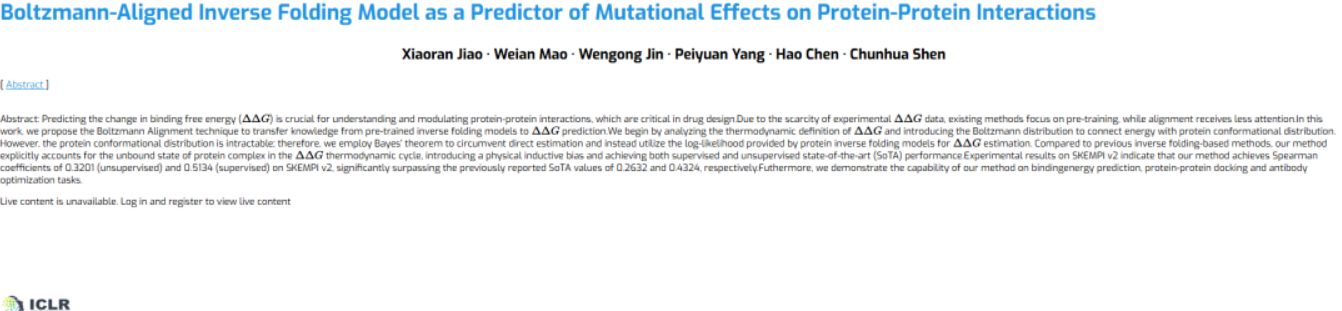
Boltzmann alignment technology predicts protein binding free energy up to state-of-the-art (SOTA).
Boltzmann-Aligned Inverse Folding Model as a Predictor of Mutational Effects on Protein-Protein Interactions
 *****sourceICLR 2025
*authorProfessor Shen Chunhua's team from the School of Computer Science and Technology at Zhejiang University, in collaboration with teams from the University of Adelaide in Australia and Northeastern University in the United States, among others.
*paper:
https://arxiv.org/abs/2410.09543
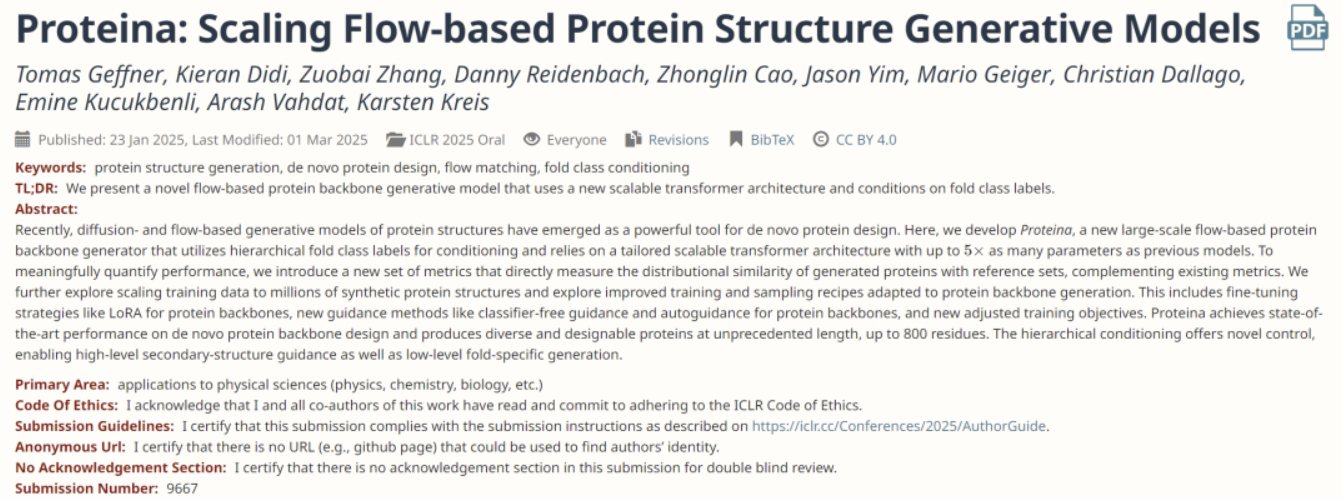
Proteina's model parameters exceed RFdiffusion by 5 times, achieving state-of-the-art (SOTA) performance in de novo protein backbone design.
Proteina: Scaling Flow-based Protein Structure Generative Models
 *****sourceICLR 2025 Oral
*authorA research team from NVIDIA, the Quebec Institute for Artificial Intelligence Mila, the University of Montreal, and MIT
*paper:
https://openreview.net/forum?id=TVQLu34bdw&nesting=2&sort=date-desc
The UniGEM model is the first to achieve collaborative enhancement of two tasks based on a diffusion model.
UniGEM: A Unified Approach to Generation and Property Prediction for Molecules
 *****sourceICLR 2025
*authorTsinghua University and Chinese Academy of Sciences team
*paper:
https://openreview.net/pdf?id=Lb91pXwZMR
RFdiffusion evolves again, achieving atomic-level precision in de novo antibody design.
Atomically accurate design of antibodies with RFdiffusion
 *****source:bioRxiv
*authorDavid Baker's team and collaborators
*Interpretation:David Baker's team's new achievement! RFdiffusion evolves again to achieve atomic-level precision antibody de novo design
*paper:
https://doi.org/10.1101/2024.03.14.585103
The first protein-RNA language model fusion scheme, combined with affinity prediction, sets a new state-of-the-art standard.
CoPRA: Bridging Cross-domain Pretrained Sequence Models with Complex Structures for Protein-RNA Binding Affinity Prediction
 *****source: arXiv
*authorA joint team from Tsinghua University, University College London, Monash University, and Beijing University of Posts and Telecommunications
*paper:
https://arxiv.org/abs/2409.03773
The Celcomen model achieves identifiable causal inference in spatial transcriptomics analysis for the first time.
Estimation of single-cell and tissue perturbation effect in spatial transcriptomics via Spatial Causal Disentanglement
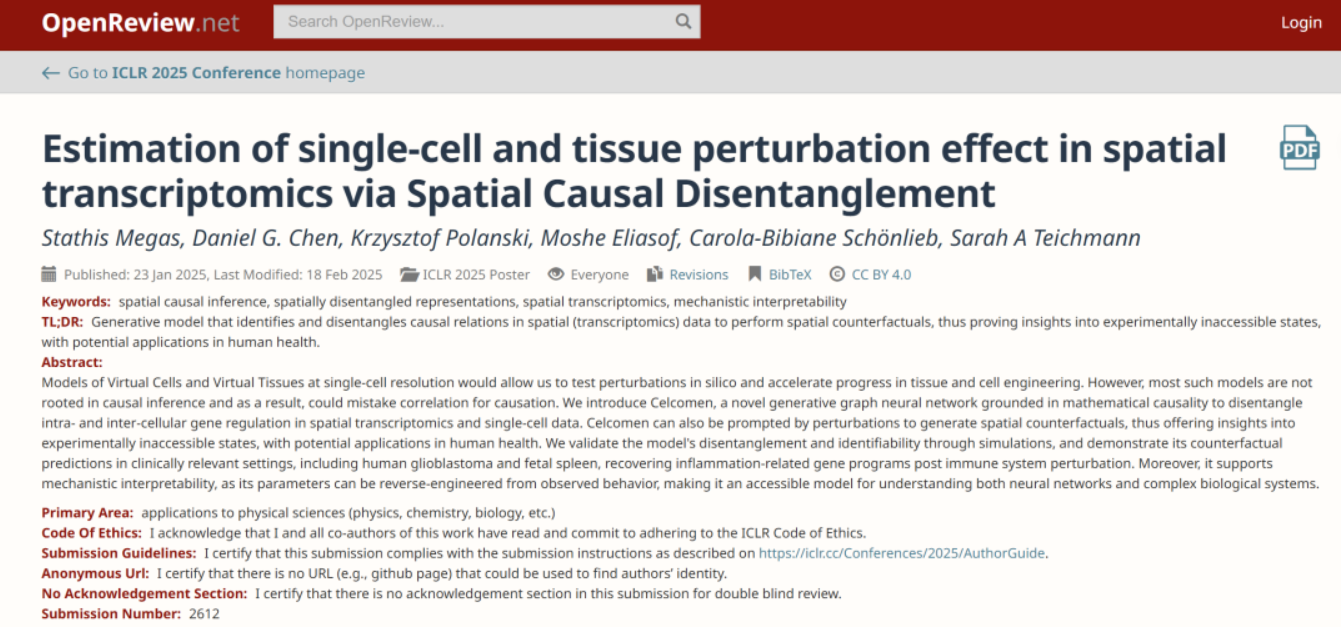 *****sourceICLR 2025
*authorCambridge University research team
*paper:
https://openreview.net/forum?id=Tqdsruwyac
The AlphaFold-Metainference method accurately predicts disordered sets of protein structures.
AlphaFold prediction of structural ensembles of disordered proteins
 *****source:Nature Communications
*authorCambridge University research team
*paper:
https://www.nature.com/articles/s41467-025-56572-9
The second-generation RNA structure prediction algorithm surpasses state-of-the-art (SOTA) standards in multiple benchmark tests.
Ab initio RNA structure prediction with composite language model and denoised end-to-end learning
 *****source:bioRxiv
*authorProfessor Yang Zhang's team at the National University of Singapore
*paper:
https://www.biorxiv.org/content/10.1101/2025.03.05.641632v1
An innovative 4D diffusion model, combined with molecular dynamics simulation data, can simultaneously predict protein trajectories at multiple time steps.
4D Diffusion for Dynamic Protein Structure Prediction with Reference and Motion Guidance
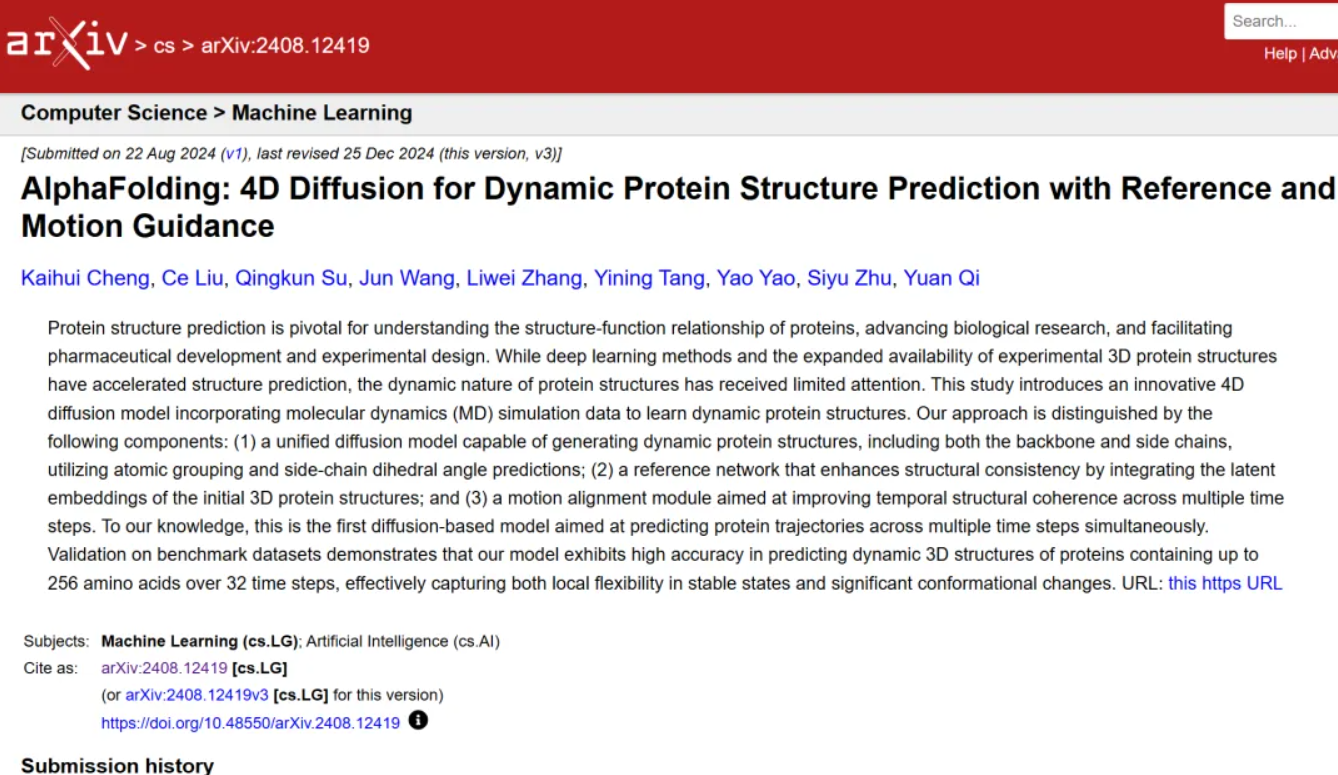 *****source: arXiv
*authorResearch teams from Fudan University, Shanghai Institute of Intelligent Science and Technology, and Nanjing University
*paper:
https://arxiv.org/abs/2408.12419
PepPrCLIP solves the "undrugable" problem by creating peptides that almost always match the target protein better.
De novo design of peptide binders to conformationally diverse targets with contrastive language modeling
 *****source:Science Advances
*authorDuke University research team
*Interpretation:Duke University uses PepPrCLIP to solve the "undruggable" problem
*paper:
https://www.science.org/doi/10.1126/sciadv.adr8638
MOLRL optimizes targeted molecules using reinforcement learning, achieving a success rate of up to 100% (TP3T).
Targeted Molecular Generation With Latent Reinforcement Learning
 *****sourceChemRxiv
*authorCellaire and Nvidia's research team
*paper:
The E2VD framework, an evolution-driven predictive framework for viral mutation, improves prediction accuracy by 671 TP3T.
A unified evolution-driven deep learning framework for virus variation driver prediction
 *****source:Nature Machine Intelligence
*authorProfessor Tian Yonghong and Associate Professor Chen Jie from the School of Information Engineering, Peking University, in collaboration with Researcher Zhou Peng from the Guangzhou National Laboratory, supervised doctoral student Nie Zhiwei and master's student Liu Xudong, among others.
*paper:
https://www.nature.com/articles/s42256-024-00966-9
AI+ Healthcare
Healthcare agents demonstrate higher initiative and relevance in patient consultations compared to closed-source models such as GPT-4.
Healthcare agent: eliciting the power of large language models for medical consultation
 *****source:Nature Artificial Intelligence
*authorResearch teams from Wuhan University and Nanyang Technological University
*paper:
ICA-Var's multivariate analysis method, based on gene sequencing and machine learning for wastewater epidemiological assessment, can detect viruses up to 4 weeks earlier.
Early detection of emerging SARS-CoV-2 Variants from wastewater through genome sequencing and machine learning
 *****source:Nature Communications
*authorResearch team at the University of Nevada, Las Vegas
*paper:
https://www.nature.com/articles/s41467-025-61280-5
Medical GraphRAG sets a new record for question-answering accuracy, achieving state-of-the-art (SOTA) results on 11 datasets.
Medical Graph RAG: Towards Safe Medical Large Language Model via Graph Retrieval-Augmented Generation
 *****sourceACL 2025
*authorA joint team from Oxford University, Carnegie Mellon University, and the University of Edinburgh
*paper:
REVERIE, the first VR motion intervention system, is reshaping the brain-body-mind health of teenagers.
Adaptive AI-based virtual reality sports system for adolescents with excess body weight: a randomized controlled trial
 *****source:Nature Medicine
*authorThe research teams of Professor Li Huating from the Sixth People's Hospital Affiliated to Shanghai Jiao Tong University School of Medicine/Institute of Proactive Health Strategy and Development, and Professor Sheng Bin from the School of Computer Science and Technology/Key Laboratory of Artificial Intelligence of the Ministry of Education at Shanghai Jiao Tong University, have collaborated through interdisciplinary medical-engineering research with the teams of Researcher Wang Jihong from Shanghai University of Sport, Professor Zeng Rong from ShanghaiTech University/Shanghai Clinical Research Center, and Professor Lin Shuide from the National University of Singapore.
*paper:
https://www.nature.com/articles/s41591-025-03724-5
The NeuralCohort method enables fine-grained patient cohort modeling based on multi-dimensional EHR data, improving the accuracy of hospital stay prediction by 16.31 TP3T
NeuralCohort: Cohort-aware Neural Representation Learning for Healthcare Analytics
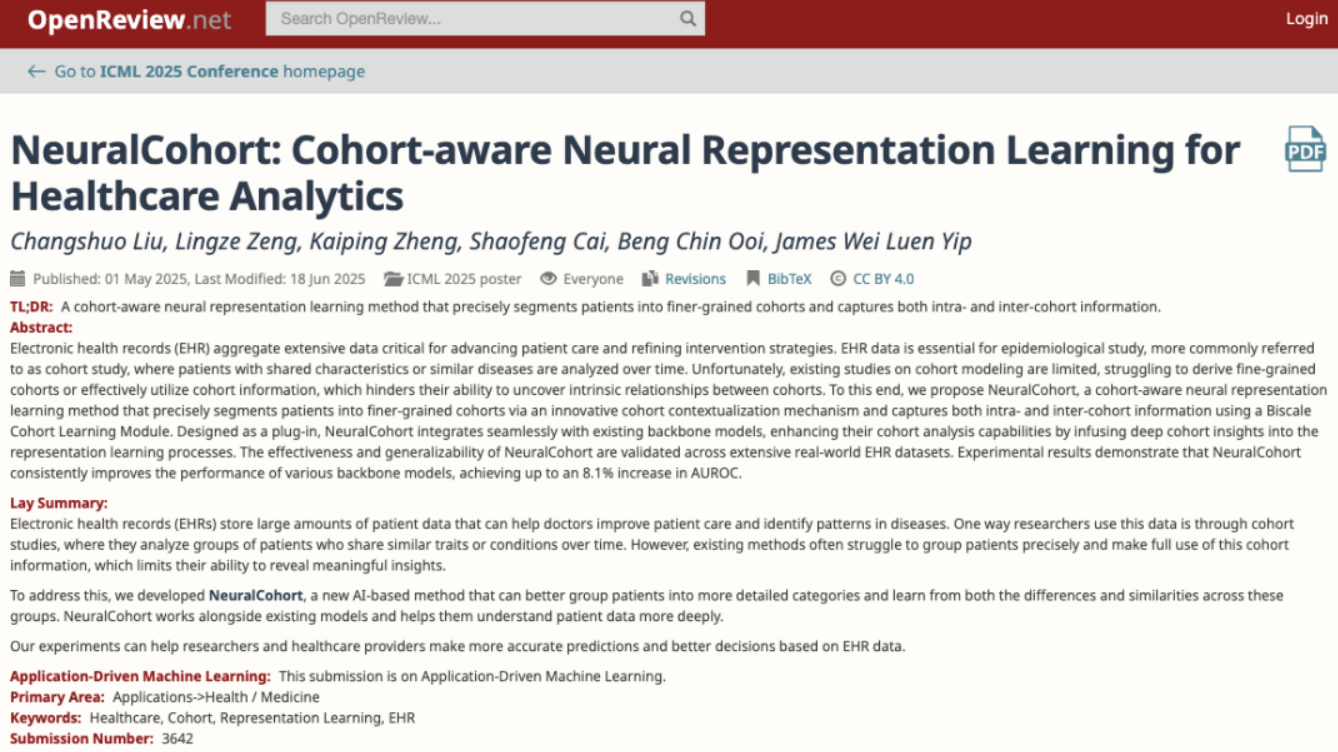 *****sourceICML 2025
*authorNational University of Singapore in collaboration with Zhejiang University
*paper:
https://openreview.net/forum?id=bqQVa6VRvm
The world's first clinical mind mapping model in the field of HIE, achieving a 15% performance improvement on the neurocognitive outcome prediction task.
Visual and Domain Knowledge for Professional-level Graph-of-Thought Medical Reasoning
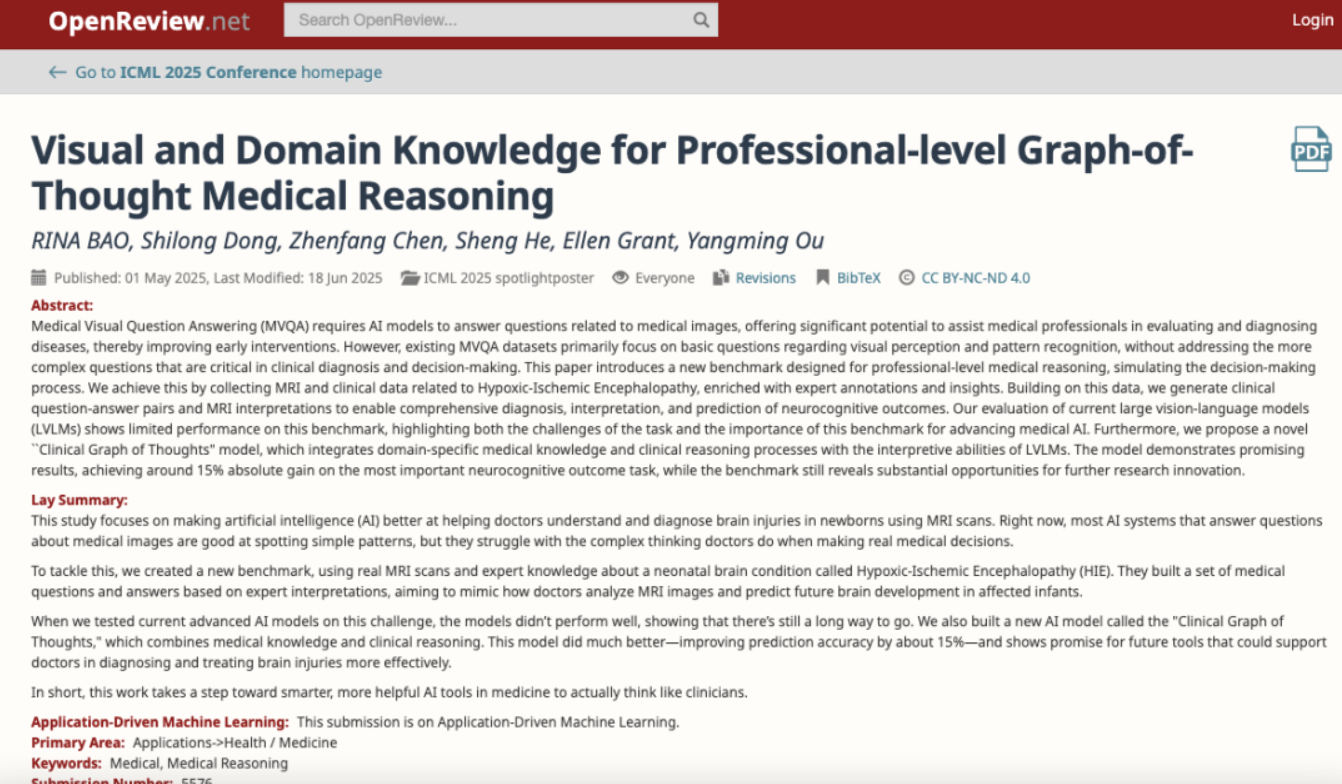 *****sourceICML 2025
*authorAn interdisciplinary team from Harvard Medical School, Boston Children's Hospital, New York University, and the MIT-IBM Watson Lab.
*paper:
https://openreview.net/forum?id=tnyxtaSve5
Hierarchical distillation multi-instance learning framework HDMIL for fast processing of gigapixel pathological whole-slice images
Fast and Accurate Gigapixel Pathological Image Classification with Hierarchical Distillation Multi-Instance Learning
 *****sourceCVPR 2025
*authorTeam of Professor Jiang Junjun, Associate Professor Jiang Kui, and Professor Zhang Yongbing from Harbin Institute of Technology
*paper:
The base model vesselFM, designed specifically for 3D blood vessel segmentation, can achieve segmentation and generalization capabilities superior to existing state-of-the-art models in zero-shot, single-shot, and few-shot scenarios.
vesselFM: A Foundation Model for Universal 3D Blood Vessel Segmentation
 *****sourceCVPR 2025
*authorResearchers from the University of Zurich, ETH Zurich, and the Technical University of Munich
*paper:
The graph-coded hybrid survival model, based on 8 million real-world datasets, identifies subphenotypes with consistent characteristics and survival outcomes.
Identification of predictive subphenotypes for clinical outcomes using real world data and machine learningn
 *source:Nature Communication
*authorCornell University and Regeneron Pharmaceuticals
*paper:
https://doi.org/10.1038/s41467-025-59092-8
By integrating strategic AI models, accurate prediction of mortality risk in multi-center, multi-specialty septic shock can be achieved.
Artificial intelligence based multispecialty mortality prediction models for septic shock in a multicenter retrospective study
 *source:npj digital medicine
*authorResearch team from Tongji Hospital and School of Pharmaceutical and Health Management, Tongji Medical College, Huazhong University of Science and Technology
*paper:
Two novel cancer prediction algorithms, based on blood indicators, enable early prediction of 15 types of cancer.
Development and external validation of prediction algorithms to improve early diagnosis of cancer
 *source:Nature Communications
*authorResearch team from Queen Mary University of London and Oxford University
*paper:
Multi-agent dialogue (MAC) framework significantly improves the diagnostic capabilities of LLMs.
Enhancing diagnostic capability with multi-agents conversational large language models
 *source:npj digital medicine
*authorTeams from Sichuan University West China Hospital, West China Biomedical Big Data Center, Zhejiang University School of Medicine, Beijing University of Posts and Telecommunications, etc.
*paper:
https://www.nature.com/articles/s41746-025-01550-0#Tab6
The first full-modal medical image re-identification framework achieves state-of-the-art (SOTA) performance on 11 datasets.
Towards All-in-One Medical Image Re-Identification
 *source:
*authorShanghai Artificial Intelligence Laboratory in collaboration with several renowned universities
*paper:
https://arxiv.org/pdf/2503.08173
The many-to-one regression model M2OST uses digital pathological images to accurately predict gene expression.
M2OST: Many-to-one Regression for Predicting Spatial Transcriptomics from Digital Pathology Images
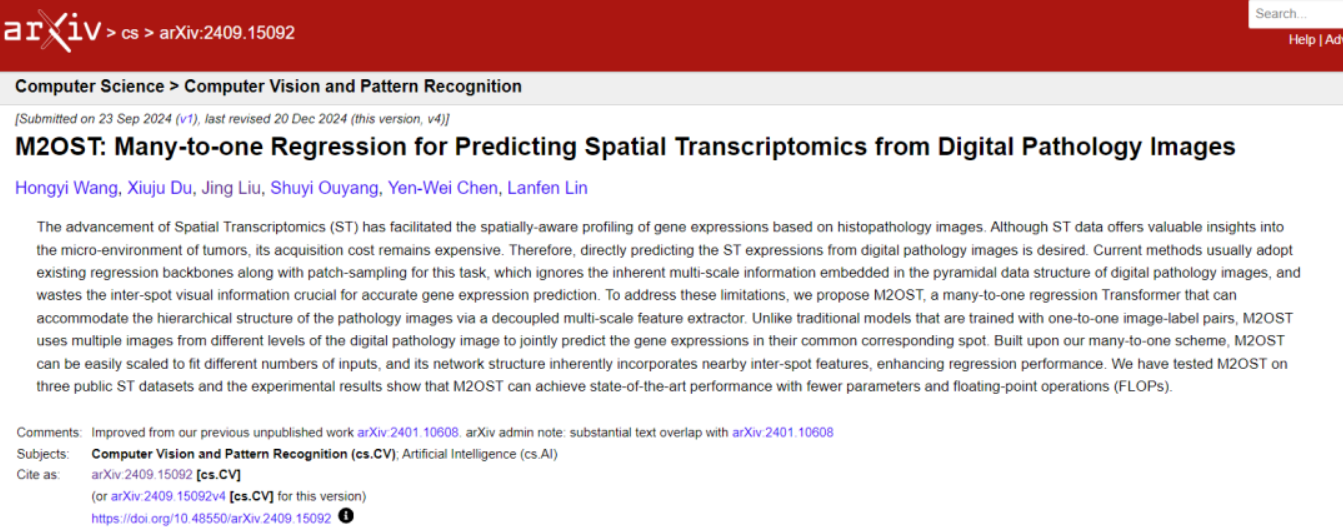 *sourceAAAI 2025
*authorProfessor Lin Lanfen's research team from Zhejiang University, China, in collaboration with the Zhejiang Hangzhou Zhijiang Laboratory and Ritsumeikan University, Japan
*paper:
https://arxiv.org/abs/2409.15092
The MindGlide model enables the quantification of multiple sclerosis lesions.
Enabling new insights from old scans by repurposing clinical MRI archives for multiple sclerosis research
 *source:Nature Communications
*authorUniversity College London team
*Interpretation:To maximize the value of clinical MRI data, the UCL team proposed the MindGlide model to achieve quantification of multiple sclerosis lesions
*paper:
https://www.nature.com/articles/s41467-025-58274-8
The world's first prospective real-world evidence on the actual effectiveness of large models in assisting the training of primary care physicians.
Large language models for diabetes training: a prospective study
 *sourceScience Bulletin
*authorThe team led by Professor Sheng Bin from Shanghai Jiao Tong University, in collaboration with the team led by Professor Mao Lijuan from Shanghai University of Sport, the team led by Professor Huang Tianyin from Tsinghua University, and the team led by Professor Jia Weiping from the Shanghai Diabetes Institute, as well as other multidisciplinary forces, joined forces with top international universities and research institutions such as Duke University, Johns Hopkins University, and the University of Melbourne.
*paper:
https://www.sciencedirect.com/science/article/pii/S2095927325000891
AcneDGNet's deep learning algorithm achieves accuracy far exceeding that of junior dermatologists, enabling acne lesion detection and grading.
Evaluation of an acne lesion detection and severity grading model for Chinese population in online and offline healthcare scenarios
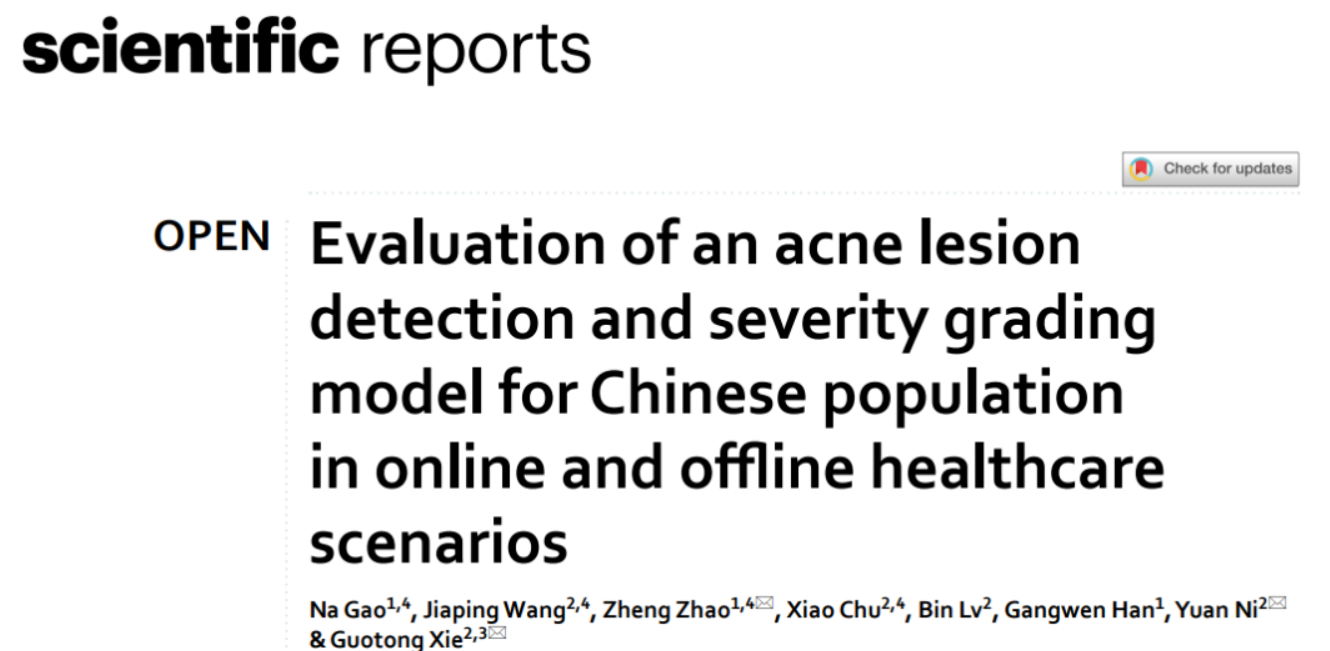 *source:Scientific Reports
*authorHan Gangwen and his team from the Department of Dermatology, Peking University International Hospital
*paper:
https://www.nature.com/articles/s41598-024-84670-z
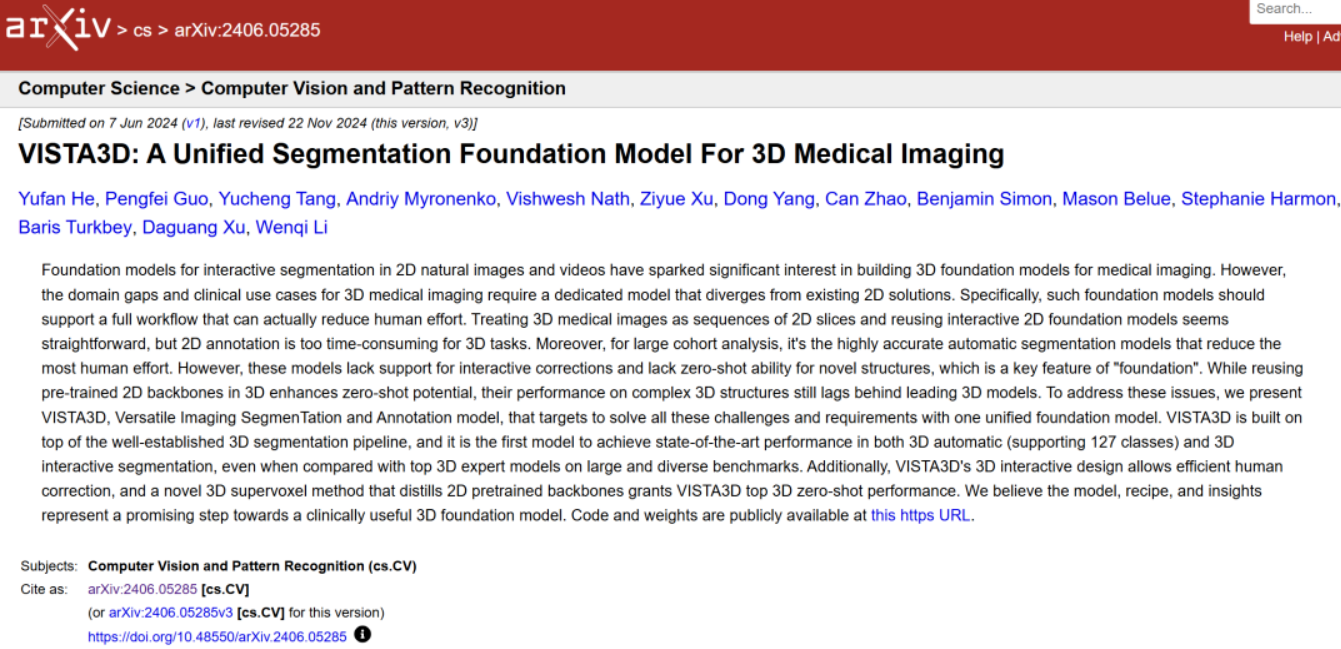
Multimodal medical image segmentation model enables automatic segmentation and interaction of 3D images.
VISTA3D: A Unified Seamentation Foundation Model For 3D Medical Imaging
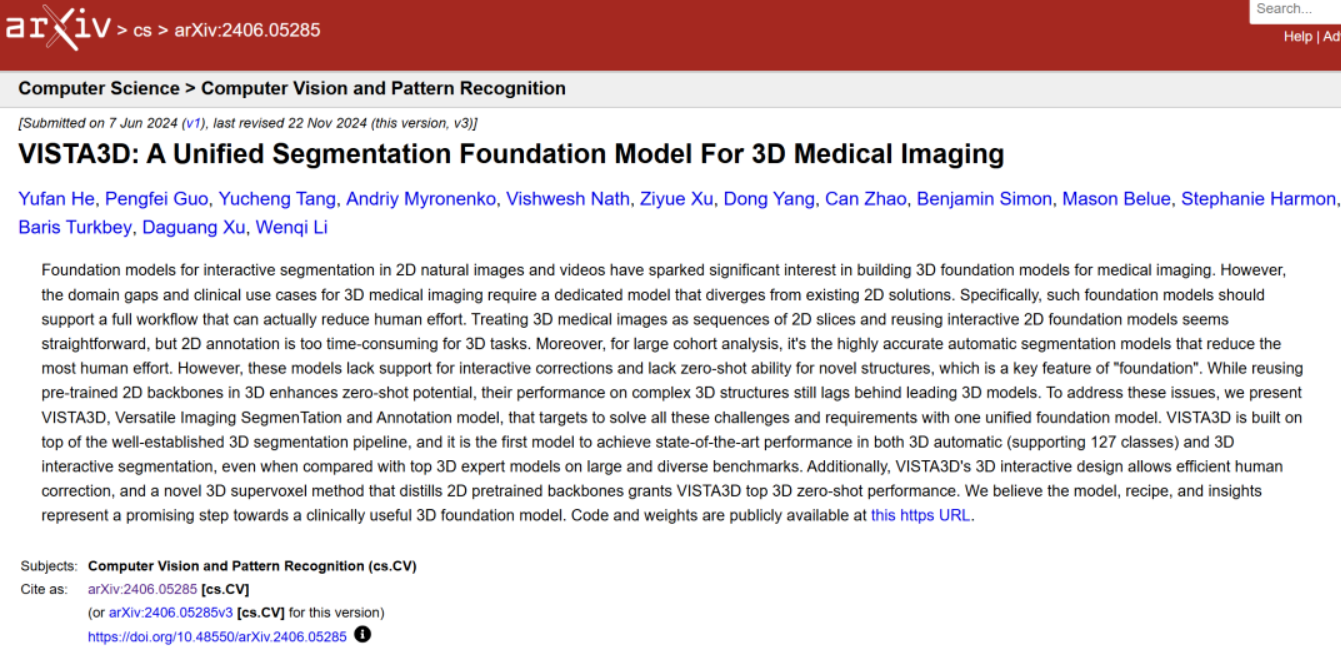 *source: arXiv
*authorNvidia, in collaboration with the University of Arkansas School of Medicine, the National Institutes of Health, and Oxford University
*paper:
https://doi.org/10.48550/arxiv.2406.05285
Precise segmentation of cardiac structures in multi-plane echocardiography effectively reduces redundancy.
EchoONE: Segmenting Multiple echocardiography Planes in One Model
 *sourceCVPR 2025
*authorMedical Ultrasound Image Computing Laboratory, College of Biomedical Engineering, Faculty of Medicine, Shenzhen University
*Interpretation:Selected for CVPR 2025! Shenzhen University team and others proposed EchoONE, which can accurately segment multi-section echocardiograms
*paper:https://arxiv.org/abs/2412.02993
MedFoundation, currently the largest biomedical language model with the largest number of parameters
A generalist medical language model for disease diagnosis assistance
 *source:Nature Medicine
*authorBeijing University of Posts and Telecommunications, Peking University Third Hospital, Three Gorges University
*paper:https://www.nature.com/articles/s41591-024-03416-6
**A general framework for contrast-driven medical image segmentation.**Achieving precise segmentation of medical images
ConDSeg: A General Medical Image Segmentation Framework via Contrast-Driven Feature Enhancement
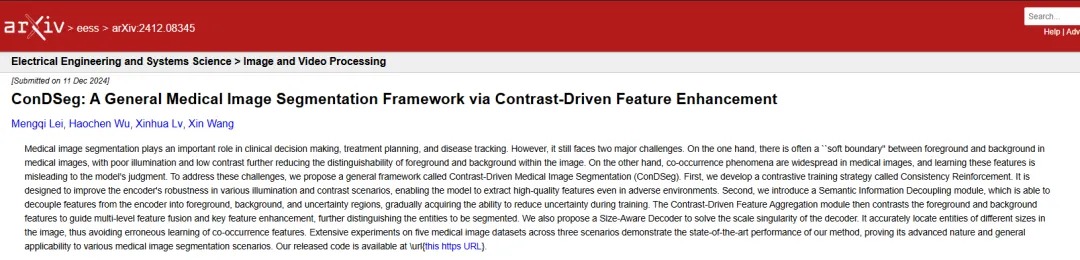 *sourceAAAI 2025
*authorChina University of Geosciences, Baidu
*paper:
https://arxiv.org/abs/2412.08345
It is state-of-the-art on nine benchmark datasets covering two infectious diseases and fourteen non-infectious diseases.
A multimodal multidomain multilingual medical foundation model for zero shot clinical diagnosis
 *sourceNature Portfolio
*authorOxford University, Amazon, University of Rochester, GlaxoSmithKline, Westlake University Medical Artificial Intelligence Laboratory
*paper:
https://www.nature.com/articles/s41746-024-01339-7
The classification accuracy reached 971 TP3T, significantly higher than the 821 TP3T of human observers.
Deep learning versus human assessors: forensic sex estimation from three-dimensional computed tomography scans
 *source:Scientific Reports
*authorUniversity of Western Australia, University of New South Wales, and University of Hasanuddin, Indonesia
*paper:
https://www.nature.com/articles/s41598-024-81718-y
Bidirectional stepwise feature alignment for misaligned medical image fusion
BSAFusion: A Bidirectional Stepwise Feature Alignment Network for Unaligned Medical Image Fusion
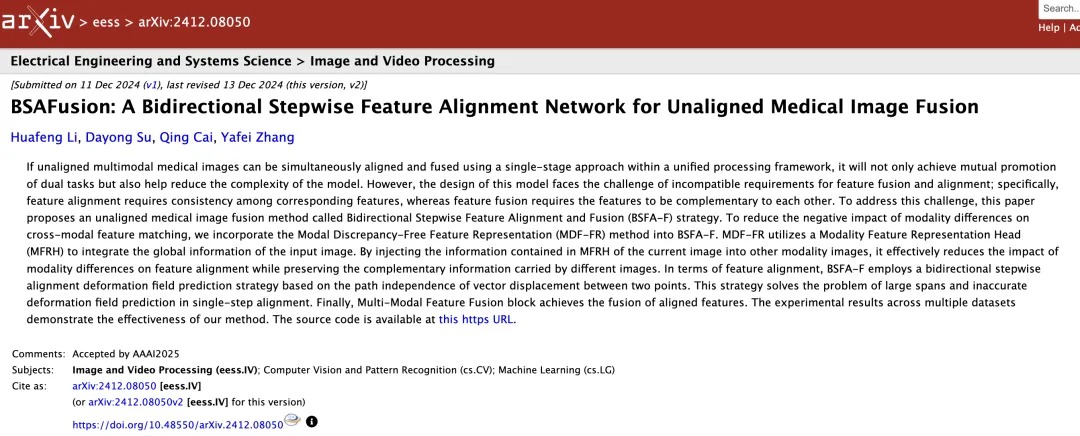 *sourceAAAI 2025
*authorKunming University of Science and Technology, Ocean University of China
*Interpretation:Selected for AAAI 2025! BSAFusion can realize multi-modal medical image alignment and fusion. Two major domestic universities jointly proposed
*paperhttps://arxiv.org/abs/2412\.08050 A novel hierarchical multi-agent framework covering 362 common diseases.
KG4Diagnosis: A Hierarchical Multi-Agent LLM Framework with Knowledge Graph Enhancement for Medical Diagnosis
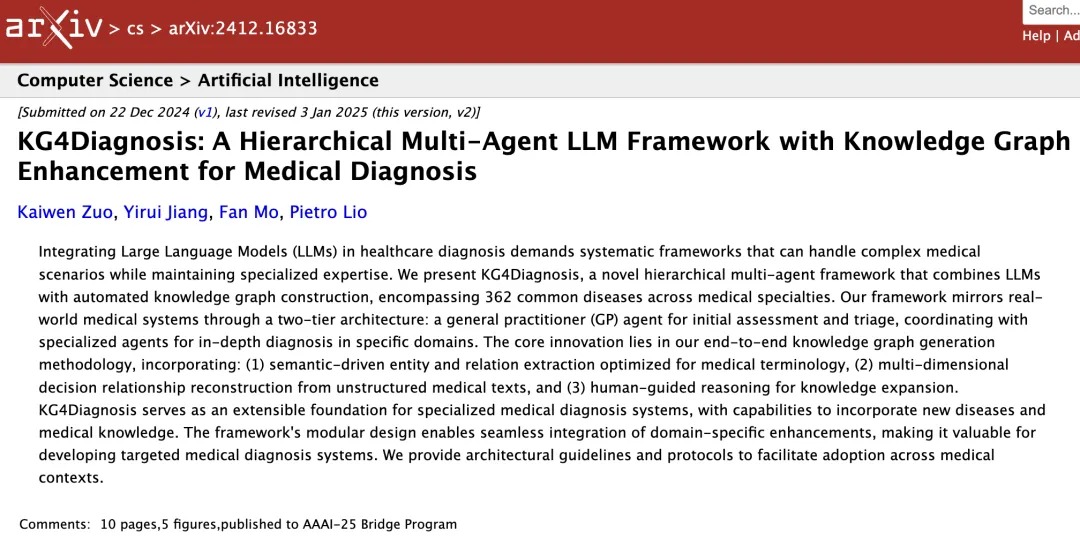 *sourceAAAI-25 Bridge Program
*authorUniversity of Warwick, Cranfield University, University of Cambridge, University of Oxford
*paper:https://arxiv.org/abs/2406.05285
AI + Materials Chemistry
With less than 100,000 structural data points trained, PET-MAD's atomic simulation accuracy rivals that of professional models.
PET-MAD as a lightweight universal interatomic potential for advanced materials modeling
 *source:Nature Communications
*authorÉcole Polytechnique Fédérale de Lausanne, Switzerland
*paper:
https://www.nature.com/articles/s41467-025-65662-7
Halving computational costs allows for the formalization of human chemical reasoning into a machine-understandable framework.
ChemOntology: A Reusable Explicit Chemical Ontology-Based Method to Expedite Reaction Path Searches
 *sourceACS Catalysis
*author: Hokkaido University, Japan
*paper:
https://pubs.acs.org/doi/10.1021/acscatal.5c06298
MOF-ChemUnity: A structured, scalable, and extensible knowledge graph
MOF-ChemUnity: Literature-Informed Large Language Models for Metal–Organic Framework Research
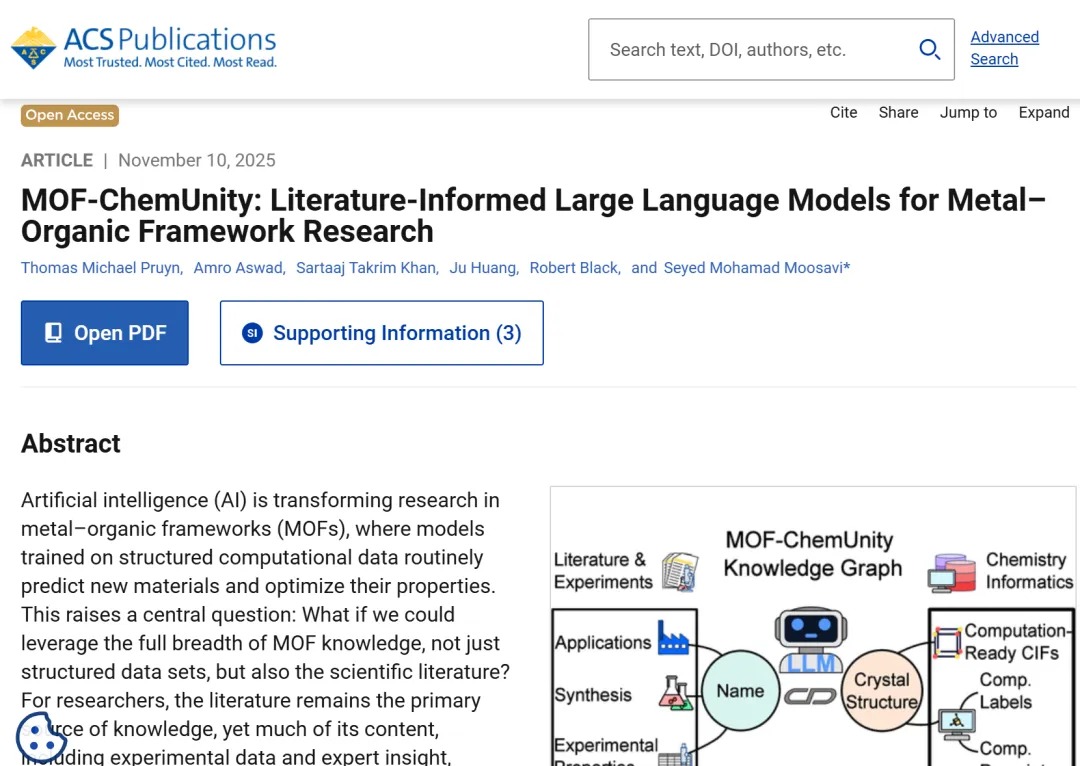 *source:ACS Publications
*author:University of Toronto, Canada; Clean Energy Innovation Research Centre, National Research Council of Canada
*paper:
https://pubs.acs.org/doi/10.1021/jacs.5c11789
Integrating the global attention mechanism of Graphermer with CGCNN
CGformer: Transformer-enhanced crystal graph network with global attention for material property prediction
 *sourceMatter
*authorShanghai Jiao Tong University Artificial Intelligence and Microstructure Laboratory
*paper:
https://www.cell.com/matter/abstract/S2590-2385(25)00423-0
FASTSOLV model: Achieving prediction of small molecule solubility at arbitrary temperatures
Data-driven organic solubility prediction at the limit of aleatoric uncertainty
 *source:Nature Communication
*authorMassachusetts Institute of Technology
*paper:
https://www.nature.com/articles/s41467-025-62717-7
Using information available immediately after MOF synthesis to predict their potential performance and applications.
Connecting metal-organic framework synthesis to applications using multimodal machine learning
 *source:Nature Communications
*authorUniversity of Toronto, Canada
*paper:
https://www.nature.com/articles/s41467-025-60796-0
For the first time, a unified framework capable of simultaneously handling the three major modalities of metamaterial design has been constructed.
UNIMATE: A Unified Model for Mechanical Metamaterial Generation, Property Prediction, and Condition Confirmation
 *sourceICML 2025
*authorVirginia Tech, Meta AI
*paper:
GeMS, the world's largest mass spectrometry dataset, covers 200 million molecular mass spectra.
Self-supervised learning of molecular representations from millions of tandem mass spectra using DreaMS
 *sourceNature Biotechnology
*authorInstitute of Organic Chemistry and Biochemistry, Czech Academy of Sciences
*paper:
Simultaneously learn the generalized potential and its response function to external stimuli in a single machine learning model.
Unified differentiable learning of electric response
 *source:Nature Communications
*authorHarvard University, Robert Bosch LLC
*paper:
Based on LLM, the chemical composition of 14,000 materials was extracted from 88,000 papers.
Data-driven material screening of secondary and natural cementitious precursors
 *sourceCommunication Materials
*authorMassachusetts Institute of Technology (MIT)
*paper:
Combining a comprehensive SSE database with LLM and ab initio meta-dynamic simulations
Unraveling the Complexity of Divalent Hydride Electrolytes in Solid-State Batteries via a Data-Driven Framework with Large Language Model
 *source:Angewandte Chemie-International Edition
*authorTohoku University (Japan), Sichuan University (China), Shibaura Institute of Technology (Japan)
*paper:
Searching for ion isotope distributions in multi-component high-resolution mass spectrometry databases at the TB level.
Discovering organic reactions with a machine-learning-powered deciphering of tera-scale mass spectrometry data
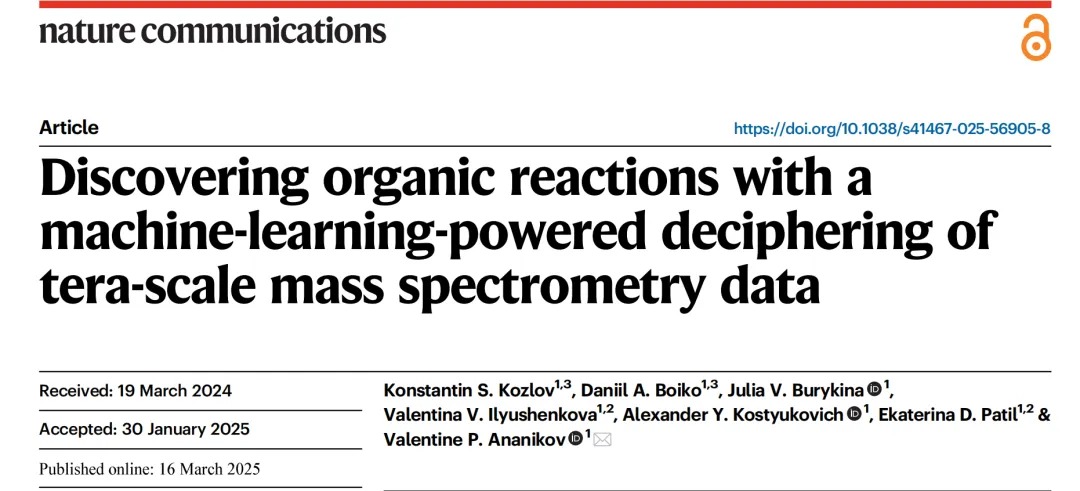 *source:Nature Communications
*authorRussian Academy of Sciences
*paper:
PXRDnet, a generative artificial intelligence structure parsing method based on a diffusion model
Ab initio structure solutions from nanocrystalline powder diffraction data via diffusion models
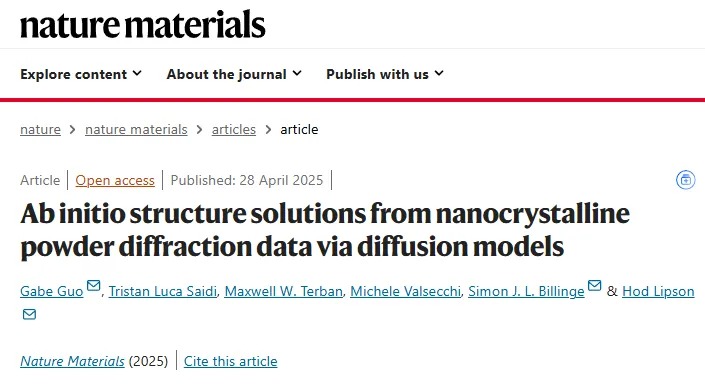 *sourceNature Materials
*authorColumbia University, Stanford University
*paper:
Ten types of light-driven organic crystals were successfully prepared based on machine learning.
Machine learning-driven optimization of the output force in photo-actuated organic crystals
 *sourceDigital Discovery
*authorWaseda University, Japan
*Interpretation:Efficiency increased 73 times! Japanese research team successfully prepared 10 light-driven organic crystals based on machine learning
*paper:
Successfully predicted the electroacoustic interaction of metals, improving efficiency by 5 times.
Accelerating superconductor discovery through tempered deep learning of the electron-phonon spectral function
 *source: npj Computational Materials
*authorUniversity of Florida, University of Tennessee
*paper:
https://www.nature.com/articles/s41524-024-01475-4
Gradient boosting decision tree technology is used to achieve high-precision prediction of the antioxidant properties of RHEAs and RCCAs.
Advancing refractory high entropy alloy development with AI-predictive models for high temperature oxidation resistance
 *sourceScripta Materialia
*authorUniversity of Bordeaux, France; National Institute for Materials Science, Japan; National Tsing Hua University, Taiwan; KU Leuven, Belgium; WEL Institute, Belgium
*paper:
https://doi.org/10.1016/j.scriptamat.2024.116394
By combining local message passing and global attention mechanisms, molecular photoelectric properties can be accurately predicted.
RingFormer: A Ring-Enhanced Graph Transformer for Organic Solar Cell Property Prediction
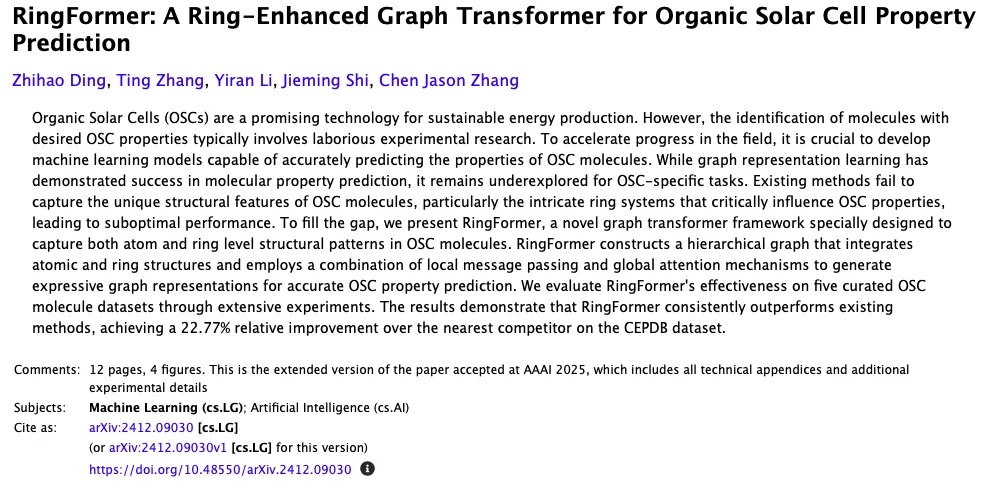 *sourceAAAI 2025
*authorHong Kong Polytechnic University
*paper:
https://doi.org/10.48550/arXiv.2412.09030
An inorganic retrosynthetic planning method has successfully improved the efficiency and accuracy of inorganic material synthesis.
Retrieval-Retro: Retrieval-based Inorganic Retrosynthesis with Expert Knowledge
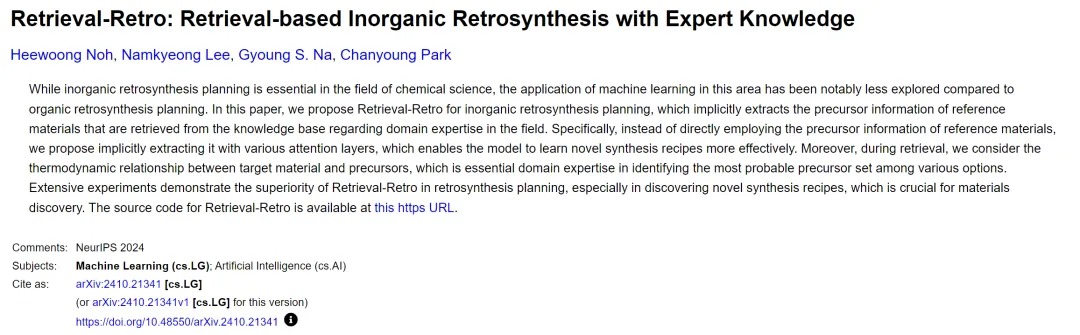 *sourceNeurIPS 2024
*authorKorea Institute of Chemical Technology, Korea Advanced Institute of Science and Technology
*paper:
https://doi.org/10.48550/arXiv.2410.21341
Based on the diffusion model, the structure is generated according to the target spatial group.
A generative model for inorganic materials design
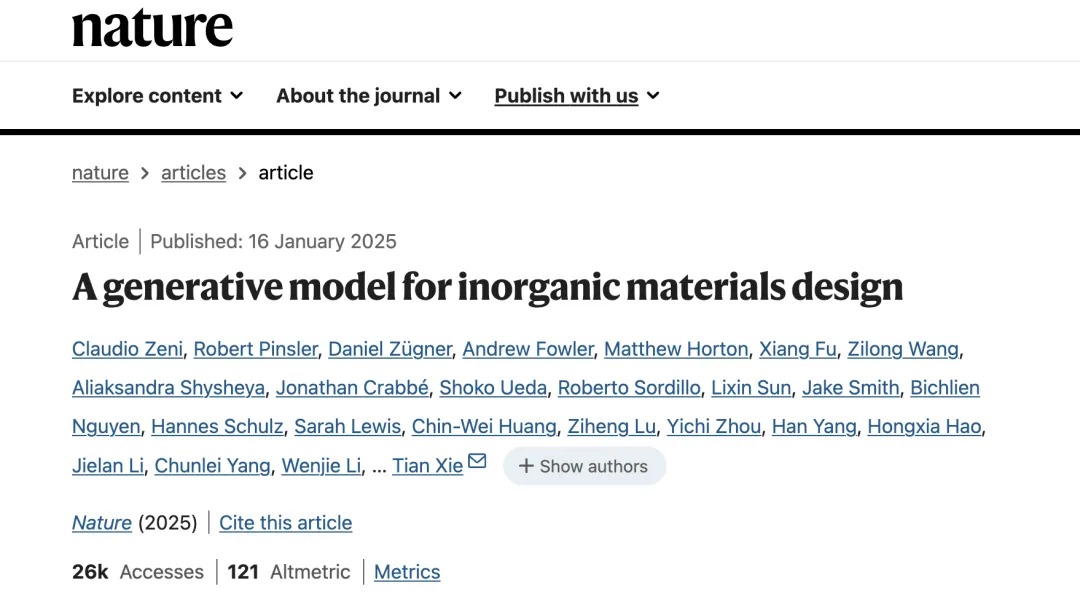 *source:Nature
*author:Microsoft
*paper:
https://www.nature.com/articles/s41586-025-08628-5
AI + Agriculture, Forestry and Animal Husbandry
Covering nearly 15,000 species, setting a new state-of-the-art standard for bioacoustic classification and detection.
Perch 2.0: The Bittern Lesson for Bioacoustics
 *source: arXiv
*author:Google DeepMind, Google Research
*Interpretation:Google DeepMind releases Perch 2.0, covering nearly 15,000 species, setting a new state-of-the-art for bioacoustic classification and detection.
*paper:
https://arxiv.org/abs/2508.04665
For the first time, 219 novel sequence descriptors based on mathematical theories such as Fourier transform and Shannon entropy are incorporated into the feature space.
PlantLncBoost: key features for plant lncRNA identification and significant improvement in accuracy and generalization
 *sourceNew Phytologist
*authorShandong University of Technology, Beijing Forestry University, Guangdong Academy of Agricultural Sciences, University of São Paulo (Brazil), Rosalind Franklin University (UK), and Umeå University (Sweden)
*paper:
AI+ Meteorological Research
The collaborative design problem of "progressive noise scheduling" and "time loss weighting" has been solved.
Elucidated Rolling Diffusion Models for Probabilistic Weather Forecasting
 *sourceNeurIPS 2025
***author:**Nvidia, University of California, San Diego
*paper:
https://doi.org/10.48550/arXiv.2506.20024
A novel potential diffusion model can be used for high-precision probabilistic sub-seasonal to seasonal weather forecasts.
OmniCast: A Masked Latent Diffusion Model for Weather Forecasting Across Time Scales
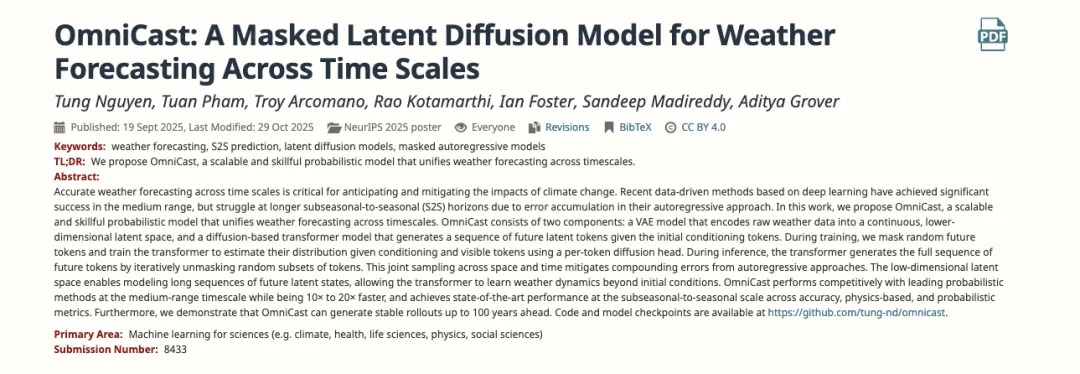 *sourceNeurIPS 2025
*authorUCLA, Argonne National Laboratory
*paper:
The hyperlocal prediction model enables predictions of most heavy rainfall events several days in advance.
Hyperlocal Extreme Rainfall Forecasts in Mumbai: Convolutional Neural Network Transfer Learning-Based Downscaling Approach
 *sourceSSRN
*author:Indian Institute of Technology in Bombay, University of Maryland
*paper:
In just 2 minutes, ACE2 can complete a 4-month seasonal forecast.
Skilful global seasonal predictions from a machine learning weather model trained on reanalysis data
 *source: npj Climate and Atmospheric Science
*author: UK Exeter Hadley Centre Met Office, University of Exeter, Allen Institute for Artificial Intelligence (Ai2)
*Interpretation:Machine Learning vs. Dynamic Models, Ai2's Latest Research: ACE2 Can Complete a 4-Month Seasonal Forecast in Just 2 Minutes
*paper:
A probabilistic machine learning weather forecasting system that combines spherical signal processing with a hidden Markov ensemble framework
FourCastNet 3: A geometric approach to probabilistic machine-learning weather forecasting at scale
 *source: arXiv
*authorNvidia, Lawrence Berkeley National Laboratory, University of California, Berkeley, California Institute of Technology
*paper:
https://arxiv.org/pdf/2507.12144
Highly skilled weather forecasts can be achieved without relying on traditional numerical weather prediction models.
End-to-end data-driven weather prediction
 *source:Nature
*authorUniversity of Cambridge, Turing Institute, University of Toronto, Microsoft Research Centre for Scientific Intelligence, European Centre for Medium-Range Weather Forecasts, British Antarctic Survey, Google DeepMind
*paper:
https://www.nature.com/articles/s41586-025-08897-0
AI + Astronomy
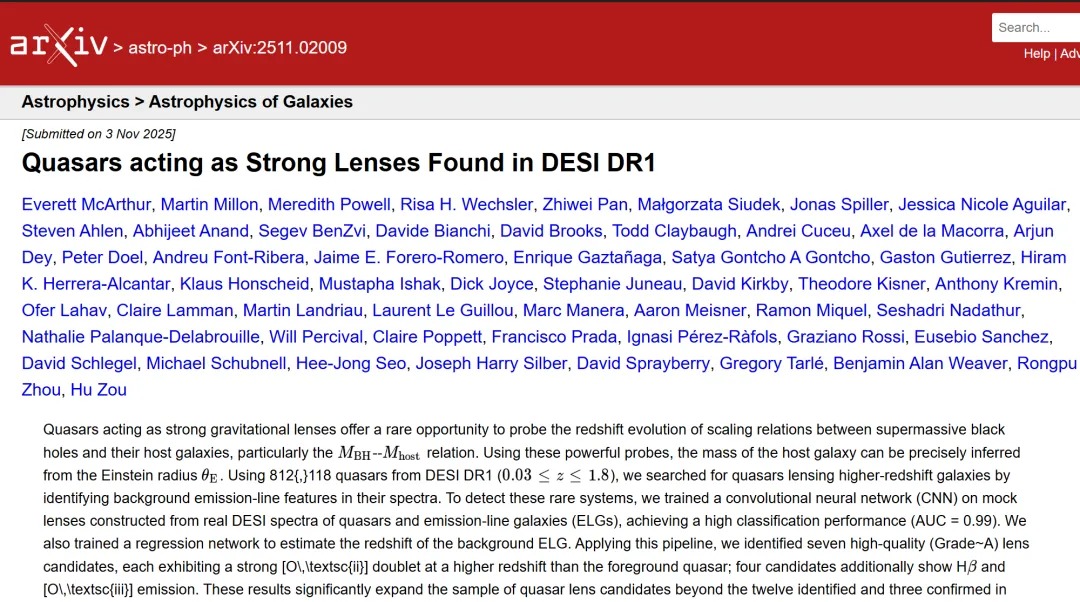
Using convolutional neural networks, seven high-quality quasar lensing candidates were successfully identified.
Quasars acting as Strong Lenses Found in DESI DR1
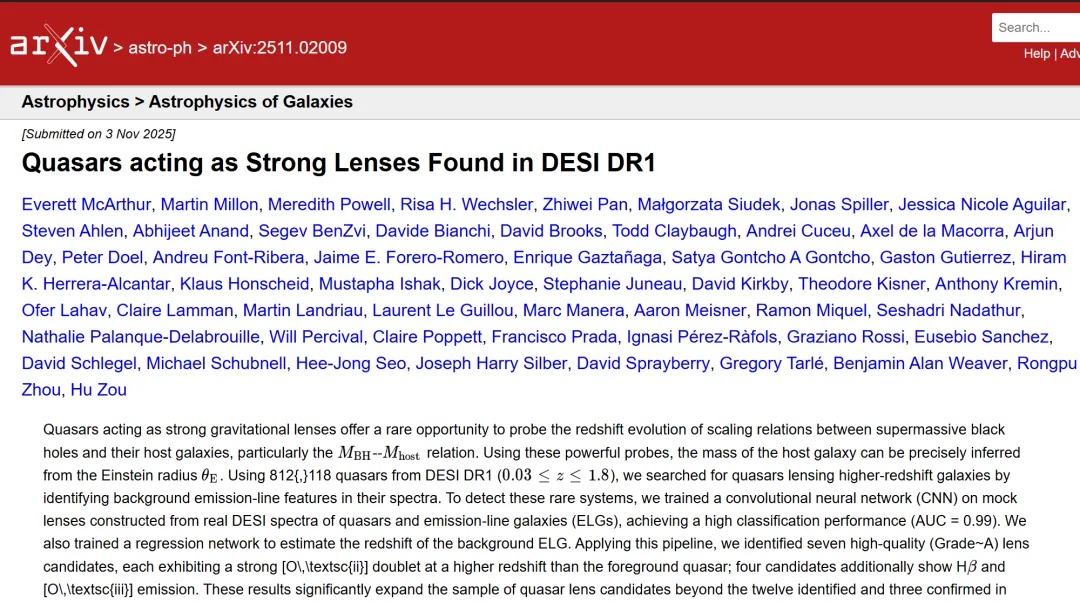 *source: arXiv
*authorStanford University, SLAC National Accelerator Laboratory, Peking University, Brera Observatory of the Italian National Institute for Astrophysics, University College London, University of California, Berkeley
*paper:
https://arxiv.org/abs/2511.02009
AION-1: The first large-scale multimodal foundational model family for astronomy
AION-1: Omnimodal Foundation Model for Astronomical Sciences
 *sourceNeurIPS 2025
*author: University of California, Berkeley, University of Cambridge, University of Oxford, etc.
*paper: