Command Palette
Search for a command to run...
Industrial Explosion Accidents Happen Frequently, and AI Can No Longer Stand It
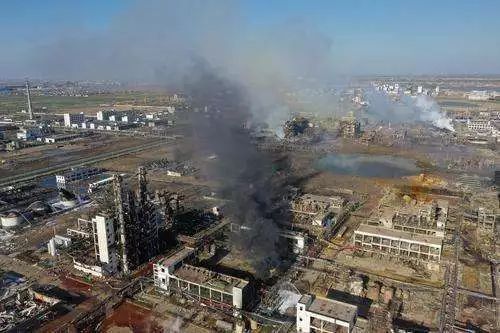
When it comes to industrial production safety issues, the use of machine learning, the Internet of Things, and AI technologies can effectively monitor employee and environmental conditions and reduce the incidence of accidents.
"I'm not surprised that there was an explosion here. Problems, big and small, had already been revealed." said an engineer who has had many contacts with the Xiangshui Ecological Chemical Park.

According to statistics, approximately 178 industrial accidents occur every 15 seconds, and more than 2.78 million people die each year from work-related illnesses or injuries. The U.S. Department of Labor estimates that the annual costs associated with work-related injuries and occupational diseases total $170 billion.
These are shocking figures that reflect the enormous harm done to employees and the high cost to businesses.
If companies do a good job of inspection, environmental management, and accident prevention measures, and workers enhance their safety awareness and standardize operations, can these disasters be avoided?
But there are no ifs.
After the pain comes action to prevent the next accident.
In modern factories, with the help of IoT technology, AI is already trying to change the status quo.

Finding the "culprit" that caused the accident
In order to avoid accidents, we first need to understand the causes of accidents. In some investigations, the following five reasons were found:
- Human Error: Shortcuts, Overconfidence, Lack of Training
- Operating on incomplete information
- Ignoring safety procedures or using equipment improperly
- Working while feeling tired due to discomfort or lack of sleep
- Lack of preparation
 Essentially, these five reasons can be divided into two main categories:
1. Internal factors (worker health, preparation and training)
2. External factors (working conditions, equipment)
To solve security problems, we need to have an accurate grasp of these factors.
Nip the "culprit" of the accident in the bud
We can use computer vision and other technologies combined with the Internet of Things to monitor the running equipment and environment in real time and issue early warnings before accidents occur. The specific application scenarios are as follows:
1. Monitor equipment operation and employee status
By collecting data from sensors on the equipment and creating different scenarios, the algorithm can tell the difference between safe and unsafe situations, thereby handling abnormal situations.
In addition, using IoT sensors to manage the power grid can effectively avoid accidents caused by electricity while being economical and efficient. For example, collecting data on tension, voltage, and Joule effect can prevent overcharging, power outages, and even fires caused by short circuits, helping to process various different signals of the circuit and detect abnormal activities.

2. Monitor environmental changes
If there are triggers for an accident, AI can also detect it in time by monitoring many other data such as carbon monoxide levels, weather conditions, temperature and vibration, and implementing safety measures when the data is abnormal.
If sensors detect a gas leak, increased temperature or unwanted humidity, work can be stopped immediately or at least the floor manager notified.
Heat and smoke sensors have become part of standard safety equipment in all industrial environments. These can complement preventative measures such as infrared cameras. For example, if equipment overheats and starts a fire, it can be seen on an infrared camera and stopped before it causes a major fire.
3. Automate
For some dangerous or tedious situations, the work can be completed by automated equipment or even robots, avoiding workers working in dangerous environments.
The application of robot employees can not only help enterprises avoid the risk of employee injuries, but also improve production efficiency and reduce production costs. Currently, the robots that have been applied in the chemical industry include fire-fighting robots, inspection robots, welding robots, etc.

If the Xiangshui and Kunshan factories used more robots, more workers would survive.
AI can help prevent accidents, but it’s time to act
In Europe, many companies have already entered the stage of smart parks, but we still have a long way to go. Whether it is environmental protection, employee training, or the popularization of modern technology, we need to learn.
Nation Waste, a commercial waste management company based in Houston, has partnered with IBM to use wearable sensor-based solutions to monitor the work environment, detect existing accidents and potential hazards, and provide timely feedback to ensure worker safety.
Smartvid.io, a media management platform with intelligent text and image recognition, uses machine learning to automatically scan images and videos taken from construction sites and flag safety issues. It collects data from field workers’ phones and project management software, uses machine learning to analyze and classify safety issues, and ensures that safety professionals don’t miss any potential risks on the job site.

Clearpath Robotics, a mobile R&D robot supplier, provides robots for work sites hoping to automate all the dirtiest and deadliest jobs. They offer a range of water, air and ground robots that can navigate tight and unsafe environments while collecting, tracking and analyzing data about the current environment. They use machine learning to guide these vehicles to specific locations and analyze image data to look for possible defects.

Regarding the two recent explosions, we learned that there had been many hidden dangers before the accidents, but they had not been resolved in a timely and reasonable manner until the moment of the explosion, when it was too late to regret.
Although technology has helped factories avoid safety accidents, it has not yet been popularized in domestic factories.
To take a step back, even if it has become popular, if managers are blinded by something, even the most accurate and intelligent detection and warning will probably be ignored by them.
Perhaps, what we lack is not technology, but conscience.