Command Palette
Search for a command to run...
Huawei's Romantic and Pragmatic self-developed Road: Starting With Emotion and Ending With Intelligence
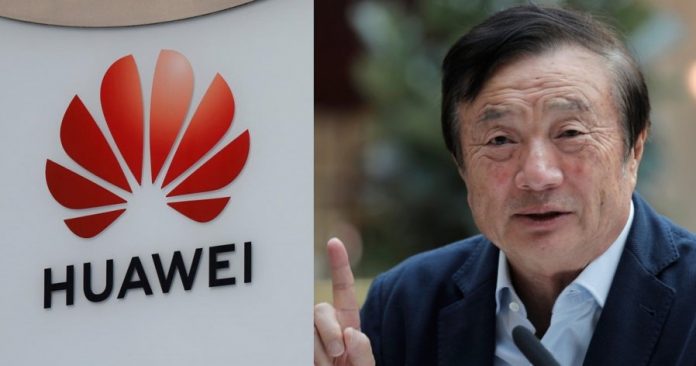
After experiencing a series of storms such as the "breakup" between Google and ARM, can Huawei successfully survive? Can the self-developed operating system and chips help Huawei out in time? We are waiting for good news.
In the past week, news about Huawei has been coming one after another, attracting everyone's attention, and many people are also worried about Huawei.
First, on May 16, the U.S. Department of Commerce’s Bureau of Industry and Security (BIS) included Huawei and its 68 non-U.S. subsidiaries in the Entity List(This list is actually a "blacklist". Once included in this list, you will lose trade opportunities in the United States and will be subject to technological blockades and international supply chain isolation);

Then on May 23, Masayoshi Son’s chip design companyARM suspends all business dealings with Huawei and its chip company HiSilicon...
Really**Before one crisis is over, another crisis arises.**At this moment, Huawei is facing extremely severe challenges. However, Huawei has remained calm and responded firmly:We can design independently without worrying about out-of-stock.
Huawei is prepared for danger in times of peace
In fact, as early as 2012, Ren Zhengfei had already made preparations for a rainy day.
At the "Noah's Ark Laboratory" expert symposium in September 2012, he told Chinese and foreign experts: "We are now developing terminal operating systems for strategic considerations. If they suddenly cut off our food supply, and we can no longer use the Android system or the Windows Phone 8 system, will we be foolish?"
Huawei has always been prepared for danger.We have been preparing for the worst and being separated from the United States.
In the past ten years, Huawei’s R&D investment has been close toRMB 400 billion, of which about 40% was invested in chip research and development, that is,160 billionAround RMB.

Everyone has heard about Huawei's high investment in R&D. Last year, they invested**101.5 billion yuan,**Ranked fourth in the world.
After huge investment and hard work, now is probably the time to reap the rewards.
EMUI: Based on Android, emotional upgrade
Friends who use Huawei phones know that Huawei phones are now equipped with their own systemEMUIIt is an emotional operating system built and upgraded by Huawei based on Android 9.0.**Artificial intelligence operating system.**It was originally developed to provide users with a better experience.

Therefore, HuaweiCBG Terminal R&D Group****TeamDecided to solve this problem and provide a better user experience.
After analysis, they found that there are four reasons behind the freeze and freeze:
1. The Android system is loosely managed, and there are no rules for the use of resources by applications;
2. Lack of coordination of system hardware resources;
3. App expansion is serious, dragging down the system operation speed;
4. The cumulative effect of storage fragmentation. Storage fragmentation becomes increasingly serious with the use time, the data reading and writing speed decreases significantly, and the system freezes frequently and aggravates.
For the first three questions, the team**With artificial intelligence as the core,**Through AI algorithms, the optimal configuration of application requirements and hardware resources is achieved, and idle resources are organized and recycled in a timely and reasonable manner.
As for the last problem of storage fragmentation, the team decided to use**F2FS (Flash Friendly File System)**The file system replaces the Android native file system.

But this is not enough. In 2016, as mobile games gradually became popular in China, the number of complaints from Huawei phone users about their gaming experience also increased dramatically.
In response to this, the team spent more than a year tackling the problem of mobile phone graphics processing performance, and released the first 3D ...GPU TurboHonor Play uses NVIDIA GeForce (a graphics acceleration technology that combines software and hardware to improve the performance of a mobile phone's GPU). In terms of frame rate, jitter rate, frame drops, power consumption and other hard indicators, Honor beats other mobile phones from other companies.

The new versions of Android have also gradually absorbed the achievements made by the Huawei team. Therefore, Huawei has also made great contributions to the development and growth of Android, but now it has been "broken up" by Android, and the plot is not beautiful.
Huawei's independent OS: romantic and pragmatic
It turns out that it is always wise to plan ahead.
Since 2012, Huawei has been planning its own operating system to replace the Android system. Hongmeng, will be regularized.
Why is it named "Hongmeng"? What does Hongmeng mean?**The ancient times in Chinese mythology and legends.**Legend has it that before Pangu created the world on Mount Kunlun, the world was a mass of chaotic energy, which was called Hongmeng. Zhang Boduan, the Purple Sun Master of the Northern Song Dynasty, wrote in a poem: "When Hongmeng was first created, it had no nature. To break the stubborn darkness, one must understand emptiness."

In fact, it is not just "Hongmeng". Huawei also has a series of R&D product names that come from**Chinese classical culture.**Huawei's self-developed mobile phone chip "Kirin", baseband chip "Balong", server chip "Kunpeng", artificial intelligence chip "Ascend", recommendation system "Fuxi"...Combining ancient mythology with new technology is probably Huawei's ultimate romance.
Huawei understands romance, but is also pragmatic. Tens of thousands of R&D engineers,Huawei OS, which took 7 years to developIt’s finally coming out.
According to a message on Weibo, this operating system was developed by an operating system team led by Professor Chen Haibo of Shanghai Jiaotong University. The current candidate name is "Hongmeng". It is also called "Kirin OS" on the Internet, and Huawei calls it "Hongmeng" internally. Project Z.

Huawei Consumer Business CEO Richard Yu said that Huawei's OS has connected mobile phones, computers, tablets, TVs, cars, and smart wearables into one operating system, and is compatible with all Android apps and all Web apps. Moreover, if Android apps are recompiled on Huawei OS,The operating performance will be improved over 60%.
However, there is still some distance to go before Huawei OS is completed.**It still requires third parties to develop applications for it.**This is relatively easy in China, but it is still difficult abroad. In other words, even if many of Google's services are blocked, this operating system still has a chance in China, but it is hard to say in the Western market.
When Ren Zhengfei was interviewed by CCTV reporters, he did not reveal much information about the operating system.
 He said he was not sure where the system was used within Huawei. When asked whether the system would be open source to attract developers, he replied: "It is not difficult to make an operating system.**The biggest difficulty is the ecology.**Building an ecosystem is a big thing, so take your time."
It is difficult to develop an operating system from scratch. But at Huawei, we have seen that after years of accumulation of technology and talent,It has also become possible to develop an independent operating system from the bottom up using an open source kernel.
Although there are still many difficulties in establishing the ecosystem, we believe that these are just a matter of time. We need to be patient and give domestically developed operating systems time.
Huawei is not the first, nor will it be the last, to develop its own operating system.
Other domestically developed operating systems
In fact, there are many operating system companies in China, such as Zhongbiao Kylin, Yinhe Kylin, Puhua, Zhongke Fangde, Deepin, etc. However, these operating systems are secondary development based on Linux. However, there are also some with a relatively high degree of independent research and development, such as those with a background in aerospace.Yuanxin, is one.
Meta-heart systemIt made its debut at Cyber Security Week in December 2014. It uses an operating style similar to iOS, but it has a parallel relationship with Android and iOS. The entire hardware driver, system framework, security mechanism, and application framework all have their own source code.

History always repeats itself, waiting for good news from Huawei
In fact, if we look back at the development history of ARM, we will find thatHistory always repeats itself surprisingly well.
ARM (then Acorn) was rejected by Intel and failed to obtain the design data and samples of Intel 80286, so it decided to do it itself and make its own chips. Then there was ARM, which is irreplaceable today.
Now ARM has also joined the camp of rejecting Huawei. Will Huawei repeat ARM's history in this challenge?