Command Palette
Search for a command to run...
AI Independently Developed Flu Vaccine, Recruiting 240 Volunteers

Immunization is an important measure and means to reduce the harm of influenza. However, due to the long vaccine development cycle, influenza vaccines need to be newly developed to target virus mutations. Therefore, during every influenza outbreak season, influenza vaccines are often in short supply. Recently, the first influenza vaccine developed by artificial intelligence was launched. The introduction of AI technology not only speeds up the development process, but also improves the effectiveness of the vaccine.
Flu is familiar to everyone. Every time the season changes, many people are "unable to escape". However, precisely because it is relatively common, its harmfulness is often ignored by us.
In fact, influenza is extremely deadly.
 According to news reports, 180 people have been confirmed infected with the H1N1 influenza virus across Myanmar since June this year, including 31 deaths.
Australia has also recently experienced a large-scale influenza outbreak, with more than 21,000 people confirmed to have been infected with the virus in New South Wales alone, and local hospitals and clinics are almost full.
Let us first get to know the influenza which is so lethal.
Flu is not just a common cold
influenza(Influenza for short) is an acute respiratory infection caused by influenza virus. It is also a highly contagious and rapidly spreading disease.
**Influenza viruses can be divided into three types: A (A), B (B), and C (C).**Among them, the type A virus often undergoes antigenic mutations, is highly contagious, spreads rapidly, and is very likely to become a large-scale epidemic. The global outbreak of type A H1N1 (also known as swine flu) in 2009 is a type of type A influenza.

However, influenza has a more rapid onset and progression than the common cold, and has more severe systemic symptoms.In severe cases, it can even lead to death.According to the World Health Organization, every year650,000People die from respiratory illnesses related to seasonal influenza. The mortality rate for influenza is usually 0.01%, but the mortality rate for the new influenza virus is as high as 6.77%.
The common cold is relatively easy to prevent.As for flu prevention, doctors suggest that the best way is to get a flu vaccine before the flu season.
Flu vaccines are long and difficult to develop, and are often in short supply.
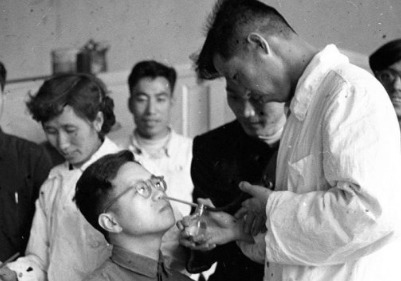
**The development of influenza vaccines is not easy. They were first developed by the US military in 1940 and first marketed in 1945.**It was put into large-scale use in 1958.
After the founding of New China, the country began to attach great importance to the research, production and vaccination of vaccines, and the research and development level made great progress at the end of the 20th century.
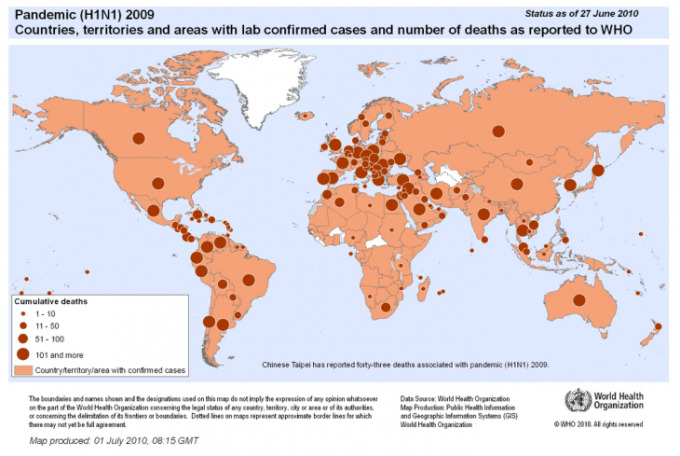
Despite the continuous improvement of R&D capabilities,Flu vaccines are often in short supply. And every time the flu season comes, many countries around the world will experience a shortage of flu vaccines.

We have written in the article 《Promise you health and longevity, machine learning makes pharmaceuticals smarter》As mentioned in the 2011 issue of the Journal of the American Medical Association, drug development is long, costly, and labor-intensive. On average, it takes 10 years and $2.5 billion to develop a drug.
Vaccines are no exception.**Vaccine development is a long, complex and costly process.**Usually, a vaccine goes from research and development to market.At least 5 years or even more than 20 yearsThe long research and development process includes understanding the disease and its antigens, evaluating the safety of the antigens and selecting the best candidate vaccine, recruiting people for clinical trials, registration and approval, and production.

The first AI-developed flu vaccine is now available to help with flu season
Now, with the help of artificial intelligence technology, the research and development of influenza vaccines has been greatly accelerated.
According to a report by the British media The Daily Telegraph on July 3, scientists at Flinders University in Australia have developed the world's first AI-designed drug, a new influenza vaccine designed by artificial intelligence called "turbo-charged."
 **This is the first time in history that artificial intelligence technology has been used to develop a flu vaccine.**It is reported that the vaccine has entered the human trial stage and the trial is being carried out in the United States. Nikolay Petrovsky, the chief researcher of the "turbo-charged" vaccine and a professor of medicine at Flinders University in Australia, said,The use of artificial intelligence has accelerated the vaccine discovery process, not only greatly reducing costs but also making the developed vaccines more effective.
Originally, large companies like GSK (GlaxoSmithKline, the world's third largest pharmaceutical, biological and healthcare company headquartered in London, UK) needed to screen millions of compounds during development, with thousands of people working continuously.5 yearsThe vaccine was developed by a small research team led by Petrovsky using only aboutTwo yearsTime has developed.

These are based on**Two intelligent algorithms.**The research team used a "Sam"(Sam)'s computer program was taught to learn to recognize the successes and failures of existing vaccine development to determine whether the vaccine is effective against influenza.
At the same time, they created another set of "mad****chemist(Mad Chemist)'s intelligent program is capable of creating trillions of virtual compounds.
The two sets of algorithms work together to come up with effective vaccine options.
Professor Petrovsky also said that the advantage of using artificial intelligence is that it can not only speed up the research and development process, but also find the most effective compounds.AI uses artificial neural networks to mimic the human brain, recognize patterns and adapt to changes. It can receive and process more information than the human brain.
The study, funded by the National Institute of Allergy and Infectious Diseases, is currently recruiting about 240 volunteers and will test their immune response to the vaccine.
If AI vaccine comes on the market, will you take it?
The advent of this new influenza vaccine is of great significance for preventing and treating health problems caused by seasonal influenza.
Artificial intelligence technology has been gradually used in clinical decision-making and applied to various stages of drug design, but it is currently only an auxiliary function. However, the successful development of "turbo-charged" vaccines,It has broken through people's understanding of artificial intelligence in drug development.

The research team said that if the "turbo-charged" vaccine can overcome all the obstacles in the future, it can be launched on the market in about 3 years. Professor Petrovsky also predicted thatIn 20 years, AI will be routinely used in drug development.
Is "AI pharmaceutical manufacturing" really here? We expect AI to usher in an era of low cost and high effectiveness. However, if a vaccine developed by AI is available on the market, will you take it?
-- over--