Command Palette
Search for a command to run...
Online Tutorial | Tianyuandong's Team Open-Sources Programming Model Flint: 39.8B Parameters, Activating Only 2.5B Per Token

From completing a single function to generating complete projects from natural language, code models are continuously lowering the barrier to software development. However, real software development involves more than just writing runnable code; understanding existing project structures, locating bugs, modifying multiple files, running tests, and adjusting based on error messages—these steps often require models to have more comprehensive code understanding and task execution capabilities. Generating code is only the first step; enabling AI to truly participate in the development workflow is the more challenging part.
Flint, launched by Recursive, is an open-source language model designed for Coding Agent scenarios, capable of understanding codebases, fixing bugs, implementing new features, writing tests, and supporting multi-turn reasoning and tool calling. Flint adopts a Decoder-only Mixture-of-Experts (MoE) architecture with a total parameter count of 39.8B, but activates approximately 2.5B parameters per token. In its MoE layers, each token selects 6 out of 256 routing experts, while also using 1 always-active shared expert. This design allows the model to maintain a large total parameter scale while reducing the number of parameters invoked during inference for each token.
This is also the core concept behind the computational efficiency of the MoE architecture: through a routing mechanism, appropriate experts are selected to participate in computation based on the current input, maintaining model capacity while reducing the number of parameters activated per token. For Agent tasks that require continuous code analysis, reasoning, and tool calling, this design helps control computational overhead during the inference phase.
In terms of actual capabilities, Flint supports multi-turn dialogue, reasoning, and tool calling. According to the evaluation results published by Recursive, the model achieved 89.7% on SWE-bench Pro v2, 74.2% on SWE-bench Verified, and 54.9% on Terminal-Bench 2.1, demonstrating its performance in software engineering tasks and terminal operation scenarios. This means that Flint’s positioning is not simply to help you complete the next line of code, but to attempt to become an underlying model for Coding Agents that can understand development tasks, call tools, and continuously drive problem-solving.
The HyperAI tutorial section has now launched "Flint: A Mixture-of-Experts Large Language Model for Coding Agents." Users can learn about the model loading and inference process through the tutorial and experience its code generation, reasoning, and tool-calling capabilities.
From generating a piece of code to participating in solving a complete development task, Coding Agents are pushing AI’s role from code assistant further towards development collaborator.
Run online:
More online tutorials:
Demo Execution
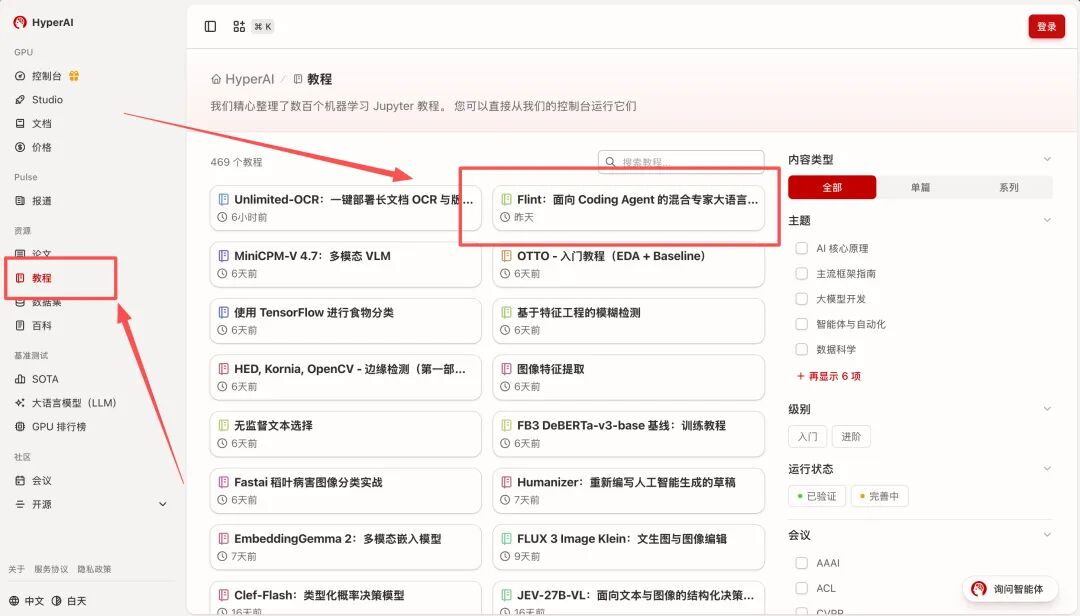
- After entering the hyper.ai homepage, select the "Tutorials" page, or click "View More Tutorials," select "Flint: A Mixture-of-Experts Large Language Model for Coding Agents," and click "Run This Tutorial."

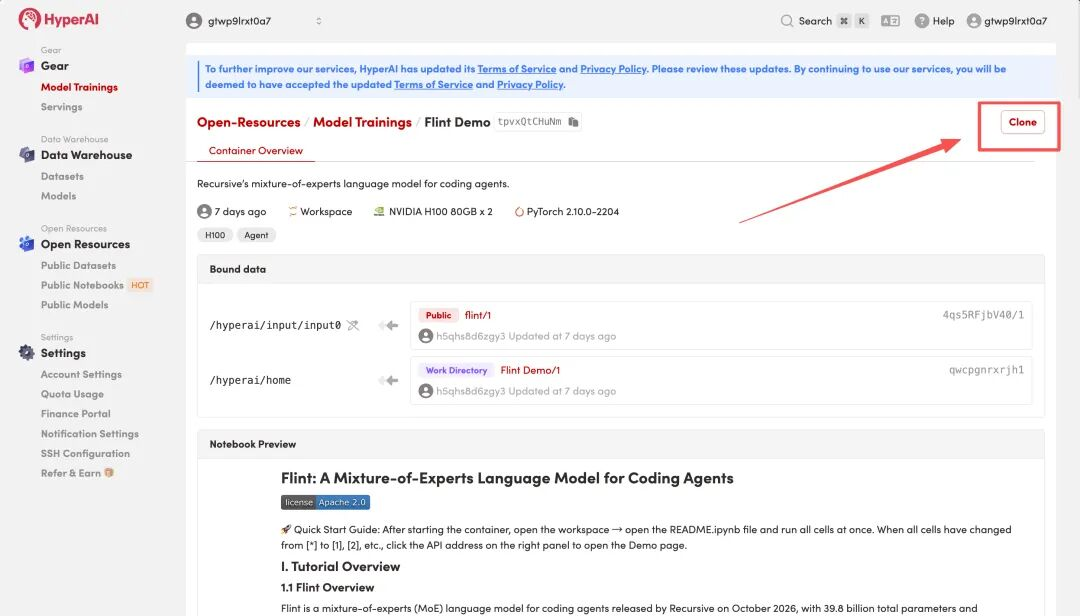
- After the page redirects, click "Clone" in the top right corner to clone this tutorial to your own container.
Note: The top right corner of the page supports language switching, currently offering Chinese and English. This tutorial article uses English as an example for step demonstration.
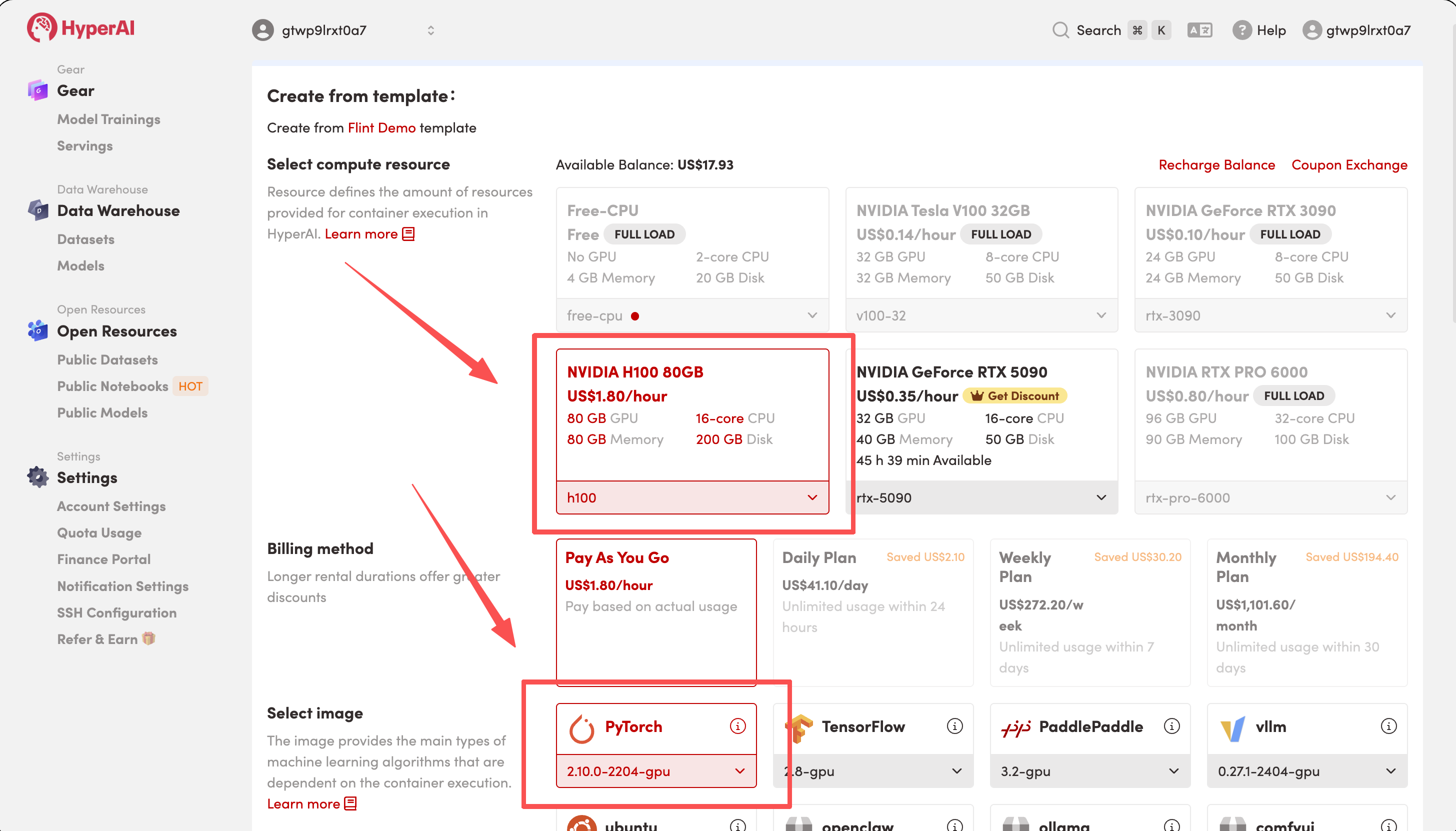
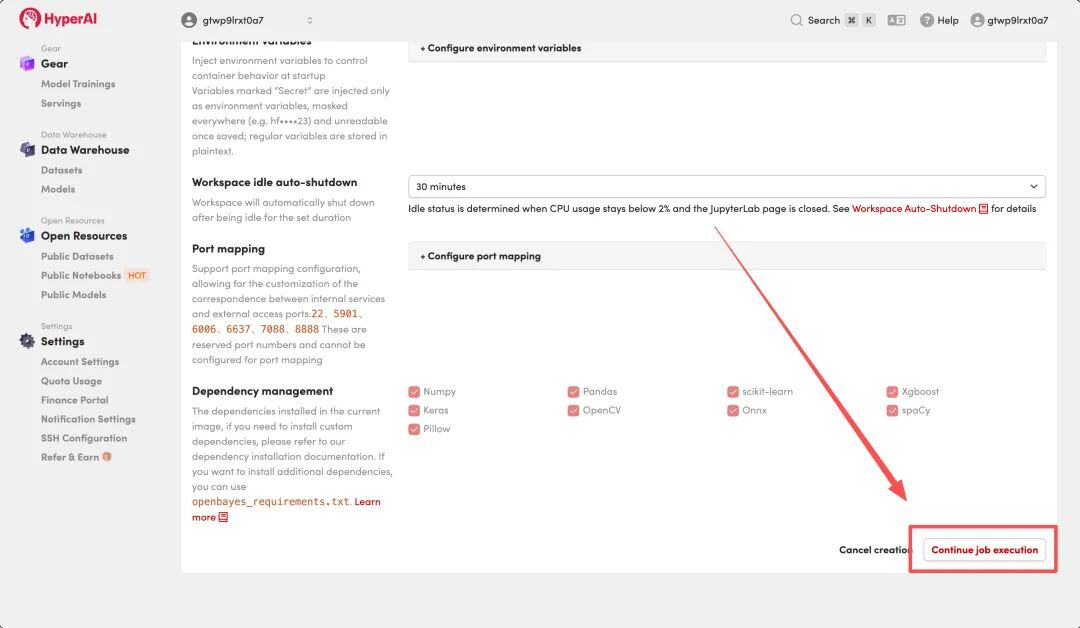
- Select "NVIDIA H100 x2" and the corresponding image, then click "Continue job execution."
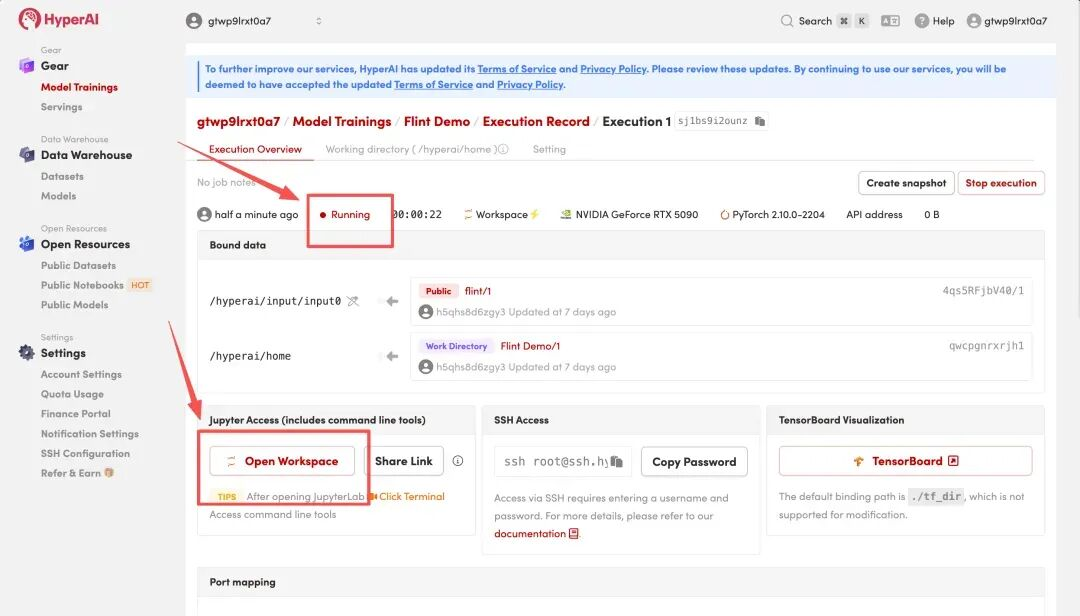
- Wait for resource allocation. Once the status changes to "Running," click "Open Workspace" to enter the Jupyter Workspace.
Demo Display
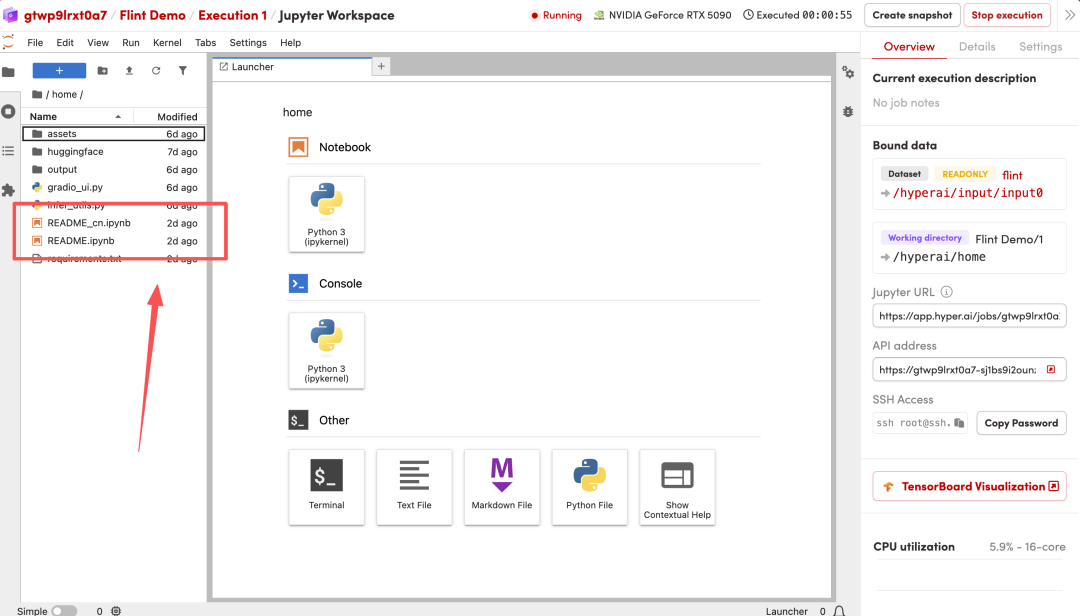
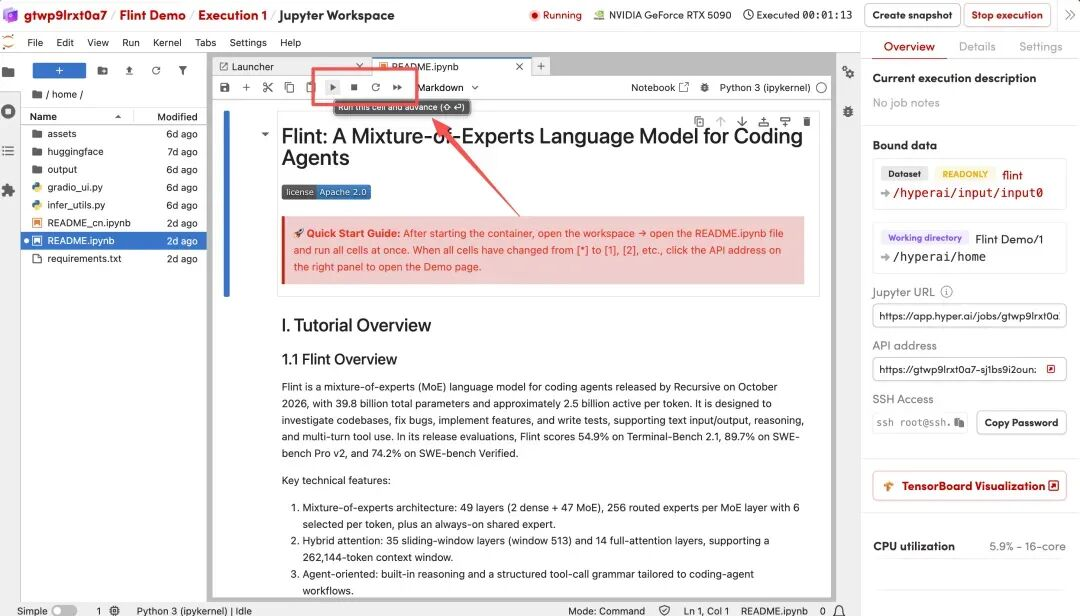
- After the page redirects, click the README file on the left. Once inside, click "Run" at the top.
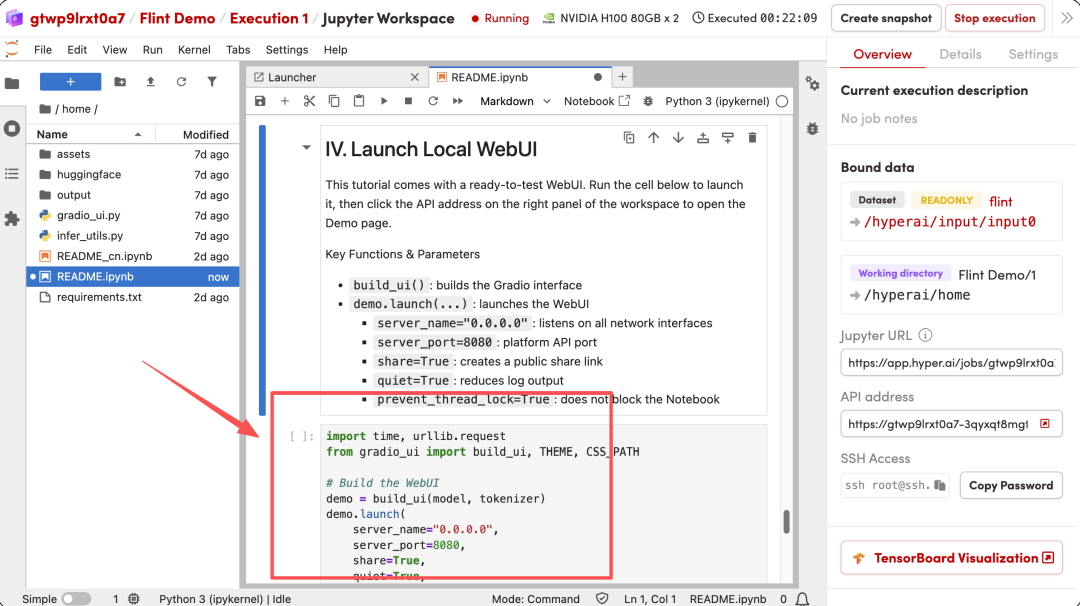
- After execution is complete, open a new terminal and execute the following command to start Open WebUI.
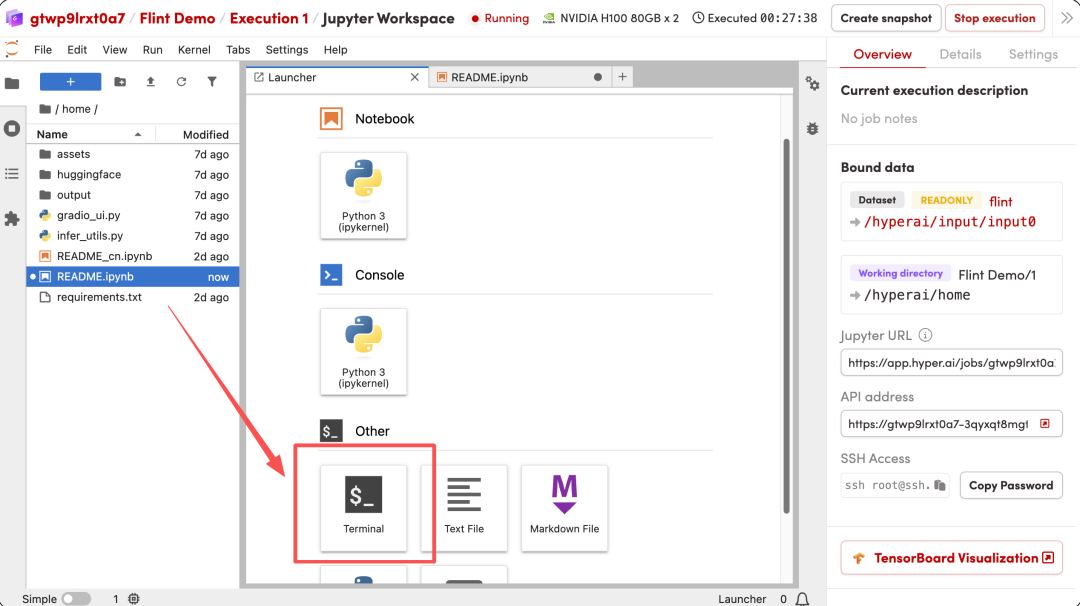
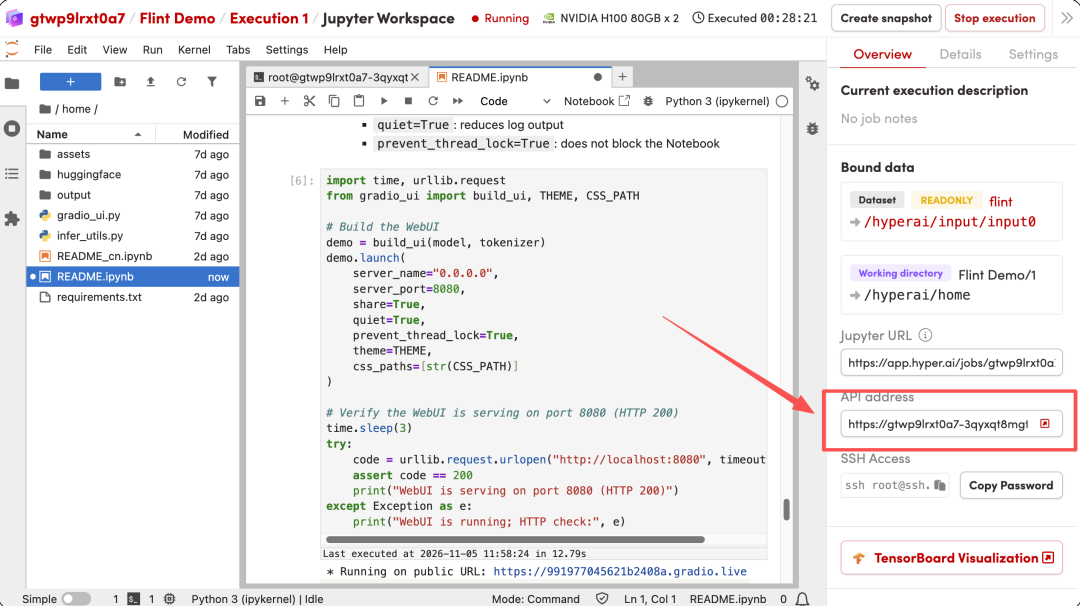
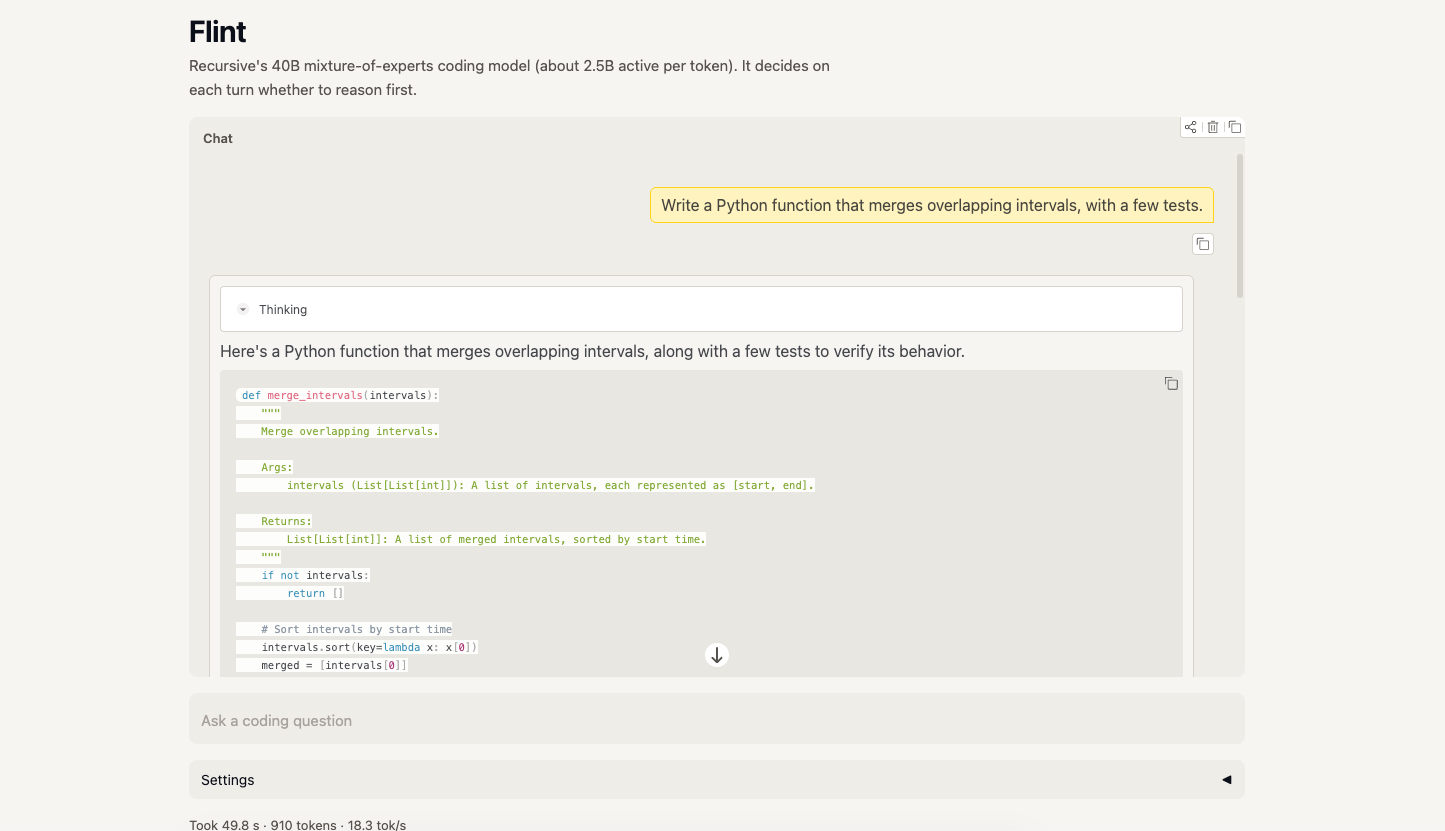
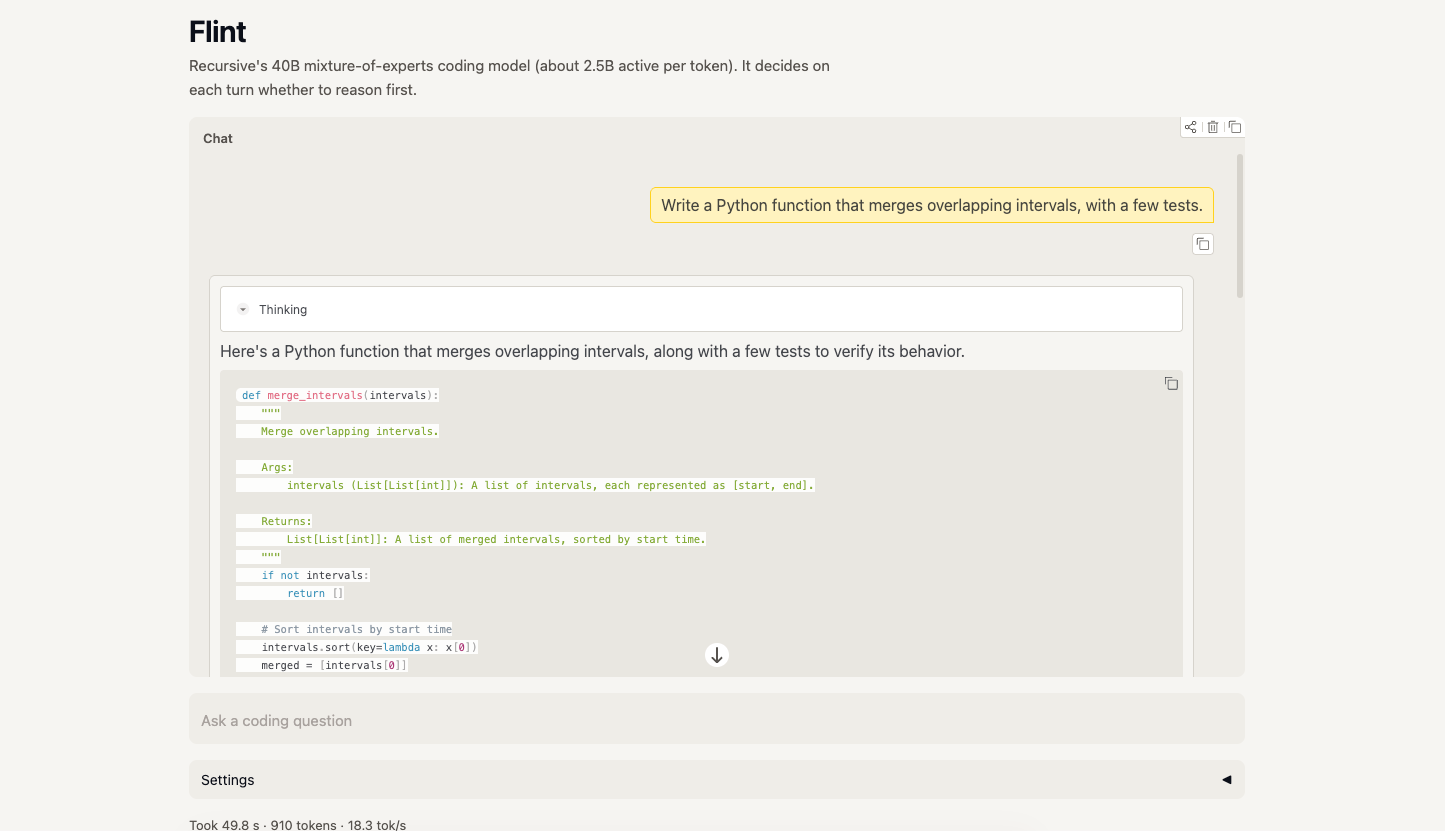
- After startup, click the API address on the right to access the Open WebUI interface in your browser.