Command Palette
Search for a command to run...
NVIDIA Officially Announced: CUDA Will No Longer Support macOS
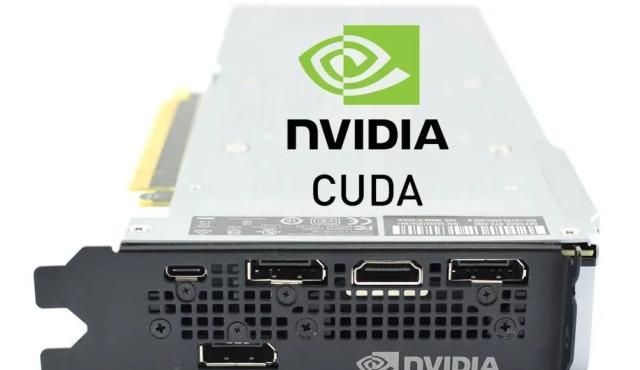
Perhaps, we will never see new Apple computers equipped with Nvidia graphics cards again. Nvidia announced in a recent document that it will stop supporting CUDA drivers for macOS. This means that the last bond in the cooperation between Apple and Nvidia will also be broken.
The cooperation between NVIDIA and Apple may be coming to an end. In a recent document released by NVIDIA, it was announced thatDriver support for Apple's macOS will be discontinued, and CUDA 10.2 will be the last CUDA application to support macOS.

CUDA is NVIDIA's dedicated parallel computing platform.It is precisely because of its existence that CUDA can enable your GPU-equipped computer to obtain the basic environment for machine learning. CUDA also makesAdobe PremiereandAfterEffectsPrograms such as NVIDIA GeForce can achieve better performance, and even better performance in some large games.
However, all the Mac products launched by Apple in recent years are equipped withAMD GPUsSince AMD graphics cards do not support CUDA, some machine learning and video professionals who rely on the macOS platform have encountered great obstacles.

Nvidia and Apple: A decade of love and hate
This last vestige of collaboration in Nvidia's long-standing relationship with Apple may soon come to an end.

Nvidia and Apple's relationship hasn't always been that bad over the past decade.
Macbook Pro has historically used Nvidia's discrete graphics cards, and has used them longer than AMD: starting with the 2007 Macbook Pro 8600M GT and ending with the 2013 Macbook Pro GT 750M series.
Apple's official statement is that the reason why it started working with AMD is because AMD's power consumption is lower.
But another important reason is that Apple and NVIDIA have differences in the general computing standards for graphics cards. Apple developed and promoted OpenCL and wanted to promote it to become an industry standard.
NVIDIA has been promoting its own CUDA and is quite closed in terms of drivers. NVIDIA, which aspires to make nuclear weapons, is increasingly focused on research in machine learning.
After that,Apple only uses AMD GPUs in its laptops and desktopsEven though Nvidia's graphics cards had better performance and more advanced technology, Apple never considered it, and the relationship between the two companies further deteriorated.
Nvidia: Report! Apple was the first to do it!
At the end of last year, ApplemacOS 10.14 MojaveIn the latest version, Nvidia quietly stopped supporting CUDA, forcing Adobe Creative Suite and other software that supports CUDA hardware acceleration to remind users not to enable this feature. So, perhaps because of Apple's "ruthlessness", Nvidia also made this choice.

In addition, this approach**Perhaps it will force professional users to choose between Mac and PC (or AMD and NVIDIA)**After all, the overall performance of AMD GPUs in the Mac series is still lagging behind NVIDIA. Even the Radeon Pro Vega II equipped with the current most powerful Mac Pro is still based on the previous generation GCN architecture, not the new era RDNA architecture.
Considering the support for new technologies, many loyal Apple users will not completely lose confidence in the MacBook, but will also consider buying a PC.
-- over--