Command Palette
Search for a command to run...
Google Releases TabFM-1.0.0-PyTorch: a zero-shot Prediction Model Designed for Mixed Tabular Data; NVIDIA open-sources Multinational Synthetic Character Dataset, With Tens of Millions of Characters available.

TabFM, released by Google Research on June 30, 2026, is a foundational model focused on processing structured tabular data. Designed for classification and regression tasks involving mixed numerical and categorical columns, it provides a new paradigm for tabular prediction workflows in both enterprise and research fields. TabFM innovatively reshapes tabular prediction as a context-learning problem.**It eliminates the reliance on human intervention in traditional supervised models, generating prediction results in a single forward propagation, thus completely eliminating the need for tedious weight fine-tuning, hyperparameter search, and feature engineering.**Thanks to its unique architecture, TabFM has significantly outperformed several powerful traditional supervised baseline models with zero-sample configurations that require no tuning, greatly improving data processing efficiency.
The HyperAI website now features "tabfm-1.0.0-pytorch: Zero-Shot Table-Based Model Benchmark," so give it a try!
Online use:https://go.hyper.ai/acMZd
Welcome to visit our official website for more information:
A quick overview of hyper.ai's official website updates from July 11th to July 17th:
* High-quality public datasets: 8
* A selection of high-quality tutorials: 7
* Community article analysis: 1 article
* Popular encyclopedia entries: 5
Visit the official website:hyper.ai
Selected public datasets
1. Nemotron-Personas-India Indian Synthetic Person Dataset
Nemotron-Personas-India is a synthetic character dataset for India released by NVIDIA. It aims to improve the diversity of synthetic data, reduce model bias, and prevent model collapse by reflecting the real-world geographical and demographic distribution of India. The dataset contains 3 million records, each with 7 virtual character roles, totaling approximately 21 million character descriptions and approximately 7.7 billion tokens.
* Use online:https://go.hyper.ai/CBnWF
2. Nemotron-Personas-Korea Korean Synthetic Human Dataset
Nemotron-Personas-Korea is a dataset of synthetic human characters released by NVIDIA, designed to comprehensively reflect the diversity and characteristics of the South Korean population. The dataset contains 1 million records, each with 7 virtual human characters, totaling approximately 7 million character descriptions and approximately 1.7 billion tokens, of which 1 billion tokens are related to the characters. The data covers 17 metropolitan autonomous regions and 252 cities and districts in South Korea, containing 209,167 unique names.
* Use online:https://go.hyper.ai/FDU8d
3. Nemotron-Personas-Japan (Japanese synthetic character dataset)
Nemotron-Personas-Japan is a dataset of synthetic human characters released by NVIDIA. It aims to showcase the diversity and richness of Japan's population and is primarily used to support the development of sovereign AI systems, training large language models, and reducing bias in synthetic data. The dataset contains 1 million records, each with 6 virtual human characters, totaling approximately 6 million character descriptions. The data covers all 47 prefectures of Japan, over 1,500 occupational categories, and over 950,000 unique names.
* Use online:https://go.hyper.ai/5vLQd
4. Nemotron-Personas-Vietnam (Vietnam Synthetic Person Dataset)
Nemotron-Personas-Vietnam is a dataset of synthetic human characters released by NVIDIA, designed to comprehensively reflect the diversity and characteristics of the Vietnamese population. The dataset contains 100,000 records, each with six virtual human characters, totaling approximately 600,000 character descriptions and approximately 118 million tokens, of which 52 million tokens are character-related information. The data covers six centrally administered municipalities and provinces in Vietnam and includes approximately 13,000 unique names.
* Use online:https://go.hyper.ai/6BfkJ
5. Nemotron-Personas-Belgium (Belgian synthetic human dataset)
Nemotron-Personas-Belgium is a dataset of synthetic characters from Belgium, released by NVIDIA in collaboration with Pleias and KU Leuven. It aims to comprehensively reflect the diversity and characteristics of the Belgian population. The dataset contains 1.2 million records, each with 6 virtual characters, totaling approximately 1.8 million character descriptions. It covers 581 Belgian municipalities and 3 administrative districts, containing approximately 260,000 unique names. It is available in four languages: Dutch, French, German, and English, with each language version containing 300,000 records.
* Use online:https://go.hyper.ai/tvwbu
6. Nemotron-Personas-Singapore Synthetic Person Dataset
Nemotron-Personas-Singapore is a dataset of synthetic characters released by NVIDIA, designed to reflect the real-world population, geography, and personality traits of Singapore. The dataset contains 148,000 records, each with six virtual character profiles, totaling 888,000 character descriptions. The data covers 55 planning districts in Singapore and includes approximately 146,000 unique names.
* Use online:https://go.hyper.ai/wFJAn
7. Nemotron-Pretraining-Code-v3 Programming Code Pretraining Dataset
Nemotron-Pretraining-Code-v3 is one of the code pre-training datasets created by NVIDIA for the Nemotron 3 series of large language models, designed to enhance the code understanding, generation, completion, and reasoning capabilities of LLM.
* Use online:https://go.hyper.ai/8IZbu
8. Nemotron-Personas-El-Salvador Salvador Synthetic Human Dataset
Nemotron-Personas-El Salvador is a synthetic El Salvadorian persona dataset released by NVIDIA. This dataset aims to comprehensively reflect the diversity and characteristics of El Salvador's population. It contains 148,000 records, totaling approximately 1 million persona descriptions. The data covers 14 provinces and 44 cities in El Salvador and includes approximately 144,000 unique names.
* Use online:https://go.hyper.ai/44dxL
Selected Public Tutorials
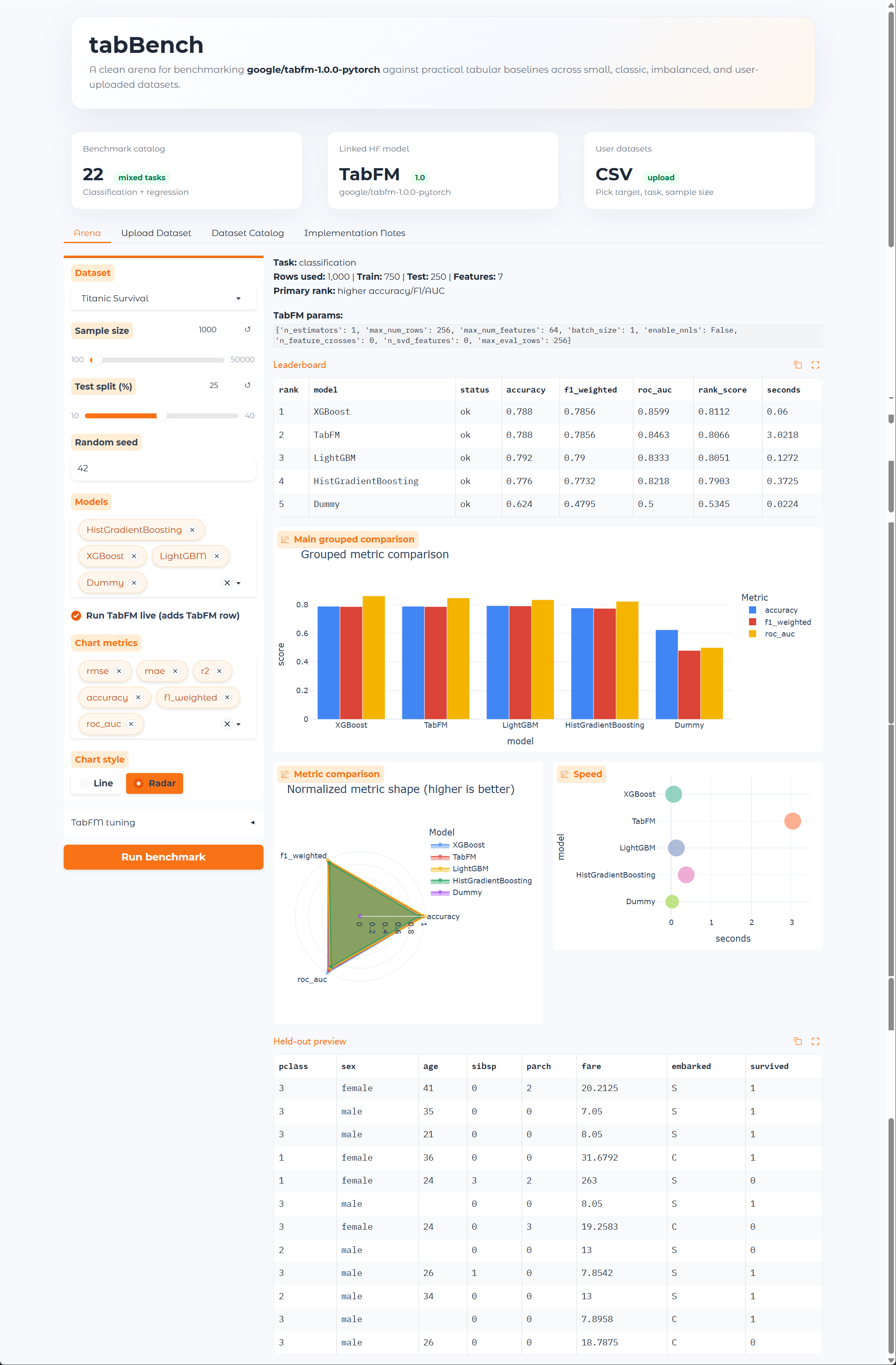
1. tabfm-1.0.0-pytorch: Zero-shot table-based benchmark
tabfm-1.0.0-pytorch is the PyTorch version of TabFM, released by Google Research in June 2026 via the Google Research Blog. TabFM focuses on classification and regression of structured tabular data containing mixed numerical and categorical columns. It treats training rows as contextual examples and generates predictions in a single forward propagation, eliminating the need for weight fine-tuning, hyperparameter searching, or heavy feature engineering for each dataset.
Run online:https://go.hyper.ai/acMZd
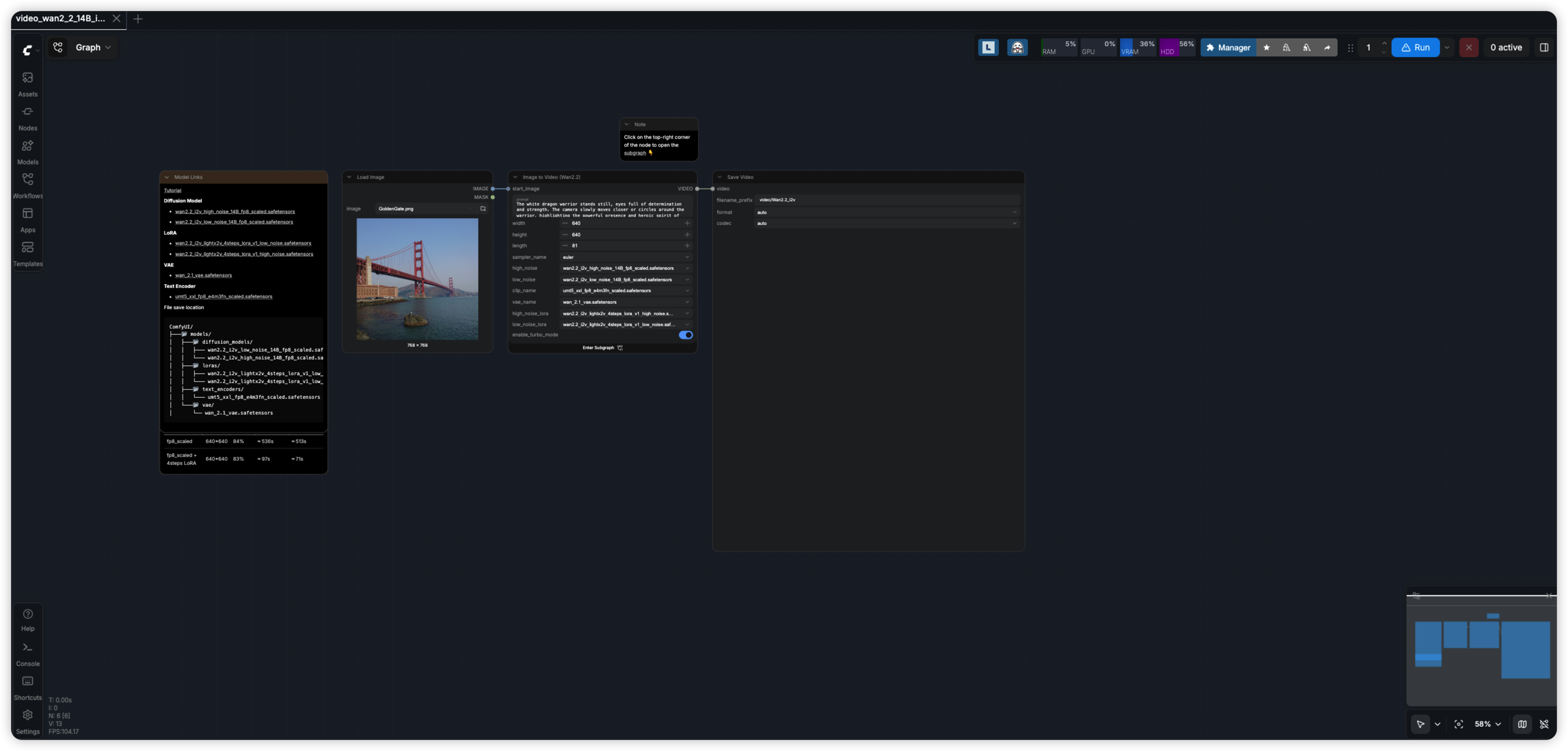
Wan 2.2 is an open-source video generation foundation model released by Alibaba's Wan-AI team. It adopts an innovative Mixture of Experts (MoE) architecture and can transform static images into dynamic videos in image-to-video (I2V) tasks, showing excellent performance in motion control and style preservation.
Run online:https://go.hyper.ai/UNbdm
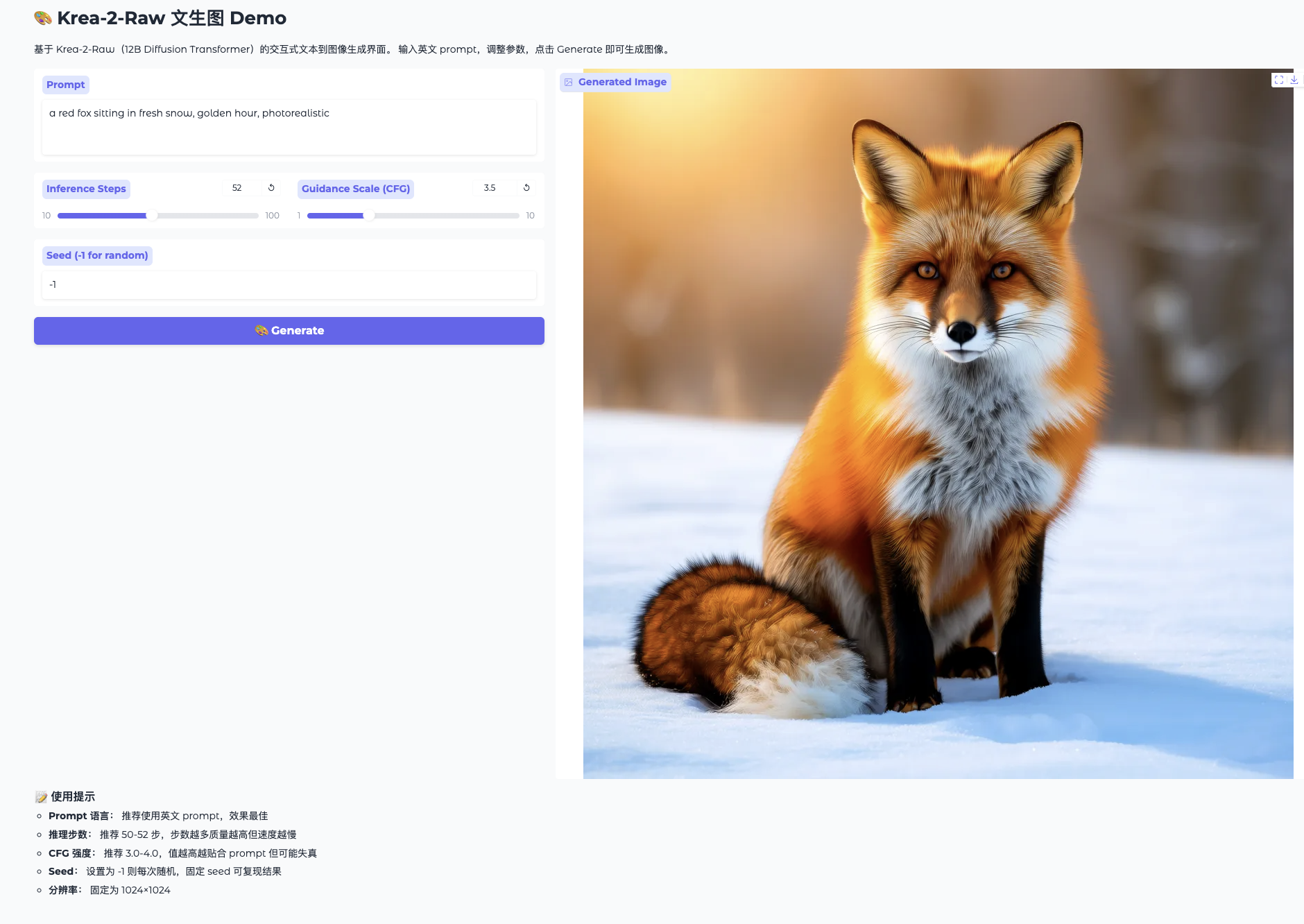
Krea-2 is a large-scale text-to-image diffusion model released by Krea.ai in June 2026. Krea-2-Raw is the base pre-trained checkpoint (approximately 12 billion parameters) of the series. It is based on the Diffusion Transformer (DiT) architecture and is capable of generating high-quality, diverse images based on natural language descriptions.
Run online:https://go.hyper.ai/NHNAD
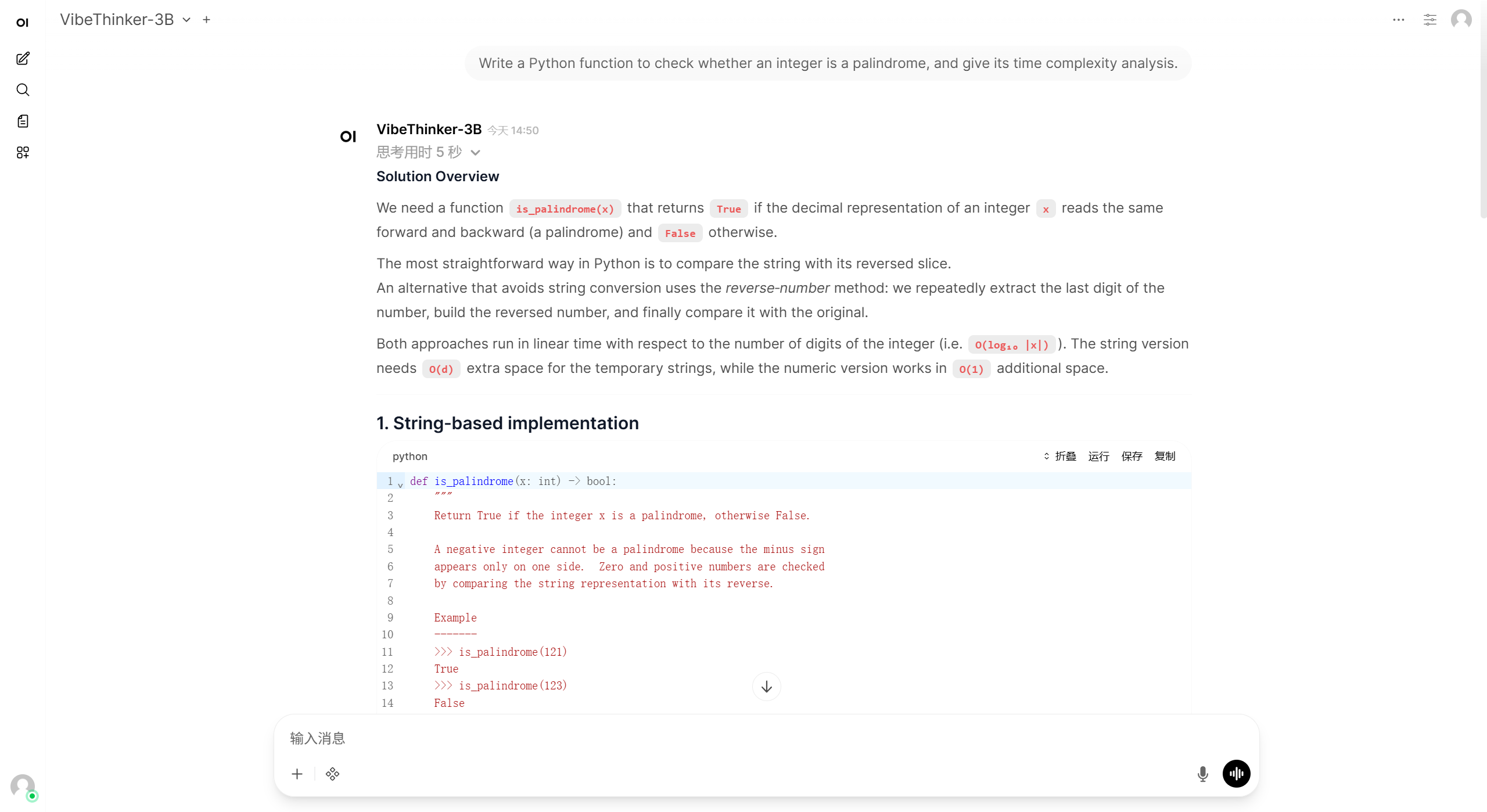
Released by the WeiboAI team in June 2026, VibeThinker-3B is a small-parameter language model (SLM) focused on verifiable reasoning tasks. With approximately 3 billion parameters, it primarily targets reasoning scenarios with explicit verification signals, such as mathematics, code, and STEM. The model employs the Qwen2ForCausalLM architecture and supports contexts up to 128K tokens. It continues the spectrum-to-signal principle training paradigm of the VibeThinker series, progressively enhancing its reasoning capabilities through a curriculum-based two-stage SFT, multi-domain reasoning reinforcement learning, offline self-distillation, and Instruct RL processes.
Run online:https://go.hyper.ai/aO6hb
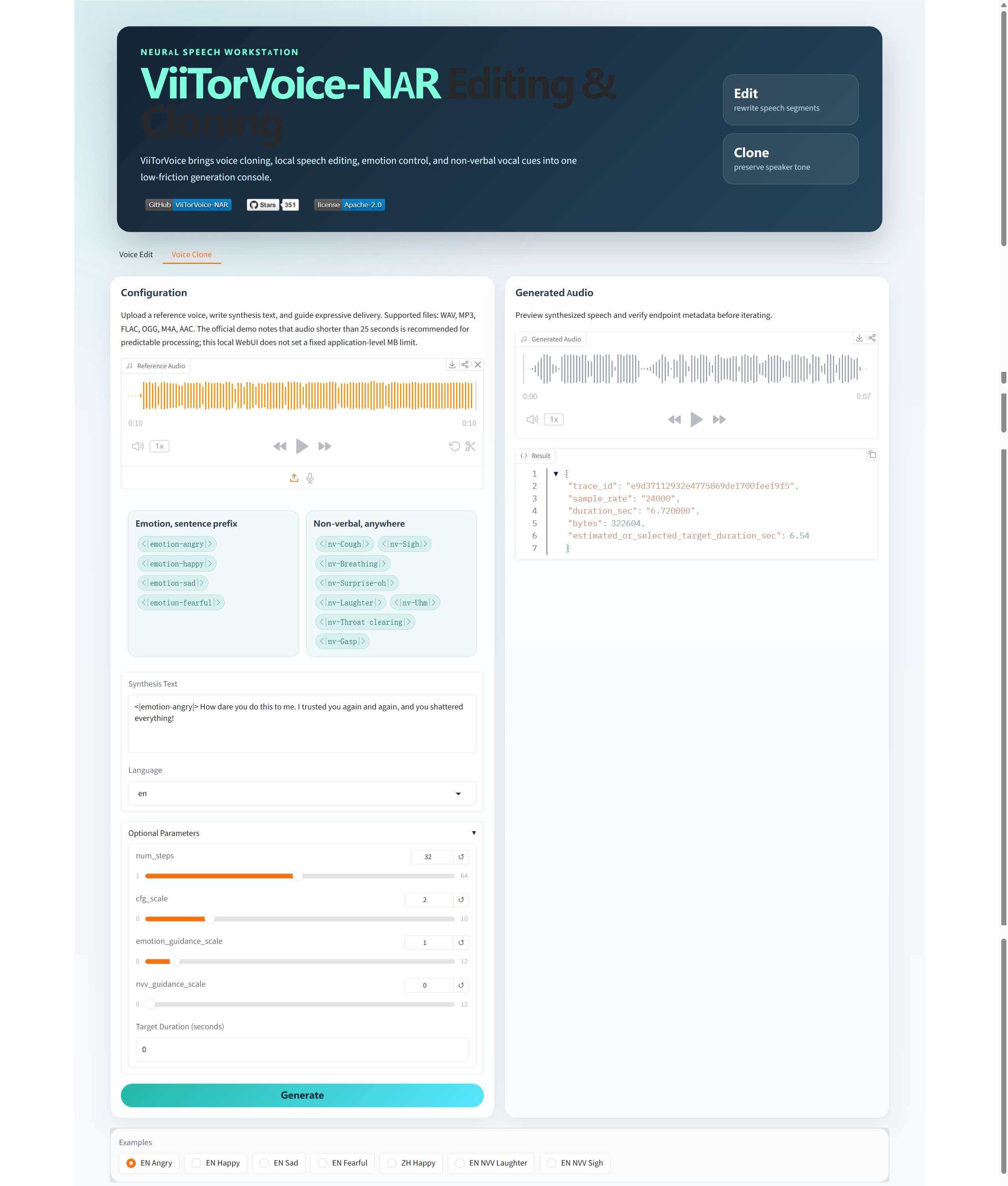
The ViiTorVoice-NAR model file was released in June 2026. It is a non-autoregressive speech generation system for speech cloning, local speech editing, and emotion/paralinguistic control. This model abandons the traditional word-by-word generation mode, instead completing the mask codebook within a discrete audio token space. Its core uses a 12-layer DualCodec 25Hz codebook, simultaneously carrying semantic and acoustic features, thereby accurately achieving speaker timbre preservation, content consistency, and local segment resynthesis.
Run online:https://go.hyper.ai/HoBLS
The CamCloneMaster model was released in June 2025 by a team from the Chinese University of Hong Kong, Zhejiang University, and Kuaishou Technology. Its core features and innovations include reference camera control that can learn camera motion patterns directly from reference videos without explicit camera parameters, a unified framework that supports both image-to-video (I2V) and video-to-video (V2V) generation modes, and an efficient training method based on Wan2.1-T2V-1.3B adaptation that only requires training the parameters of the self-attention layer.
Run online:https://go.hyper.ai/qehlc

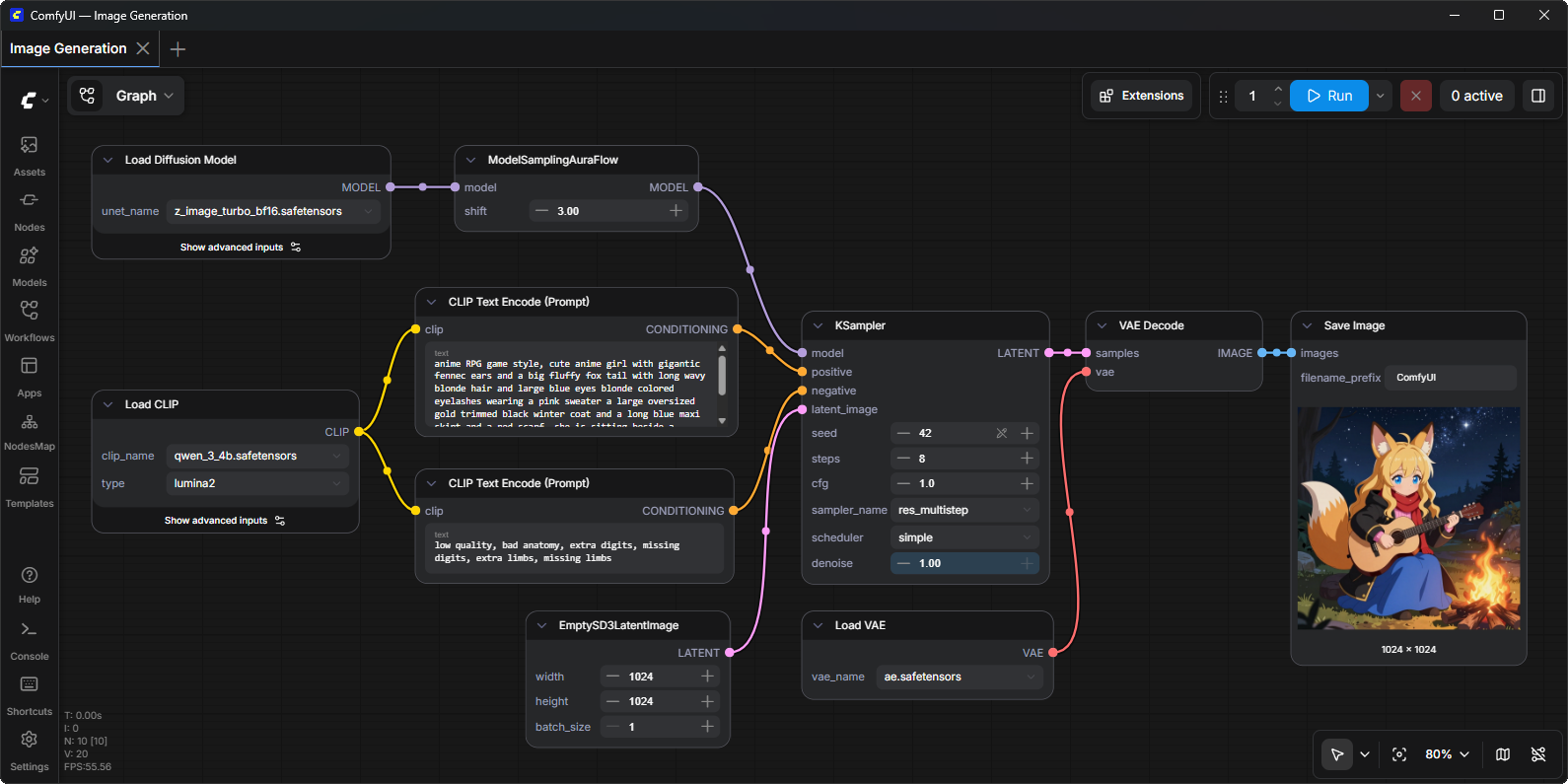
ComfyUI is an open-source, node-based visual workflow framework widely used in the field of image and video generation. Users can combine modules such as model loading, text encoding, sampling, and decoding into a complete generation process by dragging and dropping and connecting them, and can call various cutting-edge generative models without writing code.
Run online:https://go.hyper.ai/7wesQ
Community article interpretation
1. RNA structure prediction rivals AlphaFold 3! A Virginia Tech team proposes RNAbpFlow, which is completely independent of evolutionary information.
A research team at Virginia Tech recently proposed a novel RNA 3D structure prediction model, RNAbpFlow, which addresses several shortcomings of existing generation algorithms. It is no longer limited to relying on multiple sequence alignments or outputting a single static result, but extends to scenarios that require dynamic and high-precision sampling, such as generating a complete set of atomic conformations and accurately reconstructing global fold topology, based solely on nucleotide sequence and base pairing information.
View the full report:https://go.hyper.ai/Spbq5
Popular Encyclopedia Articles
1. World Action Model WAM
2. Prior Probability
3. Multi-agent workflow CudaForge
4. Reward Misspecification
5. Quantum Neural Network
Here are hundreds of AI-related terms compiled to help you understand "artificial intelligence" here:
The above is all the content of this week’s editor’s selection. If you have resources that you want to include on the hyper.ai official website, you are also welcome to leave a message or submit an article to tell us!
See you next week!