Command Palette
Search for a command to run...
The Strongest iron-based Superconducting Magnet Is Born! Scientists Design a New Research System Based on Machine Learning, and the Magnetic Field Strength Exceeds the Previous Record by 2.7 Times
Since its discovery in 1911, the superconductivity phenomenon has always maintained its cutting-edge and high value, attracting a large number of scholars to devote themselves to its research. The superconductivity phenomenon refers to the sudden drop of the resistance of certain materials to zero below a certain temperature. This is not only a revolutionary breakthrough in materials science, but also brings huge impetus to application innovation in fields such as power transmission, magnetic levitation transportation and medical imaging. However,**Traditional superconducting materials often need to be at extremely low temperatures to achieve superconductivity.**This limited their practical applications. This situation was fundamentally changed until the emergence of iron-based high-temperature superconductors (IBSs).
IBSs can achieve superconductivity at relatively high temperatures, with a superconducting critical temperature (Tc) of about 60K, which is much higher than the transition temperature of traditional superconducting materials. This feature not only reduces the refrigeration cost of superconducting applications, but also paves the way for the widespread use of superconducting materials. In addition, the high upper critical field (Hc2) characteristics of IBSs,**It can maintain superconducting state even in high magnetic field environment.**This provides new possibilities for the development of technologies such as particle accelerators and medical imaging.
Recently, scientists from the UK and Japan, including Akiyasu Yamamoto, used machine learning technology to design a research system that combines researcher-driven and data-driven methods.**Successfully produced the world's strongest known iron-based superconducting magnet.**The latest research is expected to promote the development of next-generation magnetic resonance imaging (MRI) technology and future electrified transportation technology.
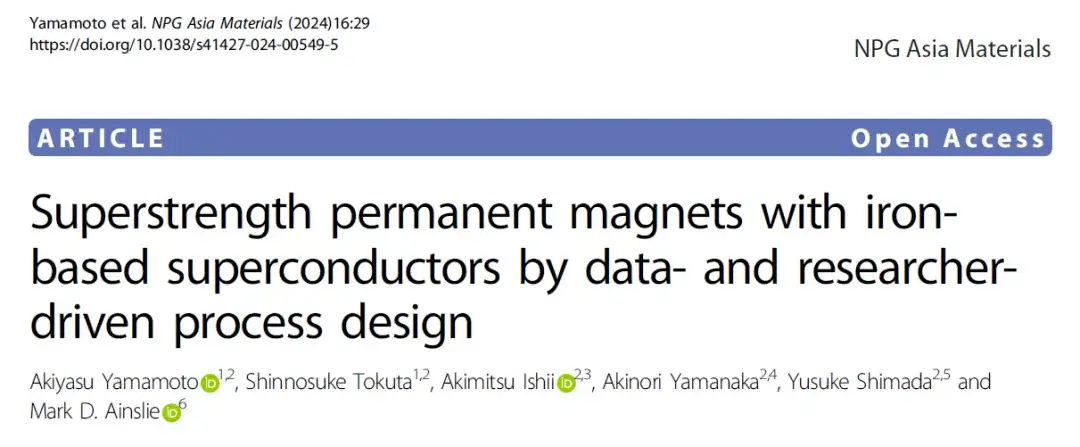
The related paper, titled "Superstrength permanent magnets with iron-based superconductors by data- and researcher-driven process design", has been published in Nature's subsidiary journal NPG Asia Materials.
Research highlights:
* The research successfully developed a practical iron-based superconducting permanent magnet, with a magnetic field strength significantly exceeding the previous record by 2.7 times
* Designed a successful research pipeline by combining researchers’ expertise with the power of machine learning
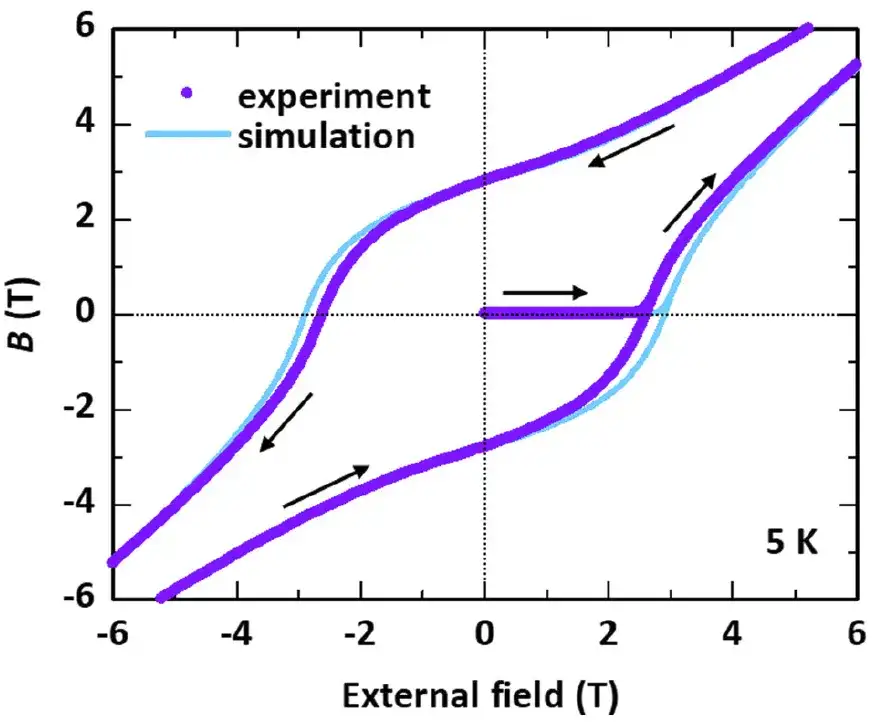
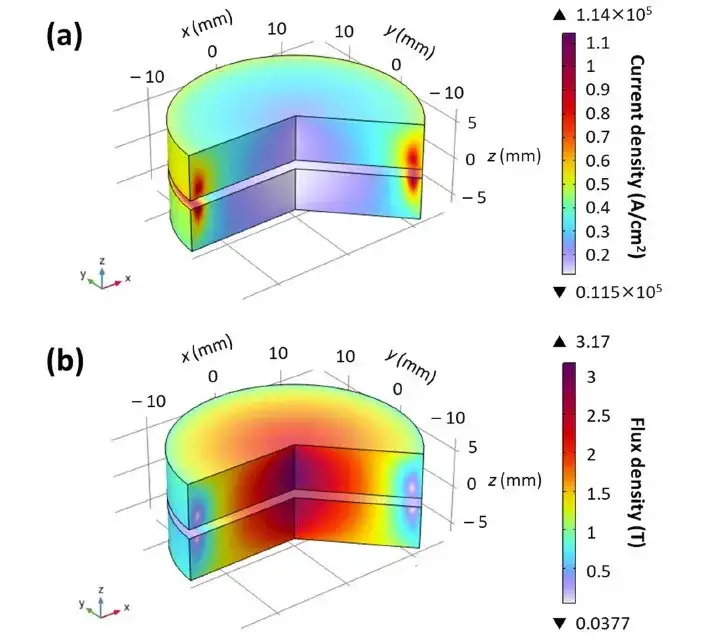
* The numerical simulation results are in good agreement with the experimental results, indicating that there is a uniform supercurrent distribution Jc inside the material
 Paper address:
https://doi.org/10.1038/s41427-024-00549-5
Paper address:
https://doi.org/10.1038/s41427-024-00549-5
The open source project "awesome-ai4s" brings together more than 100 AI4S paper interpretations and also provides massive data sets and tools:
https://github.com/hyperai/awesome-ai4s
New research system: Combining researcher-driven and data-driven
This study used the BOXVIA machine learning system, combining researcher-driven and data-driven methods to design a new research system.
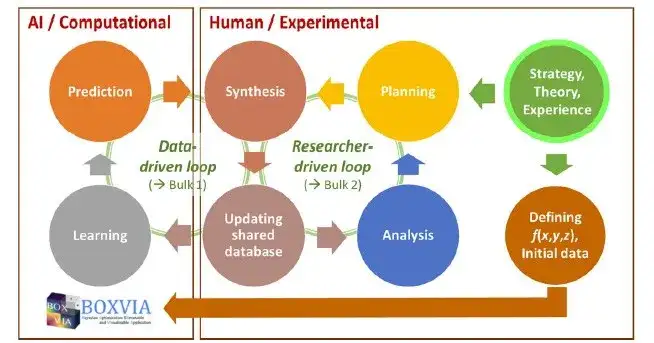
**Then,**Researchers can synthesize samples based on the proposed conditions and update the database. In the machine learning algorithm, researchers provide a general framework for the machine learning and design process, synthesizing samples in the next process from the data obtained in the data-driven loop. This "data-driven loop" is reused to help expand machine learning data and improve the efficiency of process design.
In the first phase, the researchers systematically combed through the quantifiable process parameters to identify factors that had a significant impact on the final performance. The researchers then chose to focus on three key process parameters, denoted as x (heating rate), y (maximum temperature), and z (hold time). These parameters control the spark plasma sintering process and can be applied to mechanically alloyed (Ba0.6K0.4) Fe2As2 precursor powders obtained by high-energy milling.
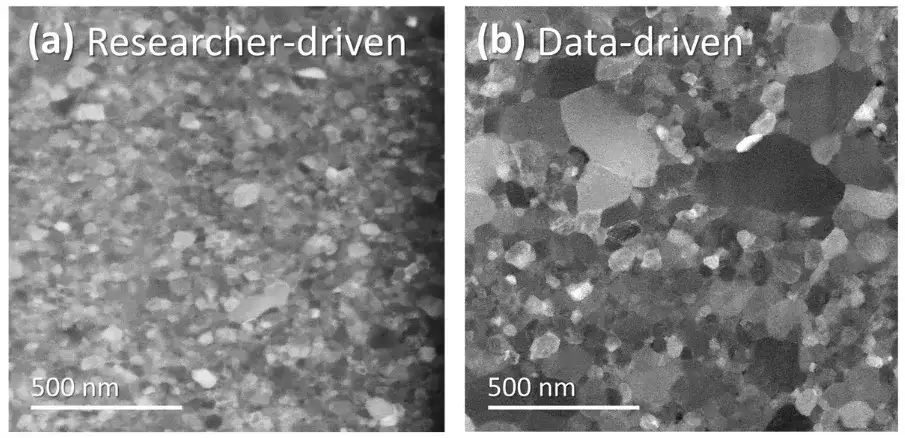
Through the above process,**The study first synthesized two larger potassium-doped Ba122 (Ba0.6K0.4Fe2As2) permanent magnet prototypes, Bulk1 and Bulk2.**Corresponding to data-driven and researcher-driven driving, each sample has a diameter of 30mm and a thickness of 6mm. Among them, the parameters (x, y, z) of Bulk1 are set to (+49.8°C/min, 556°C and 32.47min), and the parameters of Bulk2 are set to (+50°C/min, 600°C and 5min).
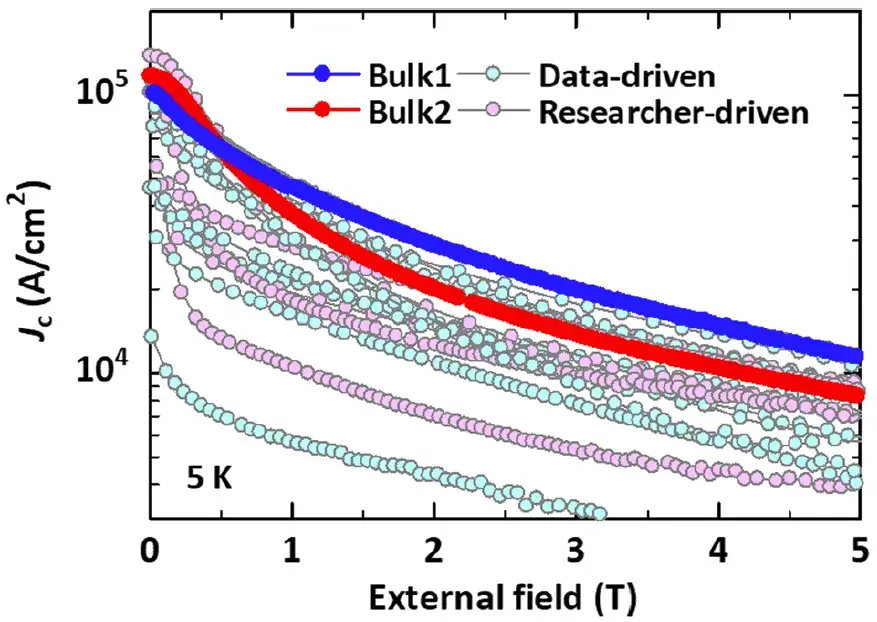
In order to optimize the critical current density,**The study developed the BOXVIA software package specifically for Bayesian optimization for machine learning algorithms and established correlations with experimental parameters.**That is, Jc =f(x,y,z), where f is a hyperparameter black-box function. Under the assumption that f(x,y,z) and its variables x, y and z are continuous, this process does not require the definition of a specific equation to describe f(x,y,z). In the Bayesian optimization algorithm, the function f is modeled using a preliminary data set and Gaussian process regression is used. Therefore, the critical current density Jc is described as a Gaussian distribution.
**In terms of local optimization,**The researcher-driven approach (Bulk2) optimized the maximum sintering temperature x by 50°C increments, resulting in an optimized x = 600°C. In contrast, the Bayesian optimization was performed in 1°C increments, refining the result to 556°C.
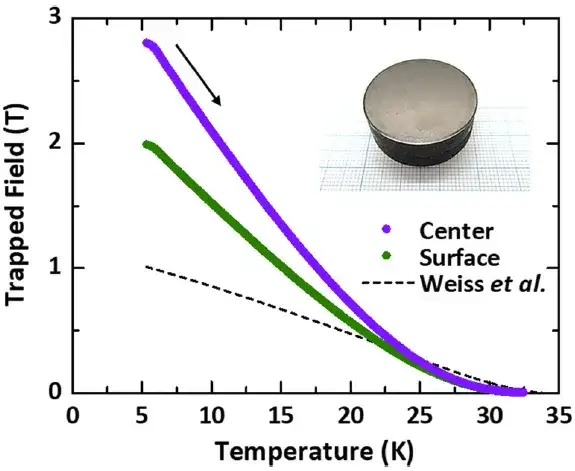
Ba122 permanent magnet: Magnetic field strength is 2.7 times higher than previously reported
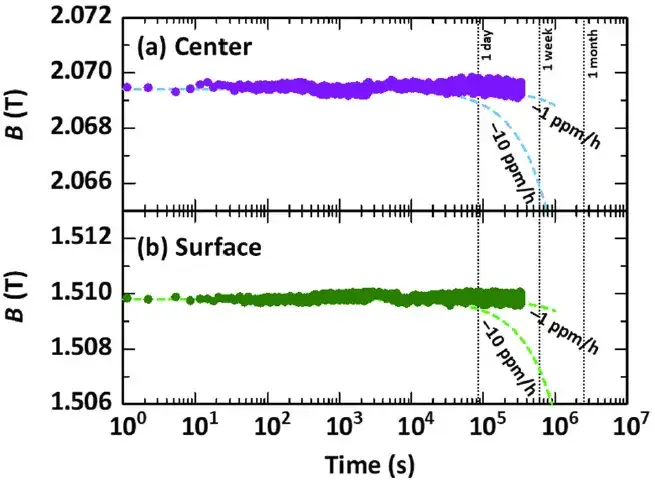
In order to further analyze the dependence of Ba122 permanent magnets on magnetic field and temperature, this study performed rapid magnetic field cooling using a refrigerator at a temperature of approximately 5K and applied a 7T magnetic field.
AI “alchemy” greatly improves efficiency
In the past few years,**Room-temperature superconductivity has always been one of the hot areas in global scientific research.**As the market begins to examine each industry from the perspective of AI application innovation, its exploration of technological breakthroughs such as nuclear fusion, magnetic levitation, quantum computers, and power transmission has gradually deepened. The large-scale application of these technologies is directly related to superconducting technology and large-scale preparation of superconducting materials.
The difficulty of finding superconducting materials is like finding a needle in a haystack, so some people joke that finding room temperature superconductors is like "making an elixir". A researcher once said, "In the process of finding various new superconducting materials, it is indeed a bit like cooking. In the past, we could only combine the experience of scientists, mix various elements together, and then test whether they are superconducting under various conditions, so the efficiency is very low."
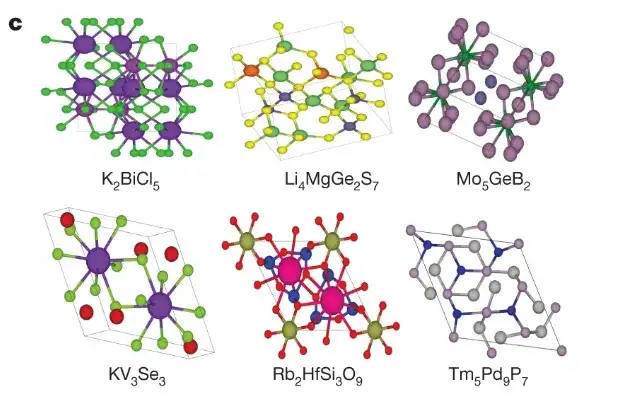
In recent years, the mature development of AI has brought new ideas for solving problems in this field.**Google DeepMind develops new AI tool****GNoME, successfully predicted 2.2 million crystal structures,**Among them, 380,000 have the most stable characteristics. It should be noted that before the use of AI-assisted material discovery, the number of stable crystals discovered by humans was only 48,000.
Specifically, GNoME is a state-of-the-art graph neural network model that uses two working pipelines to discover stable materials. Among them, the "structure pipeline" creates candidates with similarities to known crystal structures, while the "composition pipeline" adopts a more random approach based on chemical formulas. Subsequently, GNoME uses density functional theory calculations to evaluate the outputs of the two workflows and adds these results to the GNoME database to provide information for the next round of active learning. Based on this, GNoME successfully increased the discovery rate of material stability prediction from about 50% to 80%.
In December of the same year,**The Microsoft team also launched the next generation of generative AI tools - MatterGen.**It greatly improves the speed of designing materials with required properties and unleashes the huge potential of AI in material design and screening.
It is true that humans have been conducting superconducting research for 112 years, but we have not yet fully understood the microscopic mechanisms of various superconductors. Although AI has become increasingly mature in exploring superconductors, the true application of superconductors cannot be solved overnight. With the extensive exploration of superconducting materials using AI technology, perhaps we will finally get the answer in the near future.
Finally, I recommend an activity!
Scan the QR code to sign up for the 5th offline gathering of the "Meet AI Compiler" Technology Salon↓