Command Palette
Search for a command to run...
Is Your Girlfriend Angry? Algorithms Understand Her Better Than Straight Men
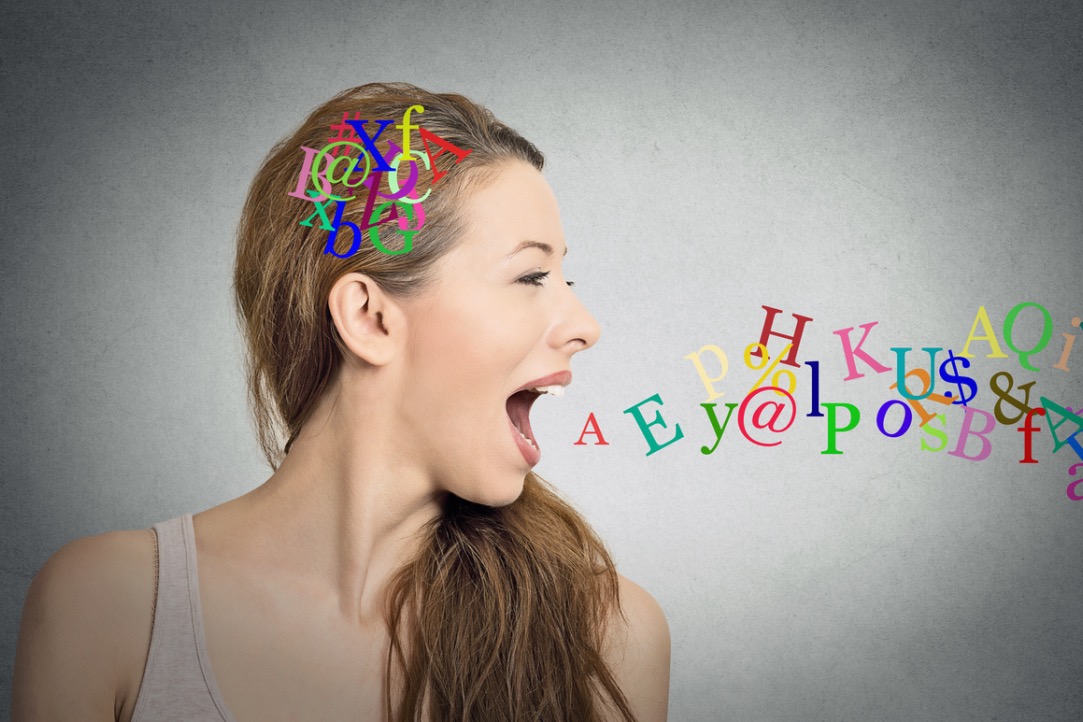
There are usually two ways to use AI technology to judge a person's emotions, one is through facial expressions, and the other is through voice. The former is relatively mature, while research on voice recognition emotions is developing rapidly. Recently, some scientific research teams have proposed new methods to more accurately identify emotions in users' voices.
There are many articles on Zhihu about How to tell if your girlfriend is angryWhen asked questions like this, some people answered: The fewer words, the bigger the matter; others said: If I’m really angry, I won’t contact you for a month; if I’m pretending to be angry, I’ll act coquettishly and say “I’m angry”.

Alexa voice assistant: cultivating a warm and caring personality
Amazon's voice assistant Alexa may be smarter than your boyfriend when it comes to sensing emotions.
This year, after the latest upgrade, Alexa has been able toAnalyze the pitch and volume of user commands, identify emotions such as happiness, joy, anger, sadness, irritability, fear, disgust, boredom and even stress, and respond to corresponding commands.
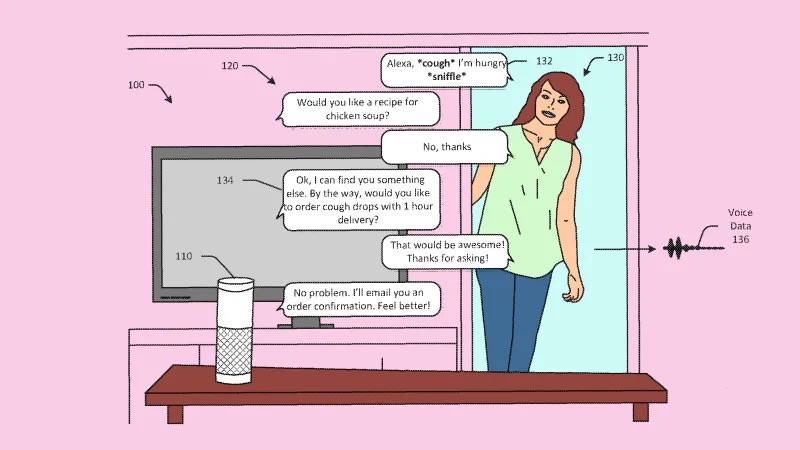 For example, if a girl blows her nose and coughs while telling Alexa that she is a little hungry, Alexa will analyze the tone of her voice (weak, low) and the background noise (coughing, blowing her nose) and figure out that she is probably sick. Then, Alexa will send out caring advice from the machine: Would you like a bowl of chicken soup, or takeout? Or even order a bottle of cough syrup online and have it delivered to your door within an hour?
Isn’t this behavior more considerate than that of a straight boyfriend?
Artificial intelligence for emotion classification is nothing new, but recently, AmazonAlexa Speech The team broke the traditional methods some time ago and published new research results.
Traditional methods are supervised, and the training data obtained has been labeled according to the speaker's emotional state. Scientists from Amazon's Alexa Speech team recently took a different approach and published a paper introducing this method at the International Conference on Acoustics, Speech and Signal Processing (ICASSP)."Improving Emotion Classification through Variational Inference of Latent Variables" (http://t.cn/Ai0se57g)
 Instead of training the system on a corpus of fully annotated sentiment data, they provided a**Adversarial Autoencoder (AAE)**This is a video with 10 different speakers.10,000****indivualA public dataset of utterances.
The results of their study showed that in judging people's voices,Potency(emotion valence) orSentimental Value(emotional value), the neural network**Improved accuracy by 4%.**Thanks to the team’s efforts, the user’s mood or emotional state can be reliably determined through the user’s voice.


Training pointsThree stagesThe first stage is to train the encoder and decoder separately using unlabeled data. The second stage is adversarial training, a technique where the adversarial discriminator tries to distinguish between real representations produced by the encoder and artificial representations. This stage is used to adjust the encoder. In the third stage, the encoder is adjusted to ensure that the latent emotion representation can predict the emotion labels of the training data.
In “hand-engineered” experiments involving sentence-level feature representations to capture information about speech signals, their AI system was 3% more accurate at assessing valence than a traditionally trained network.
Furthermore, they show that when the network was fed a sequence of acoustic properties representing 20-millisecond frames (or audio clips), performance improved by 4%.
MIT lab builds neural network that can sense anger in 1.2 seconds
Amazon isn’t the only company working on improved voice-based emotion detection.MIT Media Lab Affectiva Recently, a neural network SoundNet was demonstrated: it canWithin 1.2 seconds(Surpassing the time it takes for humans to perceive anger) Classify anger and audio data, regardless of language.
 In a new paper, researchers at Affectiva **《Transfer Learning From Sound Representations For Anger Detection in Speech》(https://arxiv.org/pdf/1902\.02120\.pdf)**The system is described in .It builds on voice and facial data to create emotional profiles.
To test the generalizability of the AI model, the team evaluated the model trained on Mandarin speech emotion data (Mandarin Affective Corpus, or MASC) using a model trained on English.Not only does it generalize well to English speech data, it also works well on Chinese data, although the performance drops slightly.

Future work will develop other large public corpora and train AI systems for related speech-based tasks, such as recognizing other types of emotions and affective states.
Israeli app recognizes emotions: accuracy rate 80%
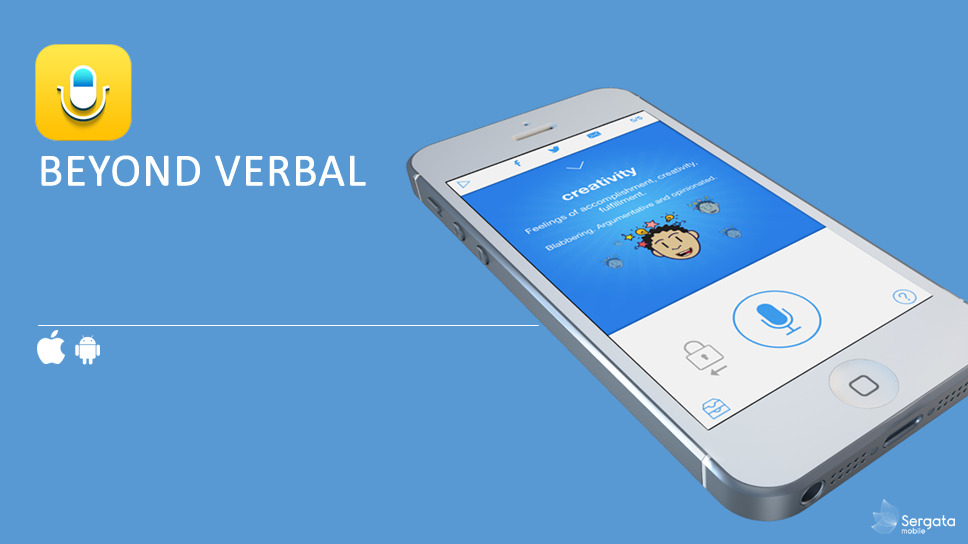
Israeli startupsBeyond Verbal An application called Moodies has been developed, which can collect the speaker's voice through a microphone and determine the speaker's emotional characteristics after about 20 seconds of analysis.
“With the current state of cognitive neuroscience, we simply don’t have the technology to truly understand a person’s thoughts or emotions,” said Andrew Baron, assistant professor of psychology at Columbia University.
However, Dan Emodi, vice president of marketing at Beyond Verbal, said that Moodies has been researching for more than three years and based on user feedback,The accuracy of the applied analysis is approximately 80%.
Beyond Verbal said that Moodies can be used for self-emotional diagnosis, customer service center to handle customer relations and even to detect whether job applicants are lying. Of course, you can also bring it to a dating scene to see if the other person is really interested in you.
Voice emotion recognition still faces challenges
Although many technology companies have been conducting research in this area for many years and have achieved good results, as Andrew Baron questioned above, this technology still faces many challenges.
Just like a girlfriend's calm "I'm not angry" doesn't mean she's really not angry, a pronunciation can contain a variety of emotions.The boundaries between different emotions are also difficult to define, which emotion is the current dominant emotion?
Not all tones are obvious and intense; expressing emotions is a highly personalized matter that varies greatly depending on the individual, environment, and even culture.
In addition, a mood may last for a long time, but there will also be rapid changes in mood during the period.**Does the emotion recognition system detect long-term emotions or short-term emotions?**For example, someone is suffering from unemployment, but is briefly happy because of the concern of his friends. But in fact, he is still sad. How should AI define his state?
Another worrying thing is that when these products can understand people's emotions, will they ask more private questions and obtain more information about users because of their dependence on them, therebyTurn "service" into "transaction"?
I hope you will have Dabai and someone who truly understands you.
Many people want to have a warm and caring Baymax. Will this high-emotional-intelligence robot that only exists in science fiction animations become a reality in the future?

-- over--