Command Palette
Search for a command to run...
Online Tutorial | Fast Decision-Making, On-Demand Reasoning: JEV-27B-VL Based on Qwen3.8-27B Supports Image-Text Judgment, Multiple-Choice, and Scoring

Visual language models can already understand images and answer questions; however, when AI looks at an image, it does not necessarily need to generate a lengthy response. For instance, determining whether an image contains violating content, selecting the product that best meets requirements from multiple options, or judging whether a short video cover is worthy of recommendation—these tasks often require not a detailed analysis, but a clear decision along with the confidence level of that decision.
The visual decision model JEV-27B-VL, introduced by the AutoTrust team in 2026, is exploring a different approach to solving these problems. It ranks first in the Vision category of the community's Jev Decision Index 0.3. According to the project introduction, unlike visual language models primarily aimed at open-ended text generation, JEV-27B-VL focuses more on Typed Decisions: enabling the model to directly output judgment results conforming to specified types based on text and image inputs.
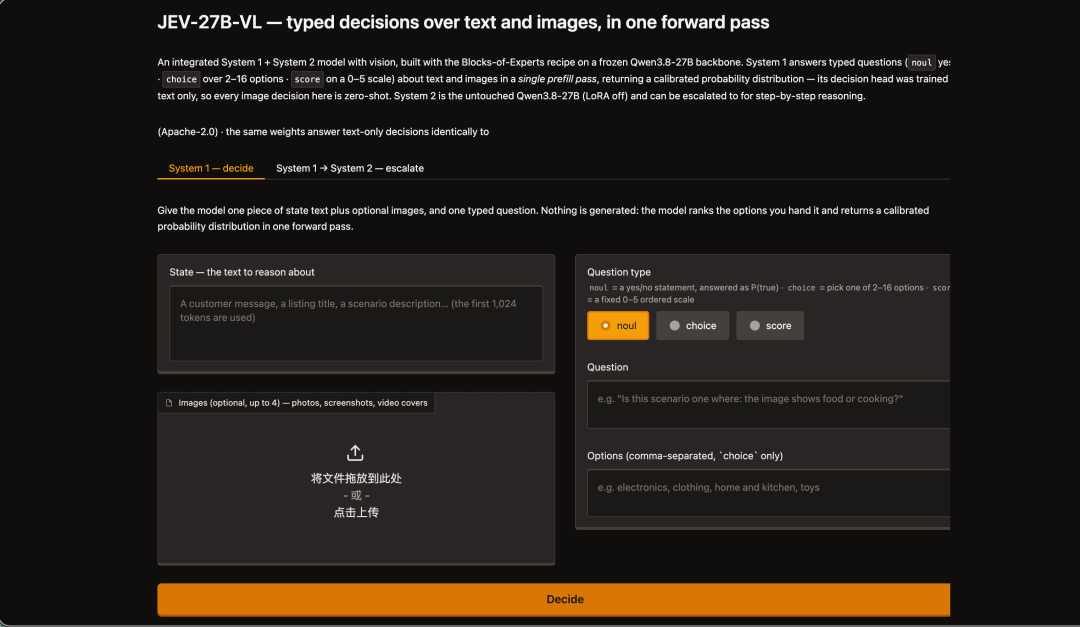
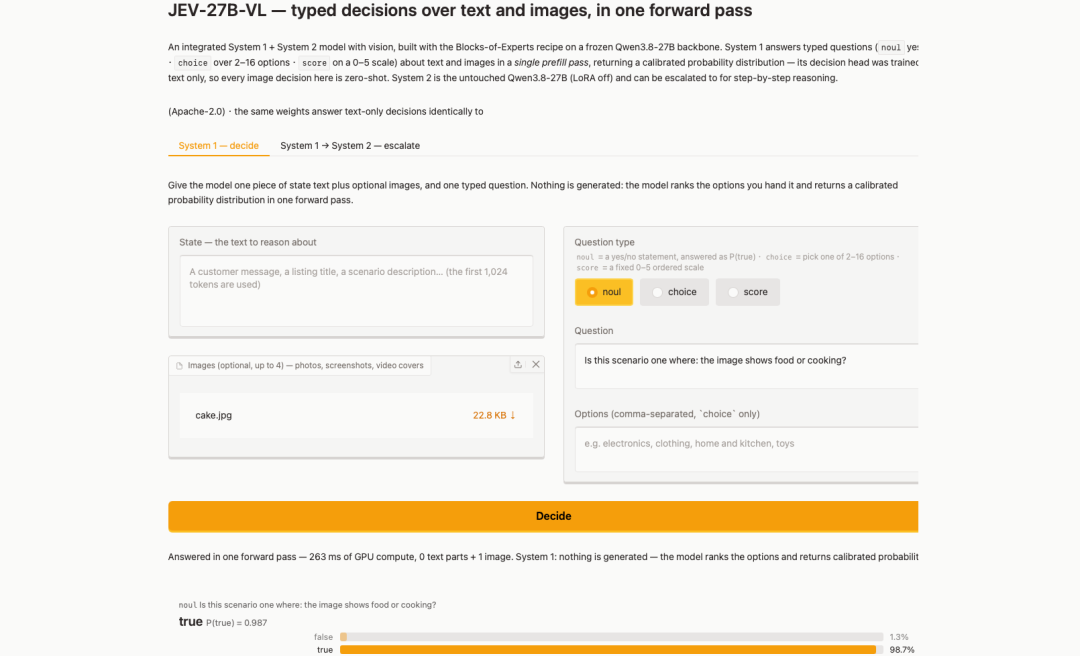
Technically, JEV-27B-VL is built on Qwen3.8-27B and integrates two different processing paths through the Blocks-of-Experts approach: System 1 handles fast decision-making, while System 2 handles deep reasoning. It reorganizes the computational paths for different tasks, avoiding the full cost of generation and reasoning for every judgment, thereby achieving model lightweighting. System 1 outputs calibrated probabilities for each option in a single forward pass via a dedicated decision head, supporting Yes/No judgments, multiple-choice questions (2–16 options), and 0–5 scoring, without the need for token-by-token autoregressive generation. If the decision confidence is low, System 2 is invoked, using the original Qwen3.8-27B for step-by-step reasoning. Compared to routing all tasks through the full generation pipeline, this on-demand allocation of computation is more suitable for applications sensitive to latency and inference costs.
When a task only requires a decision, there is no need to make the model generate a full answer. Currently, the tutorial section on the HyperAI official website (hyper.ai) has launched "JEV-27B-VL: A Structured Decision Model for Text and Images," helping developers quickly utilize the model's capabilities.
Run online:
More online tutorials:
Demo Execution
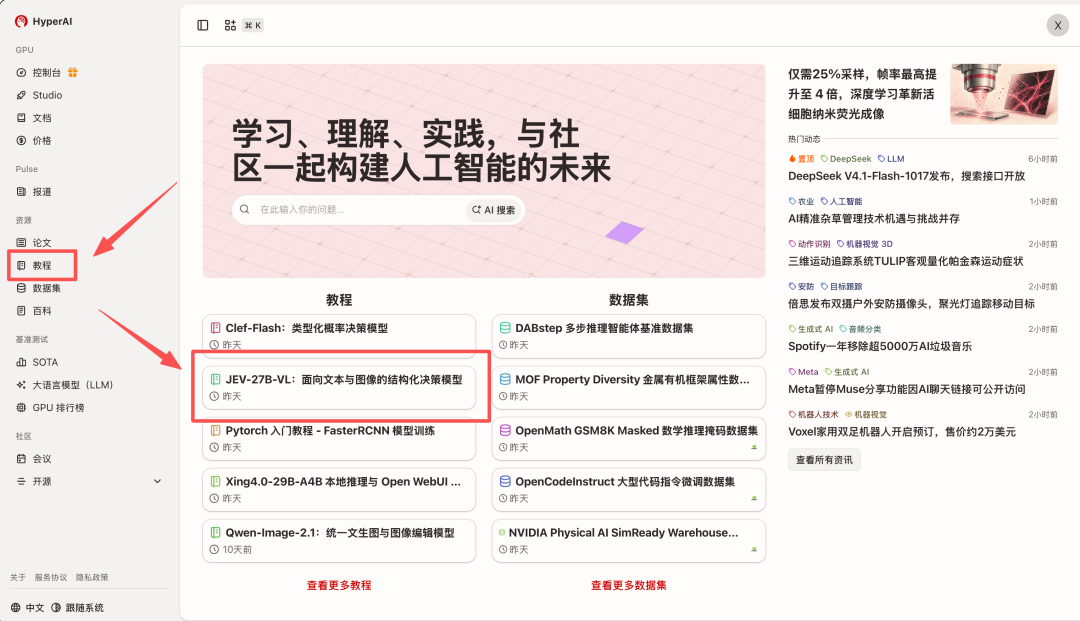
- After entering the hyper.ai homepage, select the "Tutorials" page, or click "View More Tutorials," choose "JEV-27B-VL: A Structured Decision Model for Text and Images," and click "Run This Tutorial."
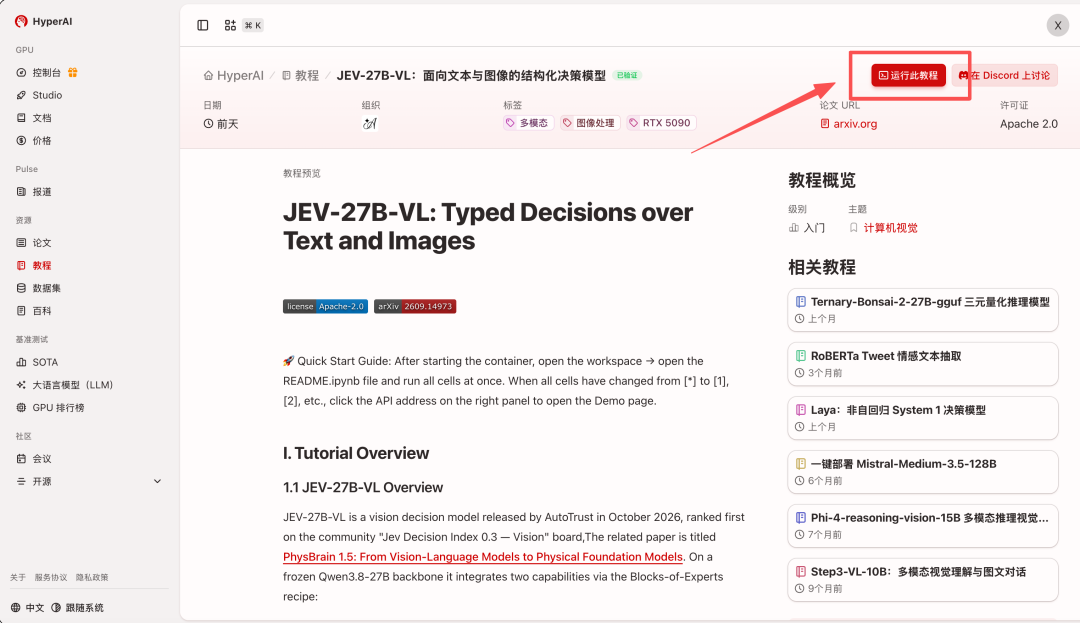
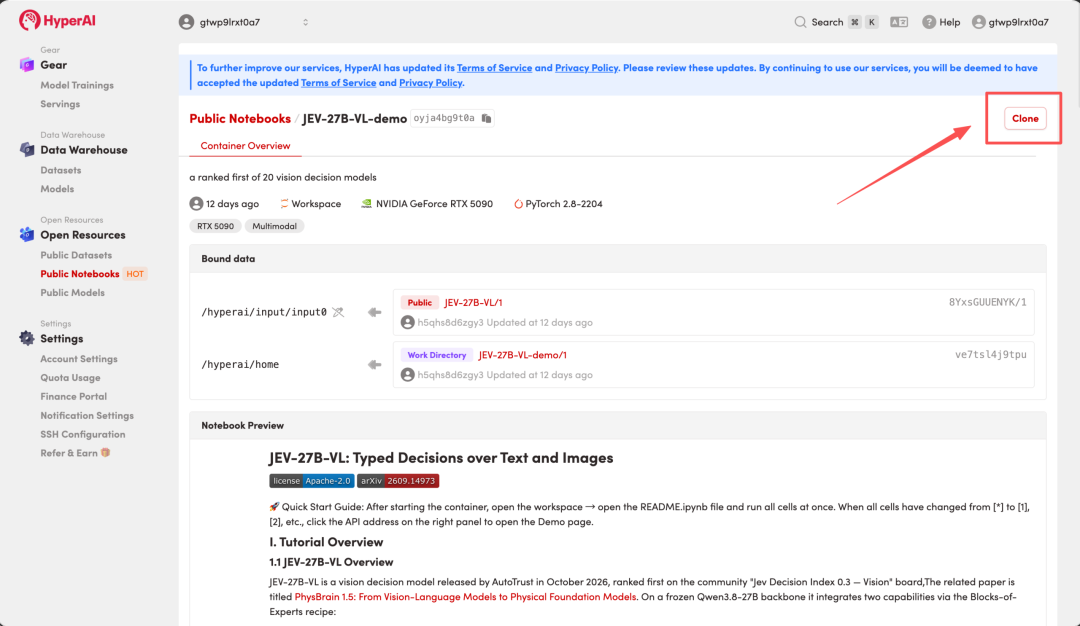
- After the page redirects, click "Clone" in the top right corner to clone this tutorial to your own container.
Note: The top right corner of the page supports language switching, currently offering Chinese and English. This tutorial article uses English as an example for step demonstration.
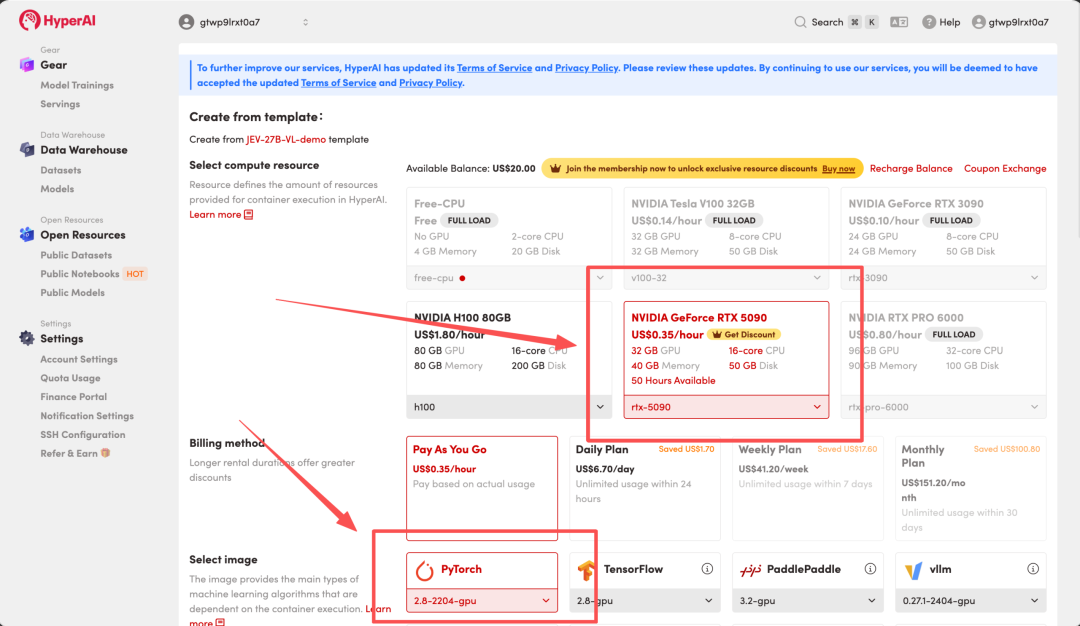
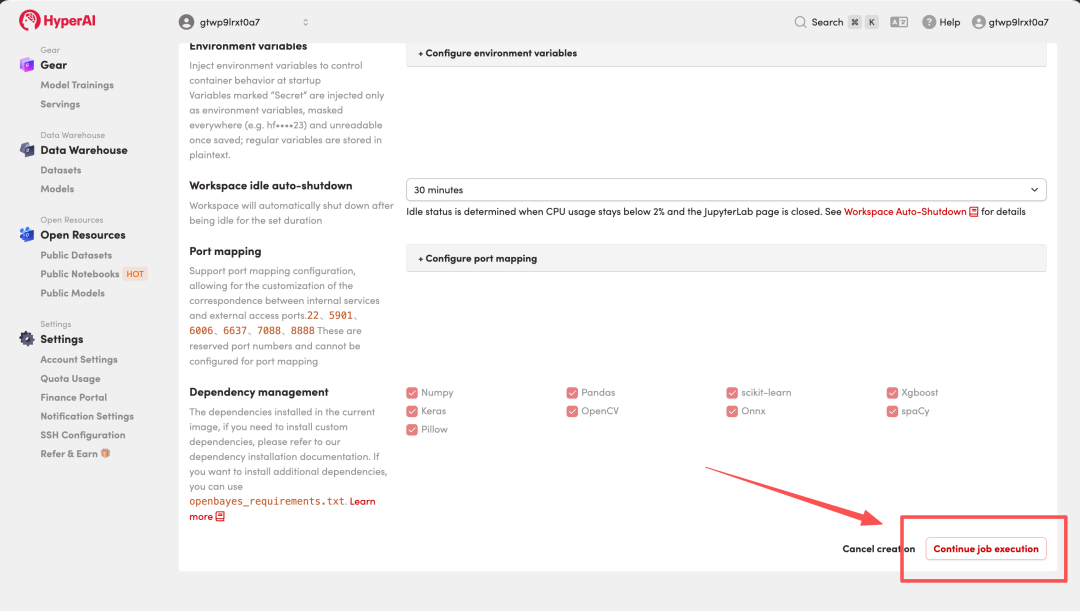
- Select "NVIDIA RTX 5090" and the corresponding image, then click "Continue job execution." This tutorial defaults to using NVIDIA GeForce RTX 5090 (32 GB VRAM) resources.
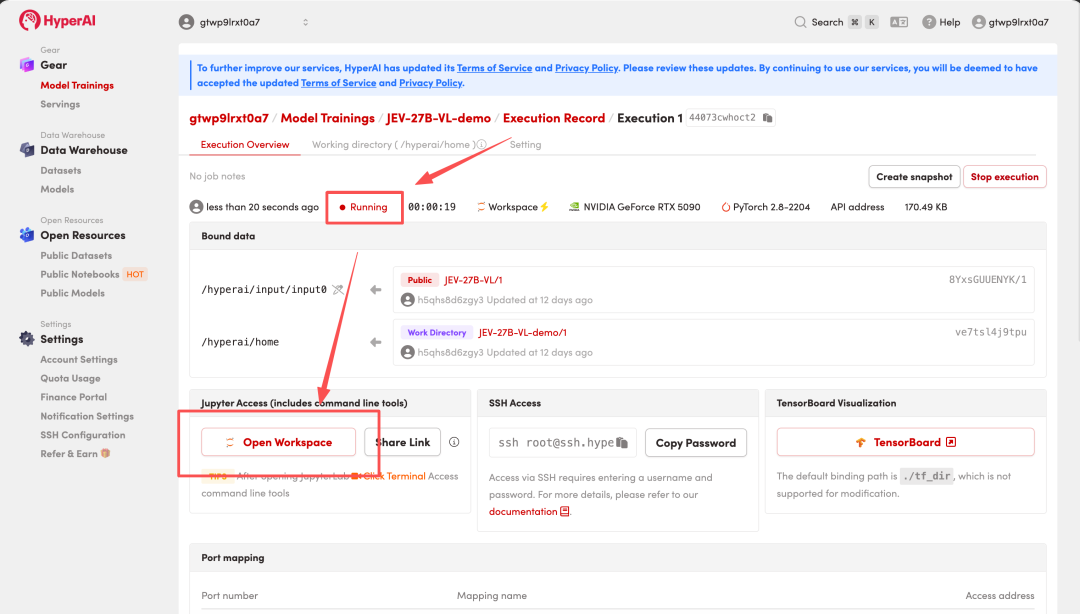
- Wait for resource allocation. Once the status changes to "Running," click "Open Workspace" to enter the Jupyter Workspace.
Performance Showcase
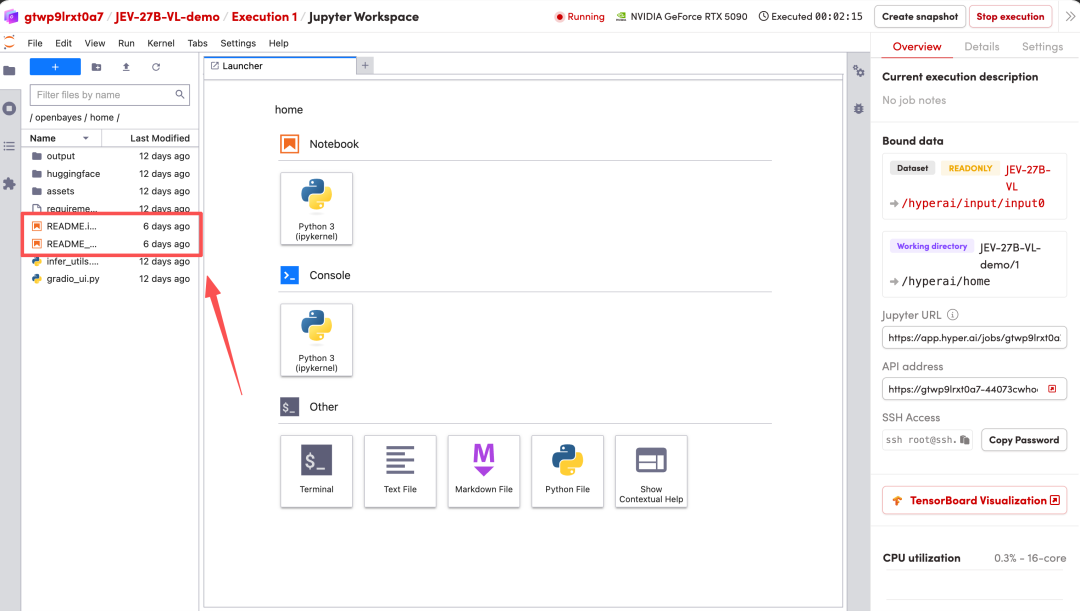
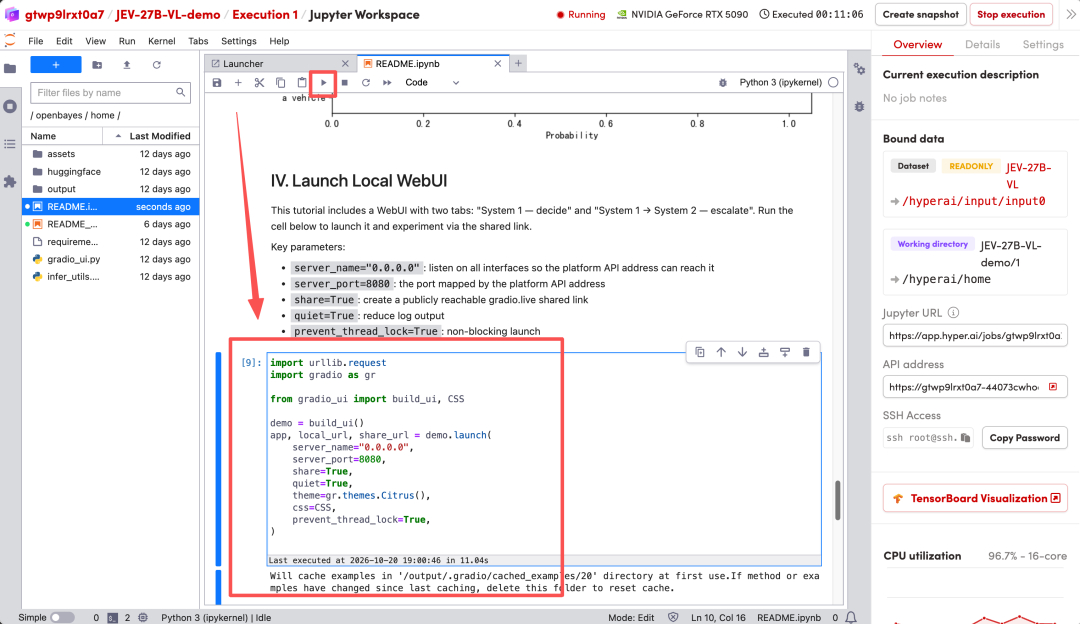
- After the page redirects, click the README file on the left. Upon entering, click Run at the top.
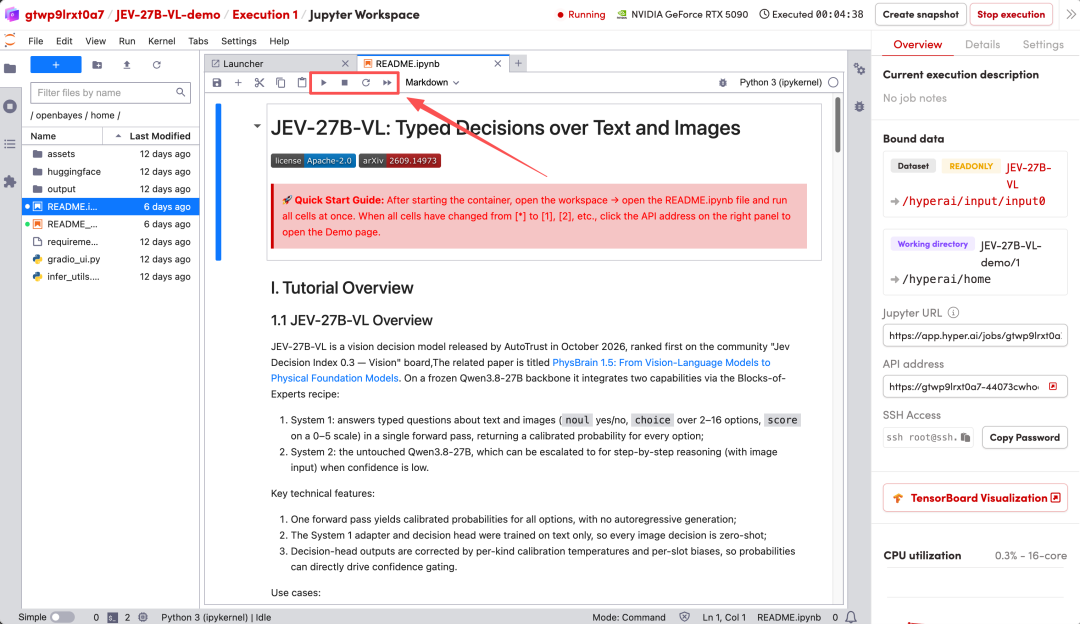
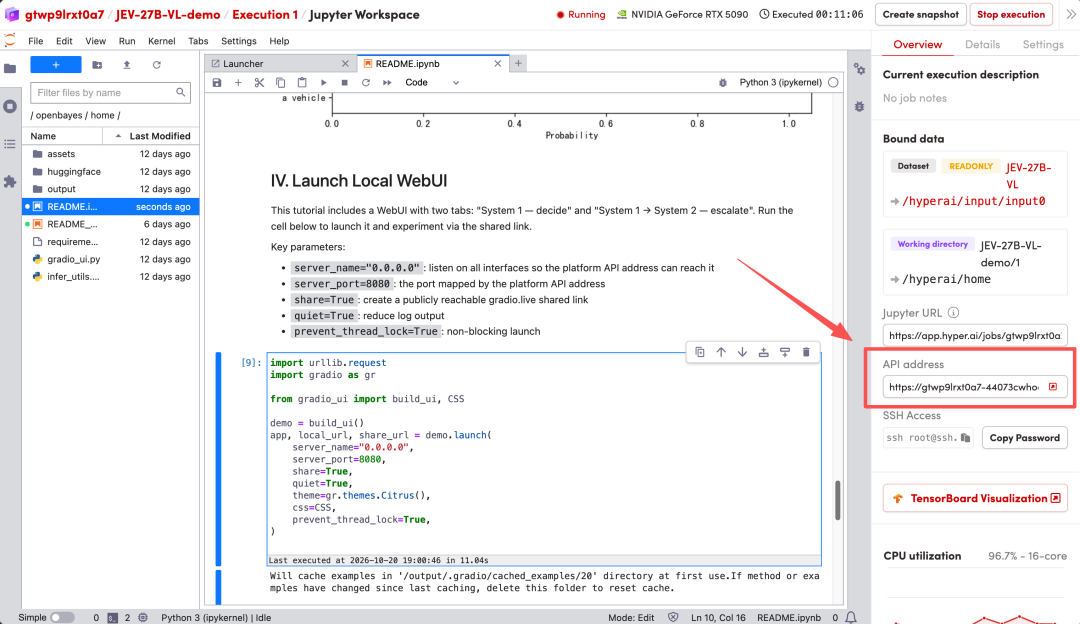
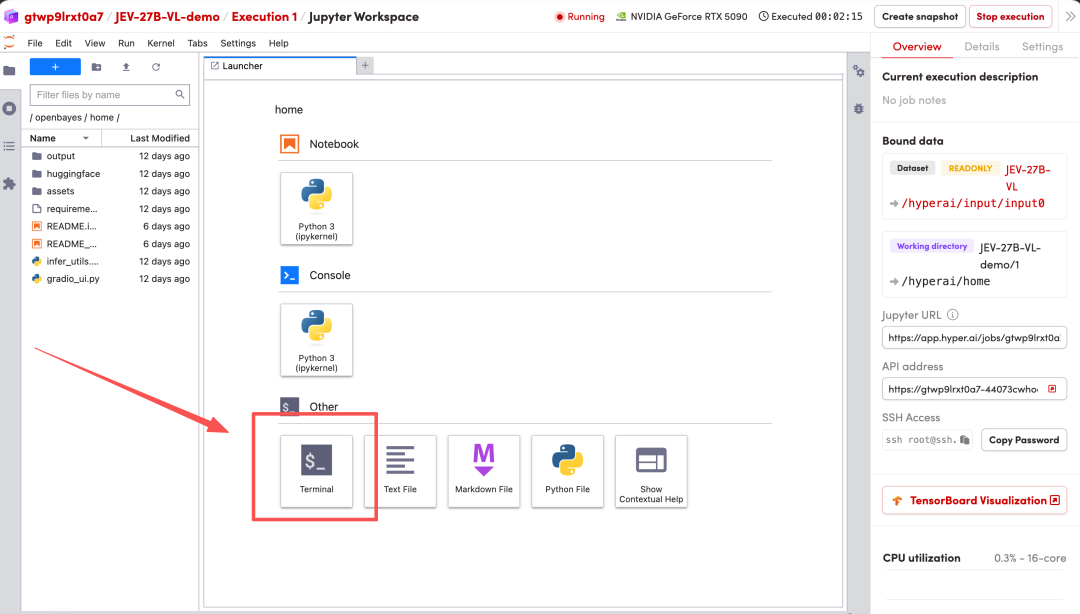
- After the run is complete, open a new terminal and execute the following command to start Open WebUI.
- Once started, click the API address on the right to access the Open WebUI interface in the browser.