Command Palette
Search for a command to run...
Huang Jiao's Speech Lasted 140 Minutes, and Three Major GTC Announcements Shocked the Industry
GTC (GPU Technology Conference) China 2019 kicked off in Suzhou on December 16. Today, NVIDIA founder and CEO Jensen Huang delivered a keynote speech lasting more than 2 hours, announcing the release of multiple new products, and the whole speech was full of practical information. We have sorted out the key releases of TensorRT 7, DRIVE, Isaac and other products, and feel the excitement of this GTC 2019 together.
NVIDIA GTC China 2019 was held at the Suzhou Jinji Lake International Convention Center from December 16th to 19th.
This technical conference originated in San Jose, California in 2009. Its initial focus was on the potential of GPUs to solve computing challenges. Ten years later, it has become a major event in the field of AI and deep learning, including nearly 100 lectures on AI-related topics.
As the only GTC outside the United States in 2019, GTC China 2019 attracted thousands of industry insiders to attend the conference.
 This year's conference topics cover AI frameworks, development tools, accelerated data science, cloud computing, real-time rendering, ray tracing, 5G and other aspects horizontally, and also include the hottest fields such as autonomous driving, smart machines, medical and finance, design and engineering manufacturing vertically.
In the morning, NVIDIA founder and CEO Jensen Huang gave a keynote speech lasting more than two hours, covering the launch of multiple new products including TensorRT 7, DRIVE, and Isaac.
Breaking News 1: TensorRT 7 is now available
NVIDIA officially released TensorRT 7 (TRT 7 for short), which supports various types of RNN, Transformer, and CNN.
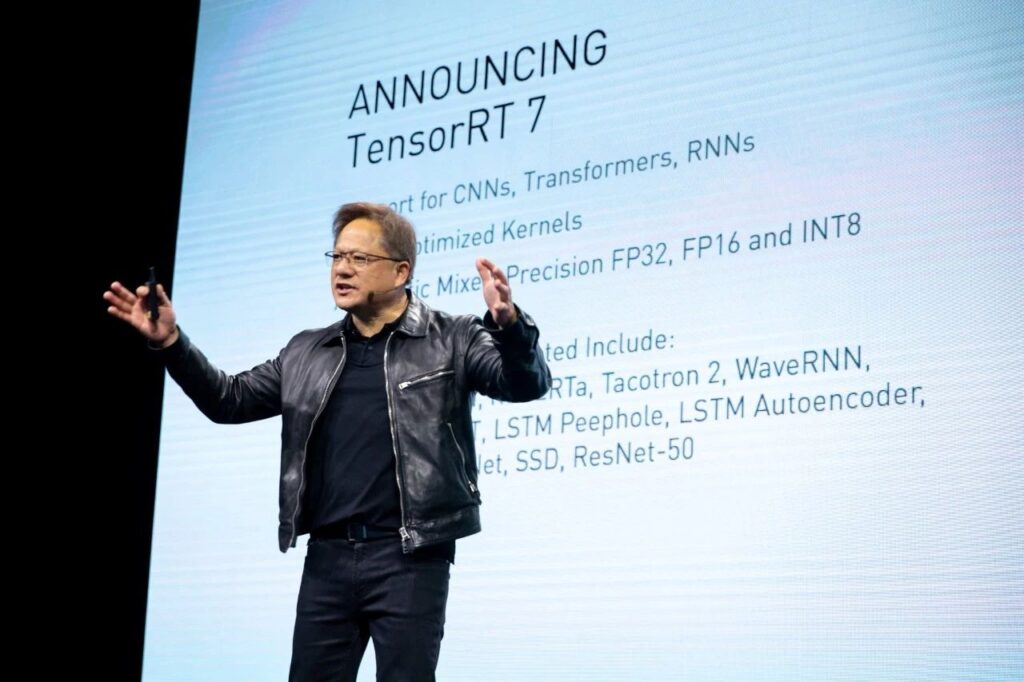
Compared to TRT 5 which only supports 30 variations, TRT 7 supportsOver 1000 different calculation transformations and optimizationsHuang said, "TRT 7 is the biggest leap we have made."
TRT 7 Powerful Features: Support for Interactive Conversational AI
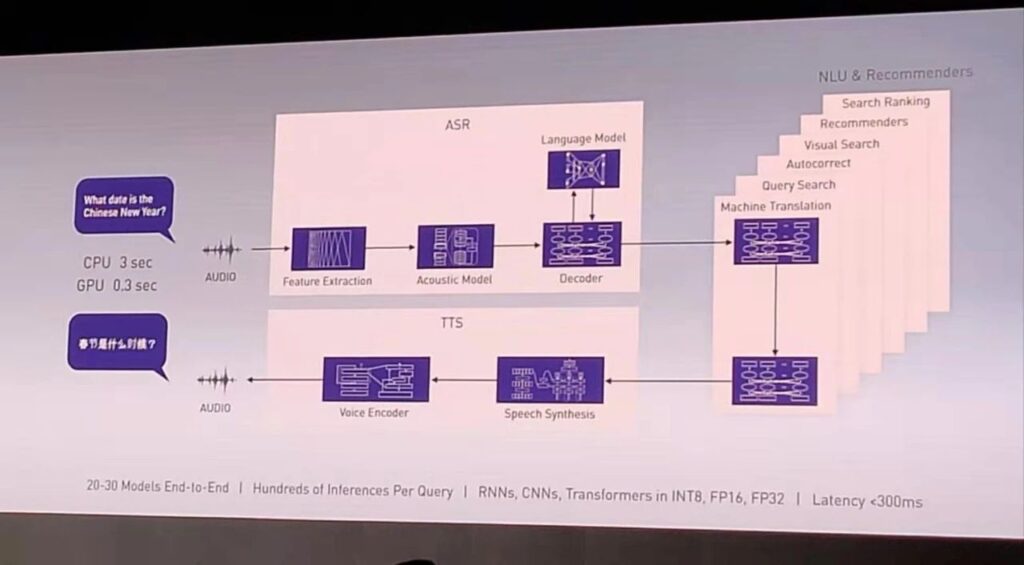
Conversational AI is a typical example of the powerful features of TensorRT 7. Breakthroughs in speech and natural language understanding make conversational AI possible, but conversations are interactive and responsive, and low latency is critical. An end-to-end process may consist of 20 to 30 models, using different model structures, including CNN, RNN, transformer, natural encoding, and MLP.
Big News 2: Launch of NVIDIA DRIVE
DRIVE is aEnd-to-end platform, enabling transportation companies to build self-driving cars.
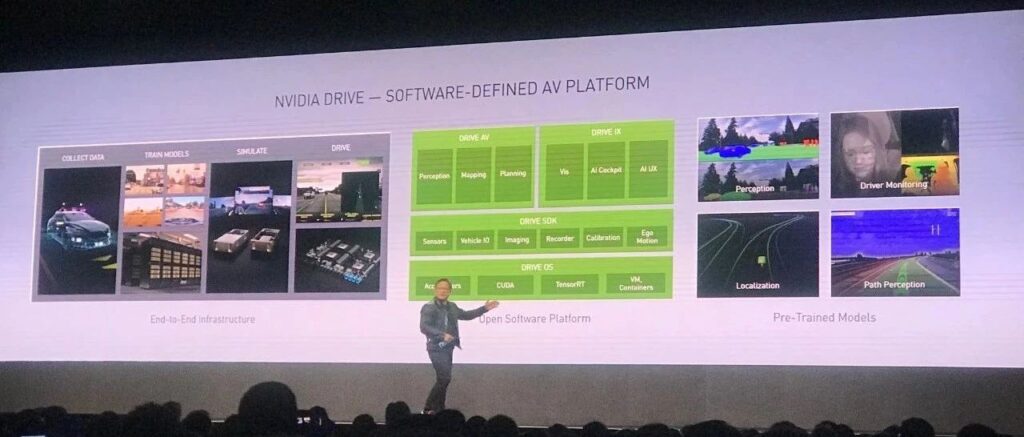
DRIVE AV platform is software defined, rather than fixed-function chips. This makes it possible for a large number of developers to collaborate in a continuous integration and continuous delivery development mode, and R&D investment can also be reflected in generations of products.
NVIDIA DRIVE Pretrained Models Available on NGC
Many AI models are needed to form a properly functioning safe autonomous driving technology, and its algorithms are diverse and redundant. NVIDIA has developed the most advanced perception models for detection, classification, tracking, and trajectory prediction. They can also be used for perception, localization, planning, and mapping. These pre-trained models can be registered and downloaded from NGC.
DRIVE Transfer Learning
NVIDIA provides a transfer learning tool that can be retrained and reoptimized using TensorRT. In addition, there is a system for federated learning that allows multiple organizations and companies to collaborate without moving or sharing data. NVIDIA sends pre-trained models to various partners. Each partner trains the model on its own data and labels it according to consistent standards. Partners only need to share the transfer used to create a new model, and then share the new model among all participating partners.
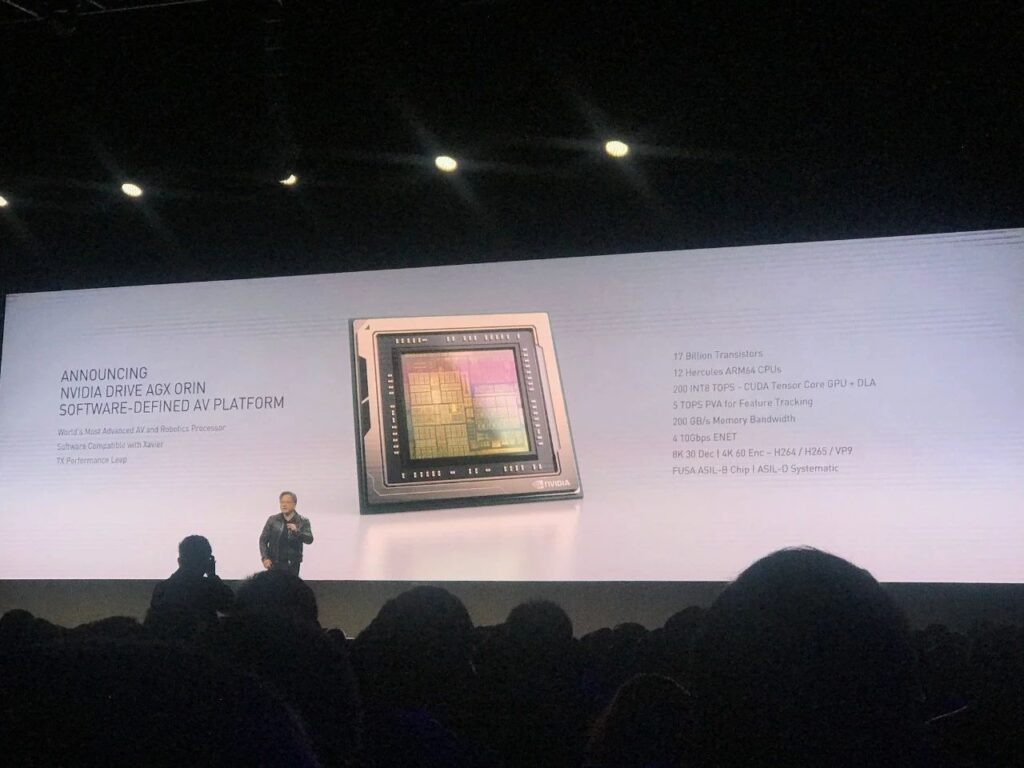
NVIDIA DRIVE AGX ORIN: A Software-Defined AV Platform
NVIDIA DRIVE forFrom L2 to L5 level, which is an architecture that is high performance and software defined.
Huang Renxun said that Orin is Nvidia's next-generation robot processor SOC, "a huge leap forward." Orin's parameters are outstanding:
As many as 17 billion transistors, 8 core 64-bit CPU, 200 TOPS (Tera Operations Per Second) deep learning computing power. Huang Xiaoming revealed that Orin is planned toProduction to start in 2022.
Big News 3: NVIDIA Isaac Release
In addition to self-driving buses, Huang said NVIDIA is also working on robots that can navigate in unstructured ways, meaning without lanes and signs, and with more degrees of freedom to operate.
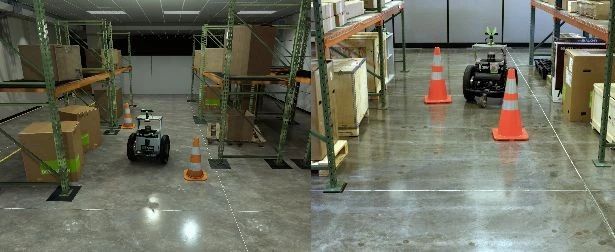
Unlike AVs, robots have more degrees of freedom. Manually collected and annotated data is impossible to use to train perception and planning type AI. “Simulation is very important for robots to learn from infinite possible scenarios.”
Isaac SDK Includes a Training-in-Sim workflow that uses a random machine domain to generate 6D pose images for training object detection, pixel segmentation, 2D pose, and 3D pose.
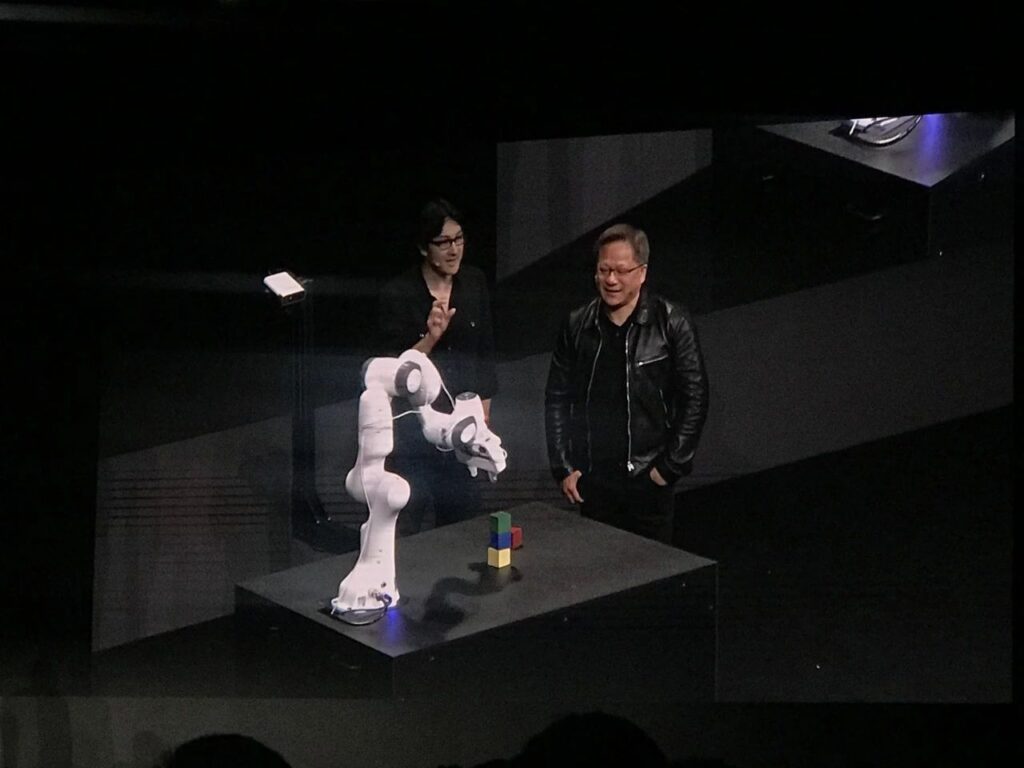
At the end of his speech, Huang Renxun also demonstrated a robot DEMO: LEONARDO, which can sense and manipulate objects, place and organize them, which drew cheers and applause from the audience. These functions are all completed by the NVIDIA Issac robot SDK he released.
-- over--