Command Palette
Search for a command to run...
Sam Altman's Bet on Human Identity Verification Infrastructure Faces a Global Regulatory Dilemma, With Only 2% Reaching His 1 Billion User target.
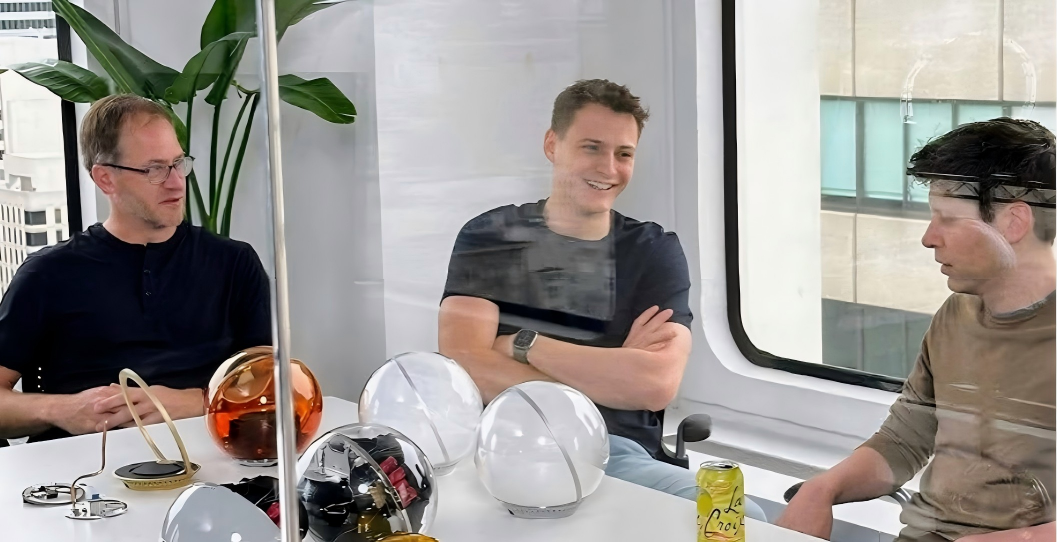
When Sam Altman and Alex Blania founded Tools for Humanity, they had a grand mission in mind:**In an era where AI makes it difficult to distinguish between real and fake, we need to establish a reliable digital identity foundation for humanity.**However, this pilgrimage route that safeguards "humanity's central position" is facing a global regulatory hurdle due to its unique operating methods.
In October of this year,**The Philippine National Privacy Commission (NPC) has formally ordered Tools for Humanity (TFH) to suspend all of its personal data processing operations in the Philippines, citing allegations that its iris scanning project in the country violates data privacy laws.**The Philippine National Court ruled that TFH's practice of offering cash rewards in exchange for personal iris scans constituted "undue influence."
Furthermore, a Business Insider report points out that TFH's ambitious goal of "one billion users" is far from reality, with only about 17.5 million actually registered and verified users, falling short of the target of 2%.
These two news items undoubtedly dealt a heavy blow to Tools for Humanity, whose ambition to expand globally is both vague and fraught with difficulties.
Company website:https://www.toolsforhumanity.com
Orb, World ID, and the proposition of "building tools for humans"
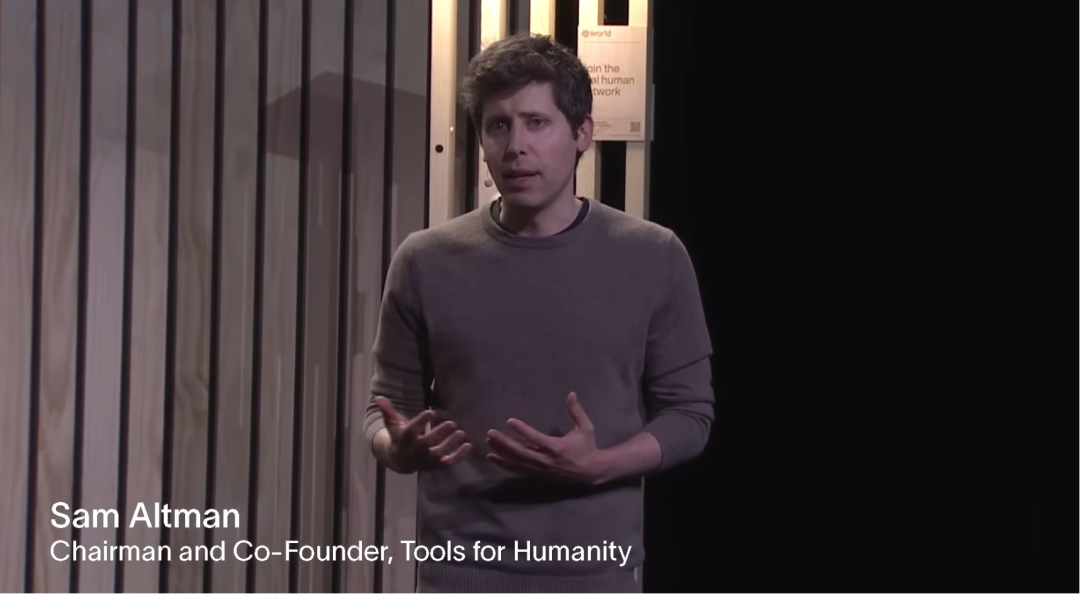
On Tools for Humanity's official website, a striking line defines the company's core mission:**"A technology company built for humanity in the AI era."**This is not just a slogan, but their repeatedly emphasized original intention. At this year's San Francisco launch event, co-founder Sam Altman and CEO Alex Blania reiterated the background of this concept.
The two individuals have long been deeply involved in the field of artificial intelligence and maintain a positive attitude towards its future development. They have also gradually realized that as generative AI can realistically mimic voices and faces, verifying the identity of real people may become increasingly important. Based on this assessment, they proposed building a system to confirm human identity in a highly AI-driven environment, with the goal of ensuring that "in an era where the internet is filled with a large amount of AI-driven content, humans still maintain their distinctiveness and central position."
* To build a global "human verification" system;
* This system distributes network ownership in the form of digital tokens to every verified real human, enabling the network to reach critical mass.
At the press conference, Altman mentioned that "if the network cannot scale to a critical size, then it is meaningless," a view that may explain to some extent the purpose of linking identity verification with digital tokens.
In other words, they want to build a system composed of an "identity network" and a "value network." To truly achieve their goal, it must reach a "critical scale," meaning that enough people must register, verify, and use it.To enable this network to grow rapidly, the strategy is to distribute ownership of the network to every real user in the form of digital tokens, making everyone a stakeholder.
The final answer to this set of ideas was "World". Altman himself admitted that the initial idea was very crazy, and then he finally chose a somewhat crazy name.
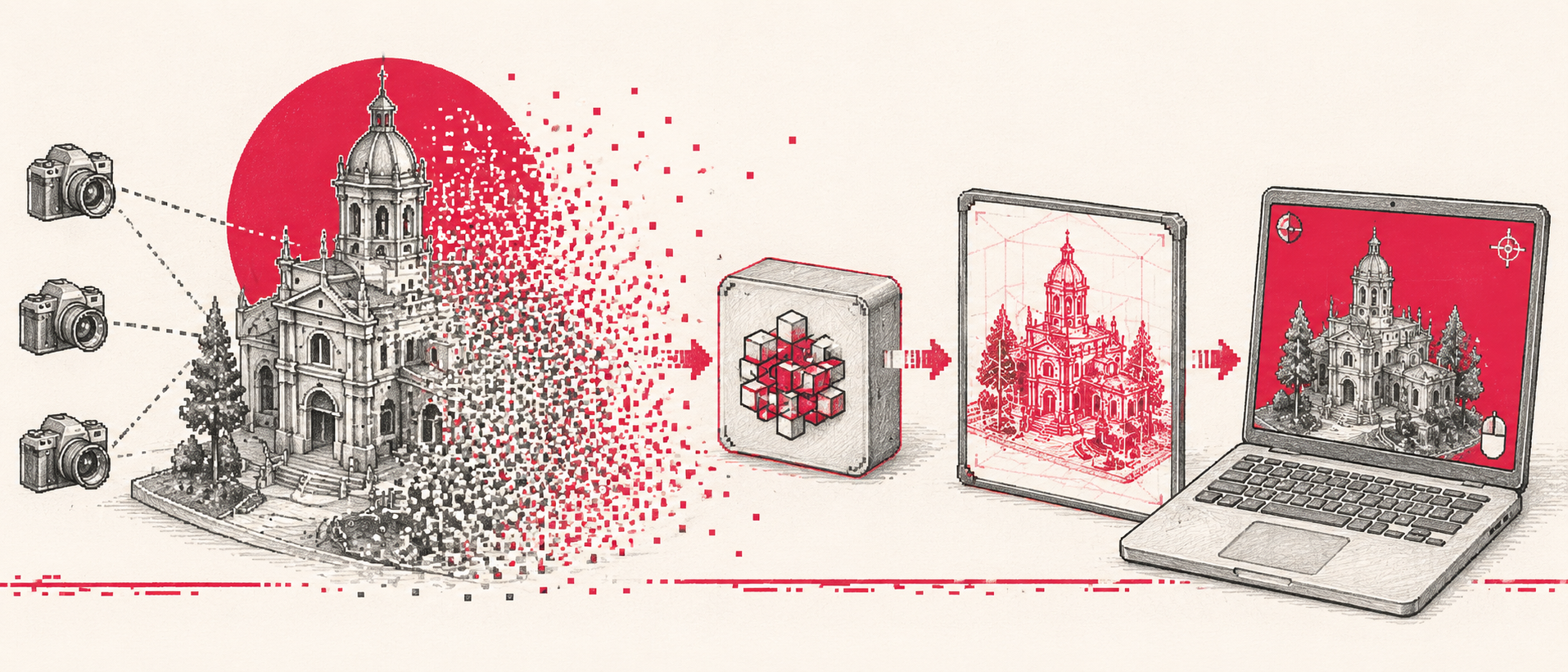
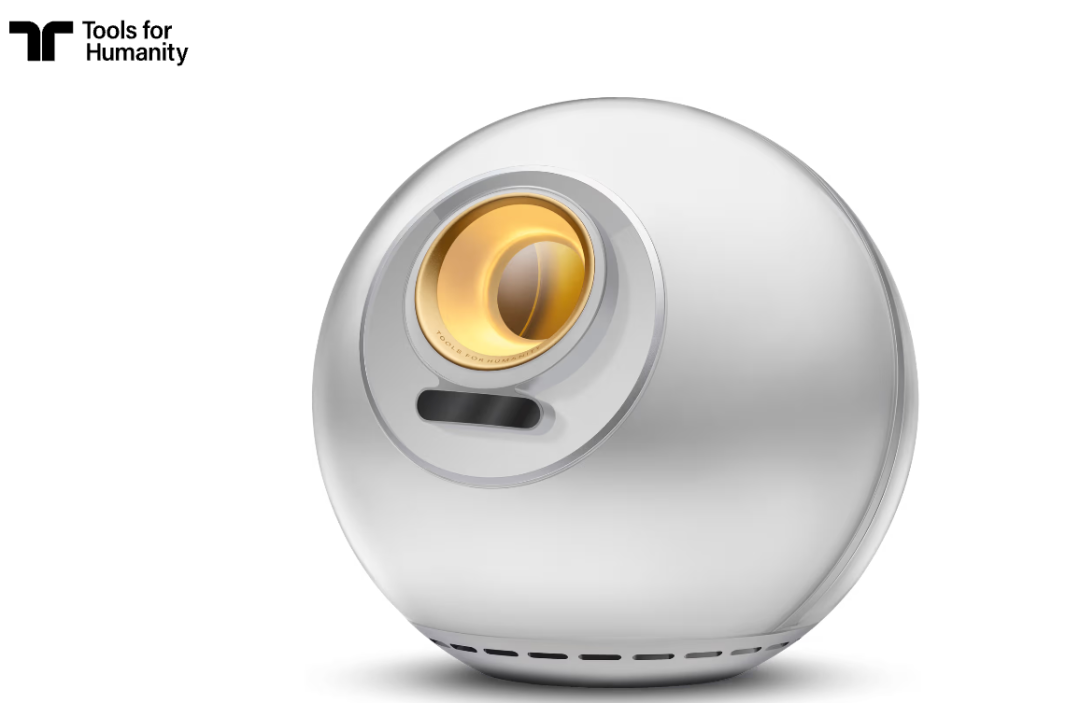
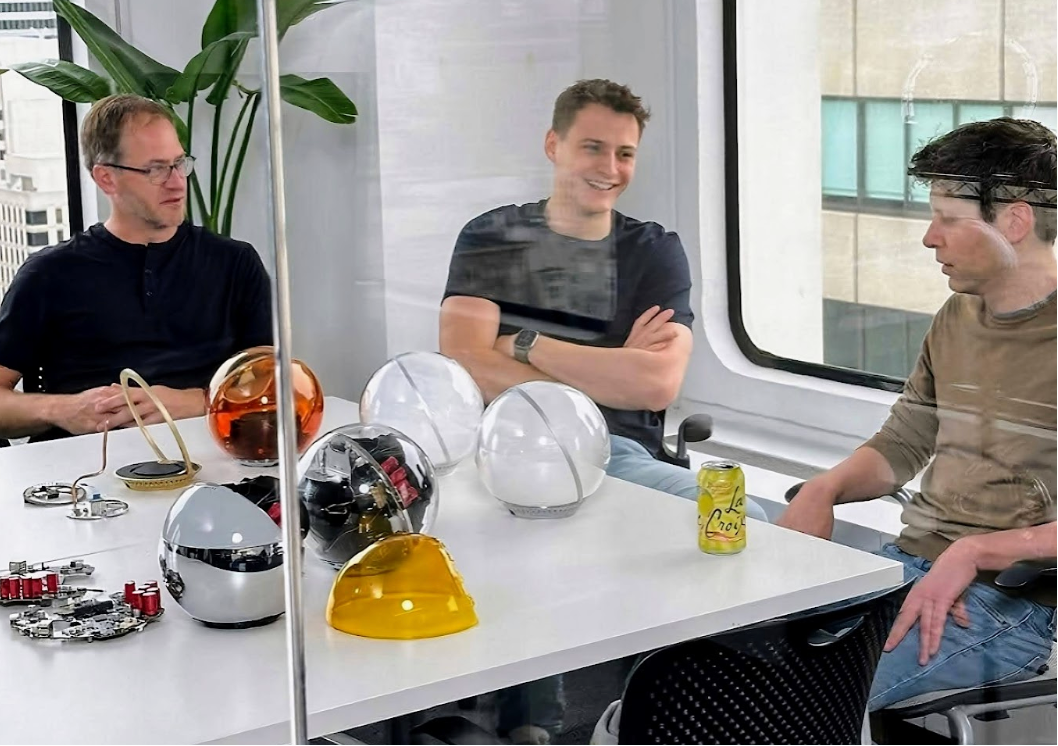
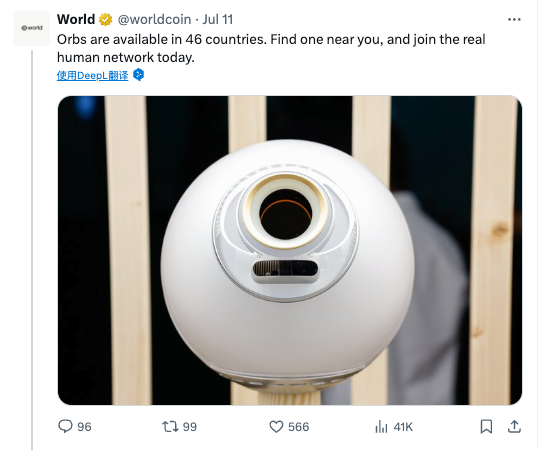
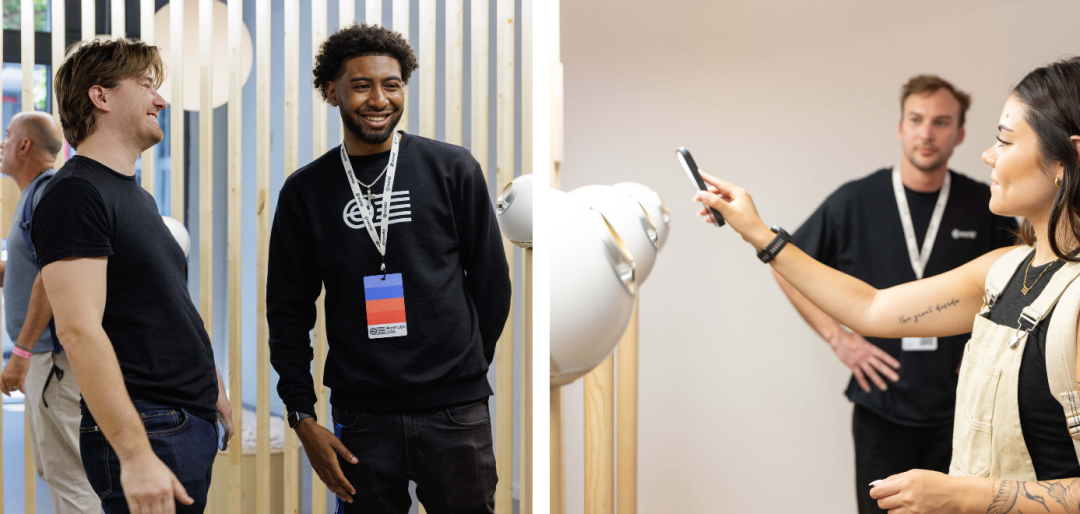
Its product line forms a logically sound closed-loop system:**The hardware device, Orb, is a futuristic, polished spherical device whose core function is to perform iris sampling.**A unique, private World ID credential will be generated within seconds. Users can use it to verify their identity through the World App and receive a cryptocurrency called "Worldcoin" as a verification reward.
Funding, Scale, and Ambition: From Capital Allocation to Team
Even for Altman himself, who is known for his focus on cutting-edge technologies, TFH's goals are considered audacious. "If this really succeeds, it will be like a vital part of the world's infrastructure," Altman said in a video interview with Time magazine.
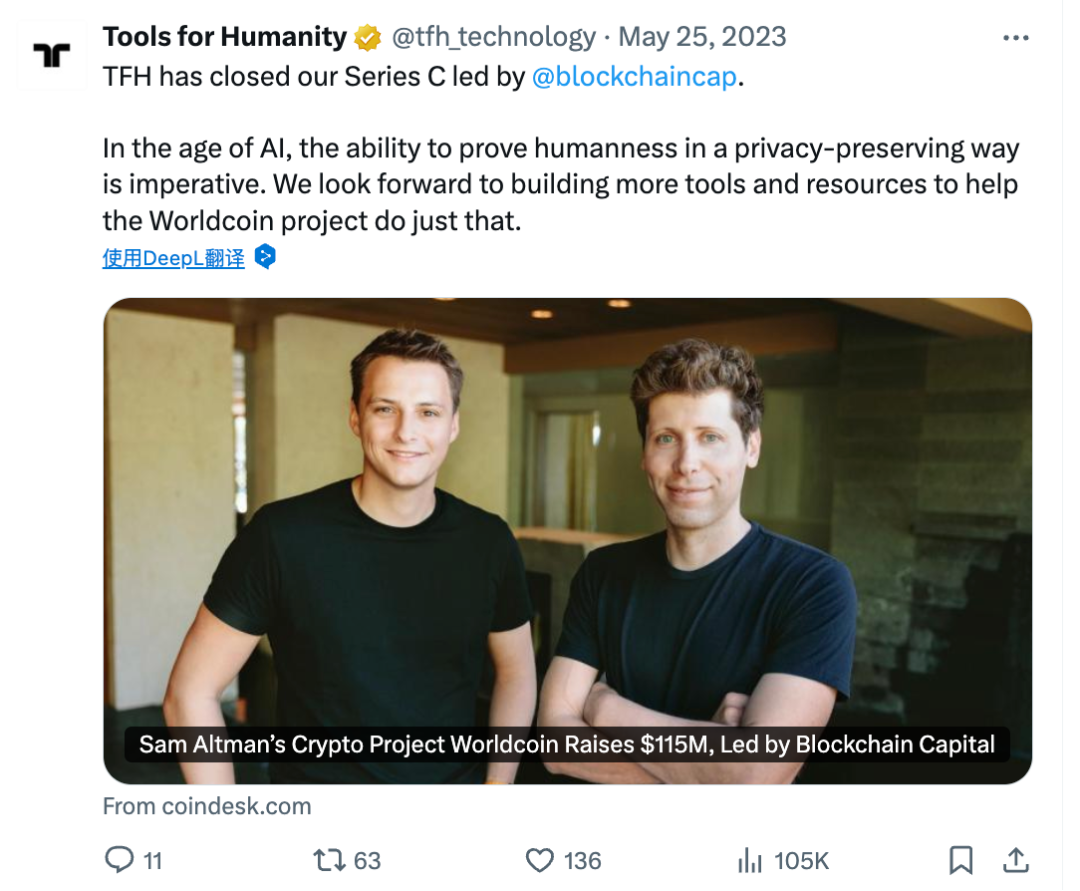
Tools for Humanity, founded in 2019 by Sam Altman and Alex Blania, is headquartered in San Francisco and Berlin. In 2023, it completed a Series C funding round of approximately 115million,ledbyBlockchainCapital,withparticipantsincludinga16z′scryptofundandBainCapitalCrypto.Furthermore,accordingtoTIME,theWorldcoinprojecthasraisedapproximately244 million from investors since 2019.
TFH's funding not only supported hardware R&D, global data collection, and software iteration, but also provided capital security for its global expansion. It's worth noting that even when the product encountered regulatory obstacles in its actual implementation, investors still valued its potential impact and worth.
Adrian Ludwig is one of them. Before joining TFH, he served as Chief Information Security Officer at Atlassian and was responsible for Android's security system at Google for many years. Now, at TFH, he is responsible for the overall architecture and security direction, especially in the context of increasingly stringent global regulations, where he assumes the role of Chief Architect and Chief Information Security Officer.
Another key member is Rich Heley, who previously held important leadership positions at Apple and Meta, and served as Vice President at Tesla overseeing new car projects and reporting directly to Musk. He is considered a veteran of the Silicon Valley tech world. After joining TFH, he led the development of Orb-related devices. In an interview, he described Worldcoin as "a very futuristic company."
However, at the same time, the team also faces complex real-world challenges:**How to advance identity collection within the regulatory frameworks of various countries, how to match the speed of hardware deployment with the pace of compliance, and how to unify user privacy standards globally, etc.**These issues determine whether World can truly go global, rather than just remaining a technological vision; achieving this often faces even greater challenges.
Regulatory controversies and institutional boundaries: Will the dragon-slaying hero ultimately become the dragon himself?
Tools for Humanity's grand vision is to build the World into the "global infrastructure" of the future. They hope that this system, as an open protocol, will be shared by all of humanity and benefit governments, businesses, and individuals.
However, as the saying goes, "the dragon-slaying hero becomes the dragon himself," the product, originally intended to solve the problem of human identity verification in the AI era, has raised numerous security and compliance concerns. Collecting iris information to protect privacy is problematic because these biometric features are extremely sensitive and unalterable, and their leakage could pose risks. Despite the proposed decentralization, all collected data is ultimately stored centrally on TFH's servers, making it a potential target for hackers. The token design has also been debated; some analysts believe that distributing Worldcoin to each user as an incentive for registration may lead to a mismatch between network incentives and actual usage needs, and its monetary attributes are also open to discussion.
The Philippines is not an isolated case. Multiple media reports indicate that Tools for Humanity faces regulatory scrutiny in several countries worldwide, with its core data processing model being re-examined for its legality by regulators in various nations. Regulatory agencies in countries including Brazil, Kenya, South Korea, and Spain have already ordered the company to delete user data or pay fines in some cases.
An Unfinished Journey
Faced with global regulatory and public scrutiny, Tools for Humanity has not remained inactive.**The company has made a series of responses regarding privacy protection.**For example, on October 28th, World's official website shared a blog post about frequently asked privacy questions. In response to the question, "Will Orb store my biometric image?", the reply was: No, the data will be sent to your personal device and will never be stored on Orb. Furthermore, World does not purchase, store, or sell biometric data.

However, the underlying technology to be adopted for this system, whether it should be overseen by a for-profit commercial company, and whether it can operate across different socio-cultural differences are all major issues that will continue to be discussed over the next decade.
Tools for Humanity continues to advance in a high-risk, highly controversial, and highly publicized manner. Will it become the infrastructure of the future internet, or will it succumb to regulatory and ethical constraints? It is too early to draw any conclusions now, but one thing is certain: the story of Tools for Humanity is far from over, and the future technological world cannot bypass it.
Reference Links:
1.https://x.com/tfh\_technology
2.https://www.businessinsider.com/sam\-altman\-orb\-eye\-scanning\-startup\-billion\-user\-goal\-viability\-2025\-11
3.https://www.coindesk.com/business/2023/05/25/sam\-altmans\-crypto\-project\-worldcoin\-raises\-115m\-led\-by\-blockchain\-capital
4.https://iapp.org/news/a/gps\-2025\-sam\-altman\-alex\-blania\-discuss\-tools\-for\-humanity\-s\-biometric\-technology
5.https://www.youtube.com/watch?v\=1x8tACHbyjg\&t\=63s