Command Palette
Search for a command to run...
Low Latency, Multilingual Support, and Lightweight Design: Voxtral Realtime Breaks the Constraints of ASR Across All Scenarios; a Boon for Wearable Device Design! Antenna Performance Builds an Antenna Performance and Fault dataset.

Currently, Automatic Speech Recognition (ASR) technology has made significant progress in offline scenarios, and can reliably meet professional needs such as high-precision speech transcription and speech classification and archiving. However, it still falls short when facing real-time applications such as voice assistants and live subtitles, and it is difficult to achieve both low-latency streaming transcription and high-precision speech recognition. This has become a key obstacle to the full-scenario application of ASR technology.
In view of this,**In February 2026, Mistral AI open-sourced a solution that achieves near-offline accuracy with a latency of less than 500 ms—the Voxtral Mini 4B Realtime 2602 multilingual real-time speech transcription model.**This model is built on a native streaming architecture and a self-developed causal audio encoder, with configurable transcription latency (from 240 ms to 2400 ms) and support for real-time transcription of 13 languages. Furthermore, as a 4B parameter model, it can be easily deployed on various edge computing units, achieving a throughput of over 12.5 tokens per second. In short, the release of the Voxtral Mini 4B Realtime 2602 greatly meets the needs of lightweight applications in real-time scenarios.
The HyperAI website now features "Voxtral-Mini-4B-Realtime-2602 Multilingual Real-Time Speech Transcription," so give it a try!
Online use:https://go.hyper.ai/M01Fu
A quick overview of hyper.ai's official website updates from March 9th to March 13th:
* High-quality public datasets: 4
* Selection of high-quality tutorials: 3
* Community article interpretation: 3 articles
* Popular encyclopedia entries: 5
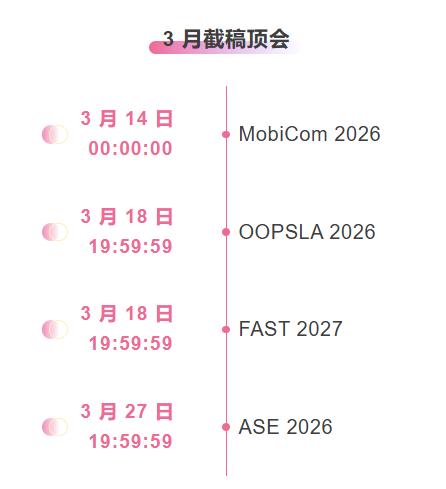
* Top conferences with deadline in March: 4
Visit the official website:hyper.ai
Selected public datasets
1. Open-RL Inference Problem Dataset
Released by Turing in 2026, this dataset is a multi-domain reasoning problem dataset that covers independent, verifiable, and explicit STEM reasoning problems in physics, mathematics, biology, and chemistry. It is suitable for reinforcement learning fine-tuning, reward modeling, outcome-supervised training, and verifiable reasoning benchmarking.
Direct use:https://go.hyper.ai/WY3LO
2. CHIMERA General Inference Synthetic Dataset
This dataset is designed specifically for inference training, covering a wide range of STEM subjects and providing Long Chain of Thought (CoT) trajectories. It contains 9,225 questions across 8 subjects (Mathematics, Computer Science, Chemistry, Physics, Literature, History, Biology, and Phonetics), with all examples generated by LLM and automatically validated, requiring no manual annotation.
Direct use:https://go.hyper.ai/VGB3e
3. Lung Cancer Clinical Dataset
This dataset contains 1,500 patient records spanning from 2015 to 2025, covering 60 countries across all six WHO regions. It provides detailed clinical, demographic, lifestyle, genetic, and diagnostic information on lung cancer, suitable for exploratory data analysis (EDA), machine learning classification, survival analysis, geographic trend analysis, and public health research.
Direct use:https://go.hyper.ai/WRf2s
4. Antenna Performance and Fault Dataset
This dataset contains 1,107 records covering the physical characteristics, material properties, and performance metrics of flexible/wearable antennas operating in the WiFi and Bluetooth bands. It details antenna design parameters and records key RF performance metrics, aiming to provide resources for predictive maintenance, anomaly detection, and robust wearable antenna design using machine learning.
Direct use:https://go.hyper.ai/WtxZa
Selected Public Tutorials
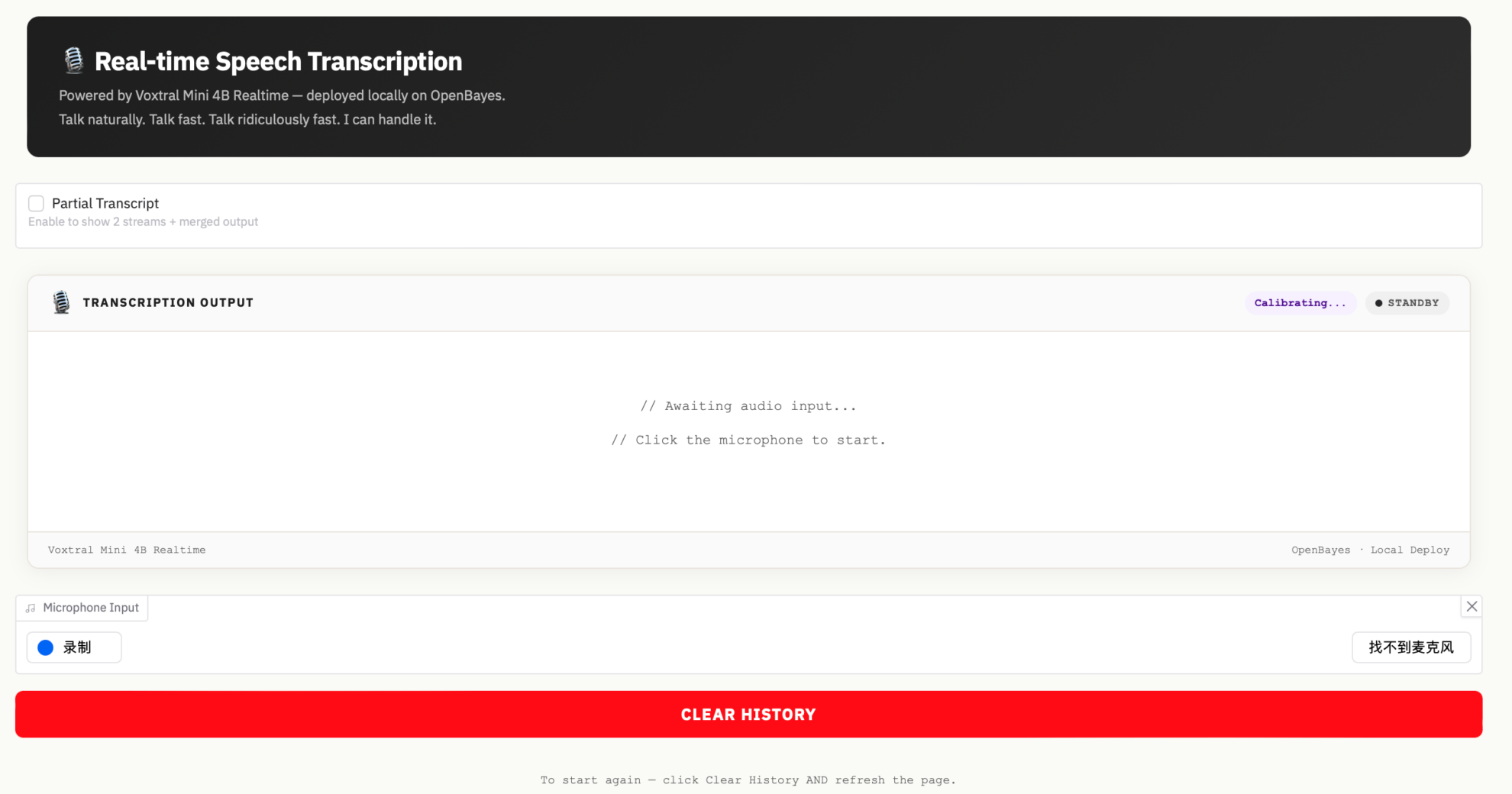
1. Voxtral-Mini-4B-Realtime-2602 Multilingual Real-Time Speech Transcription
Voxtral Mini 4B Realtime 2602 is a multilingual real-time speech transcription model released by Mistral AI. It is one of the first open-source solutions to achieve near-offline system accuracy with a latency of less than 500 milliseconds. The model supports 13 languages and outperforms existing open-source real-time benchmarks in multiple tests.
Run online:https://go.hyper.ai/M01Fu
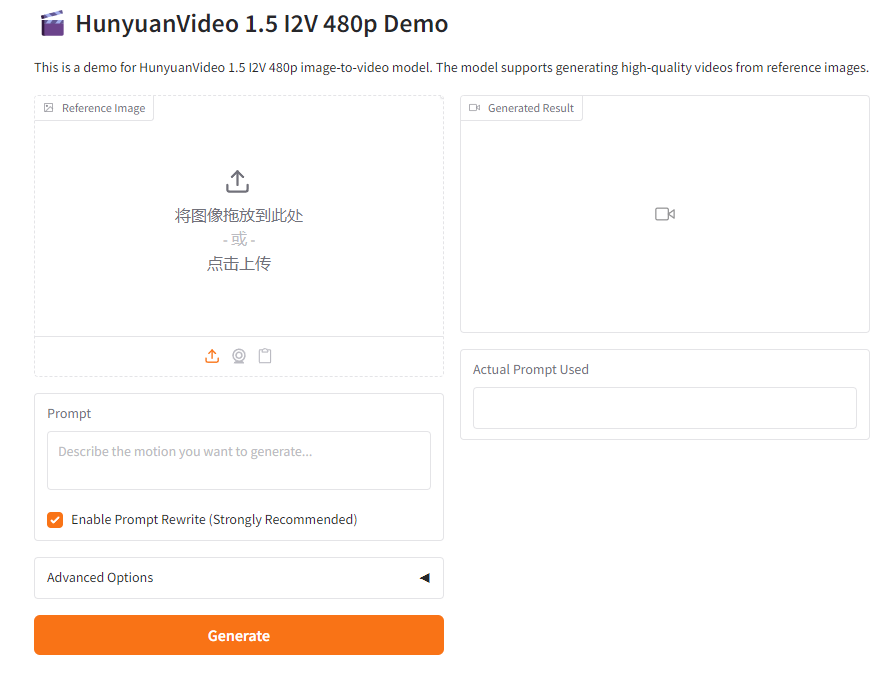
HunyuanVideo-1.5 is a lightweight video generation model released by Tencent's Hunyuan team. With only 8.3 billion parameters, it achieves top-tier video quality, significantly lowering the barrier to entry and even running smoothly on consumer-grade GPUs.
Run online:https://go.hyper.ai/CxCQt
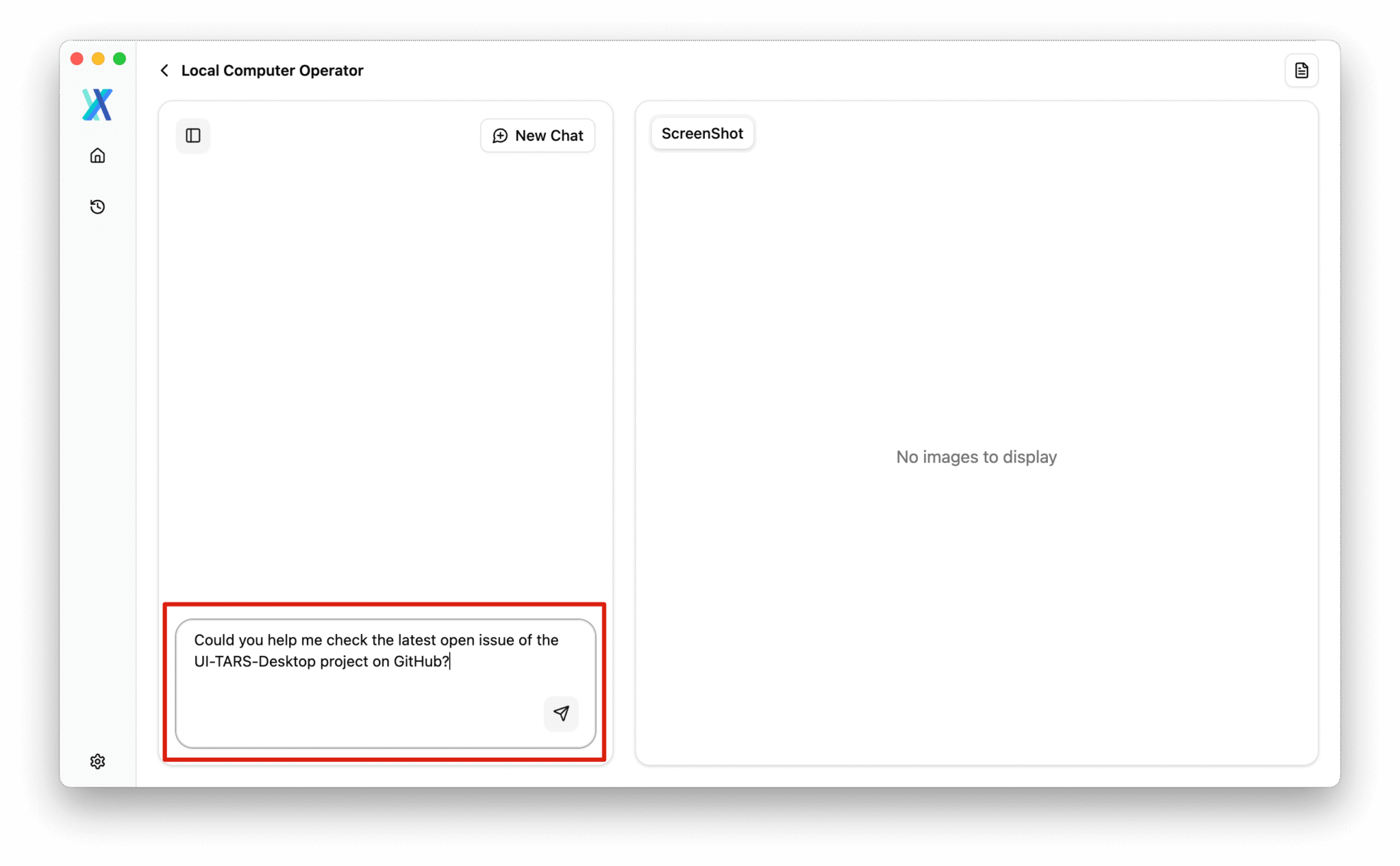
UI-TARS-desktop is a desktop graphical user interface (GUI) intelligent assistant application launched by ByteDance. It is built on UI-TARS and the Seed-1.5-VL/1.6 series of visual-language models. This application can understand computer and browser interfaces in a multimodal way and automatically complete various operation tasks with the help of natural language commands.
Run online:https://go.hyper.ai/ynFTU
Community article interpretation
1. Breakthrough in Physics-Information Machine Learning! A novel GNN architecture enables accurate prediction of complex multibody dynamic systems, empowering robotics, aerospace, and materials science.
Modeling complex physical systems faces numerous challenges. While machine learning models can learn complex relationships from data, they often lack constraints on physical laws, leading to error accumulation and even system divergence in long-term predictions. To address this problem, researchers at the Swiss Federal Institute of Technology in Lausanne (EPFL) have proposed a novel physics-driven GNN architecture, DYNAMI-CAL GraphNet. This architecture combines the learning capabilities of GNNs with physics-based inductive biases, explicitly guaranteeing the conservation of linear and angular momentum by directly embedding these laws into the model structure.
View the full report:https://go.hyper.ai/4gvDE
2. A team from the Chinese University of Hong Kong, Zhejiang University, and Macao Polytechnic University proposed a general framework, Bi-TEAM, to improve the accuracy of hemolytic disease prediction by 350%, integrating biological semantics and chemical precision.
The introduction of non-classical amino acids significantly expands the functional space of peptides, improving their stability and bioavailability. However, complex chemical modifications also present new challenges to traditional modeling methods. To address this, the Chinese University of Hong Kong, in collaboration with several research institutions, proposed a selective fusion modeling paradigm. Based on the understanding that "chemical variations are local perturbations of the biological semantic space," they designed a general framework, Bi-TEAM, to inject local chemical variations into the global protein background. This study comprehensively evaluated Bi-TEAM on 10 diverse datasets across three biochemical domains, achieving state-of-the-art (SOTA) performance in seven key prediction tasks.
View the full report:https://go.hyper.ai/eYOSQ
3. Online Tutorials | Quick Deployment with Free CPU Resources, Covering Popular Open Source Models such as Qwen 3.5/DeepSeek-R1/Gemma 3/Llama 3.2
GPU resource costs, complex environment configurations, and high hardware barriers are major obstacles faced by many developers when attempting model deployment. To facilitate rapid and accessible project deployment for developers worldwide, HyperAI offers free CPU quotas. Basic users can run a single task continuously for up to 12 hours, while Pro users can run a single task continuously for up to 24 hours. Simultaneously, HyperAI's "Tutorials" section offers online tutorials on running popular open-source models such as Qwen, DeepSeek, Gemma, Llama, and GLM on CPU, allowing users to experience model inference and basic development testing without needing to deploy complex local environments.
View the full report:https://go.hyper.ai/7KJe4
Popular Encyclopedia Articles
1. Reverse sorting combined with RRF
2. Underfitting
3. HyperNetworks
4. Bidirectional Long Short-Term Memory (Bi-LSTM)
5. Proximal Policy Optimization
Here are hundreds of AI-related terms compiled to help you understand "artificial intelligence" here:
 One-stop tracking of top AI academic conferences:https://go.hyper.ai/event
The above is all the content of this week’s editor’s selection. If you have resources that you want to include on the hyper.ai official website, you are also welcome to leave a message or submit an article to tell us!
See you next week!