Command Palette
Search for a command to run...
With an Accuracy of 94%, a Spanish Team Has Achieved Automated Near-earth Object and Satellite Stripe Detection Based on YOLO11, With Stable Identification Across Consecutive frames.
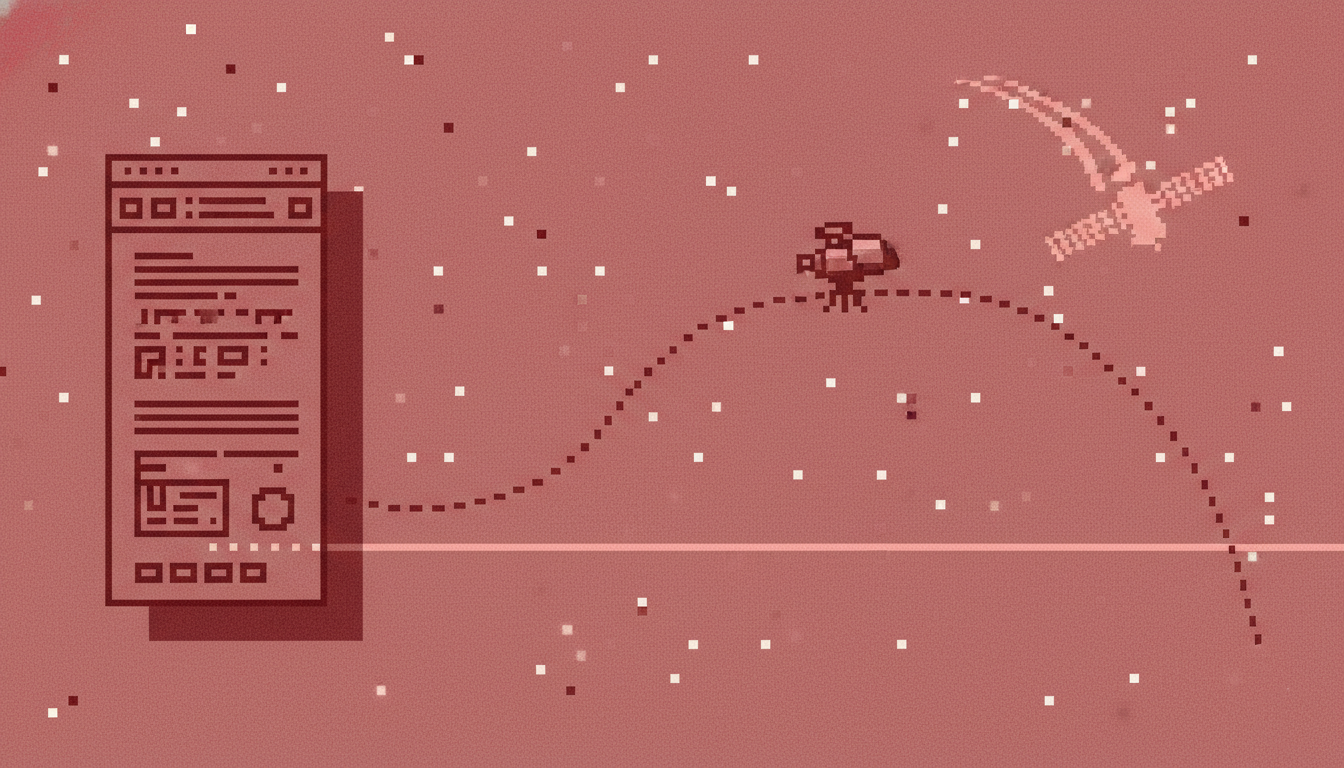
Detecting near-Earth objects (NAOs) not only helps us understand the formation and evolution of the solar system, but is also directly related to planetary defense. According to the international astronomical community, NEOs are asteroids with a perihelion of less than 1.3 astronomical units that approach or intersect Earth's orbit. Because of their close orbits, they have become key targets for collision avoidance monitoring.
In recent years, the rapid development of large-field-of-view, high-frequency sky survey technology has ushered in an era of massive data for near-Earth object detection. The sheer number of images generated each night is enormous, making manual analysis virtually impossible, let alone identifying faint, rapidly moving targets. Simultaneously, the increasing number of artificial satellites and space debris not only threatens the safety of spacecraft but also makes the astronomical observation environment more congested and noisy. Accurately distinguishing between natural celestial bodies and man-made targets within such dynamic and complex images has become a major challenge.
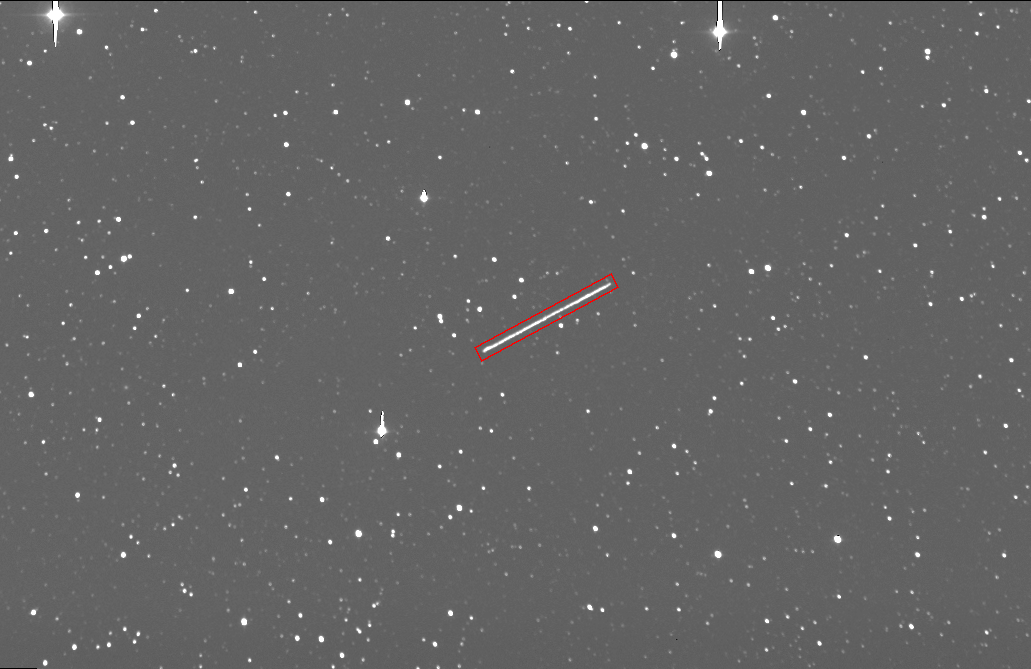
To this end, researchers have tried various methods, including Hough transform, Radon transform, synthetic tracking, and deep learning-based pattern recognition methods. Recently,**The StreakMind system, developed by research institutions such as the Astronomical Observatory of the Royal Naval Academy of Spain,**This is a representative achievement in this field. The system can automatically identify linear trajectories left by satellites or asteroids in astronomical images, extract the length, position, and direction of the trajectories, and provide standardized output for subsequent astronomical measurements and database entry.
The related research findings, titled "StreakMind: AI detection and analysis of satellite streaks in astronomical images with automated database integration," have been published as a preprint on arXiv.
Research highlights:
* StreakMind combines a YOLO11 oriented bounding box detector trained on both real and synthetic images to achieve robust detection under heterogeneous observation conditions.
* On the independent test set, the model performed reliably for short, medium, and long trails, achieving an overall precision of 941 TP3T and a recall of 971 TP3T, successfully detecting 107 out of 110 real-world trails.
* The detection results are directly integrated into a standardized database, ultimately generating a structured, repeatable dataset suitable for the development of large-scale space target contamination statistical analysis and archiving observation systems.
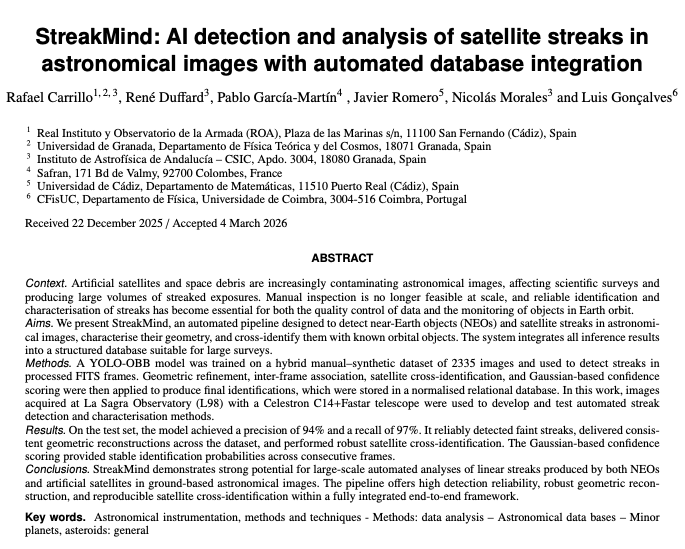 View the paper:
https://hyper.ai/papers/2605.03429
View the paper:
https://hyper.ai/papers/2605.03429
Dataset: Over 2,000 real images + 280 synthetic motion blurs
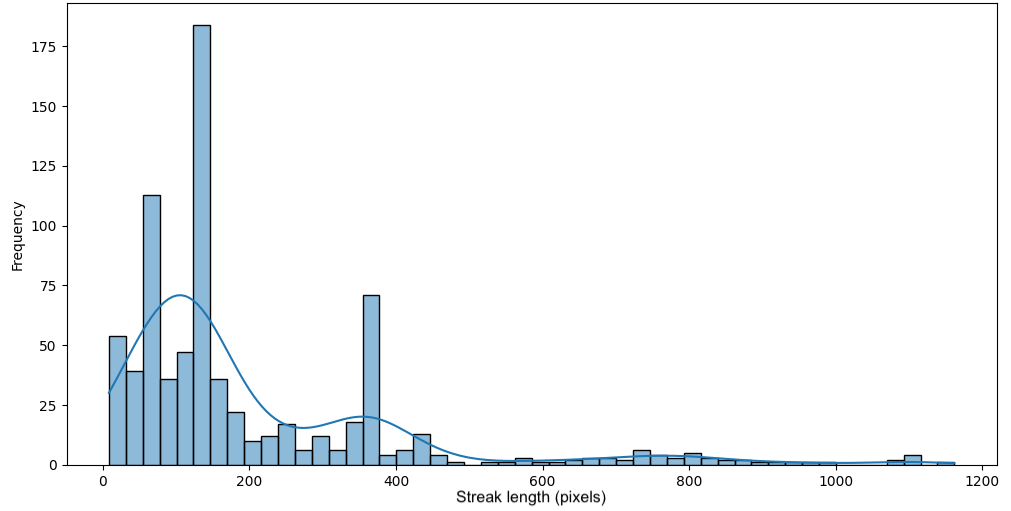
StreakMind uses data from two sources: real observations and synthetic data. Real observations were conducted at the La Zagra Observatory in Spain (MPC L98) using a Celestron C14+Fastar f/2.1 mirror (Tetra1) paired with an SBIG ST-10X CCD camera. The pixel scale was approximately 4.12 arcseconds per pixel, the field of view was approximately 74.9 × 50.5 arcminutes, the image size was 1092 × 736 pixels, the exposure time ranged from 8 to 120 seconds, and the limiting magnitude was approximately 19 to 20.**A total of 2055 images were captured. After flat-field and dark-field correction, 765 linear motion lines were manually marked.**The lengths range from 8.5 to 1161 pixels, with an average of about 203 pixels.
StreakMind: Refining, Linking, and Database-Integrating Linear Motion in Astronomical Images
**StreakMind's core detection module uses the YOLO11-OBB model.**This is a single-stage target detection network specifically designed for rotating targets. Unlike traditional detection methods, it can directly output oriented bounding boxes (OBBs) with angles, making it well-suited for tilted, elongated trails in astronomical images.
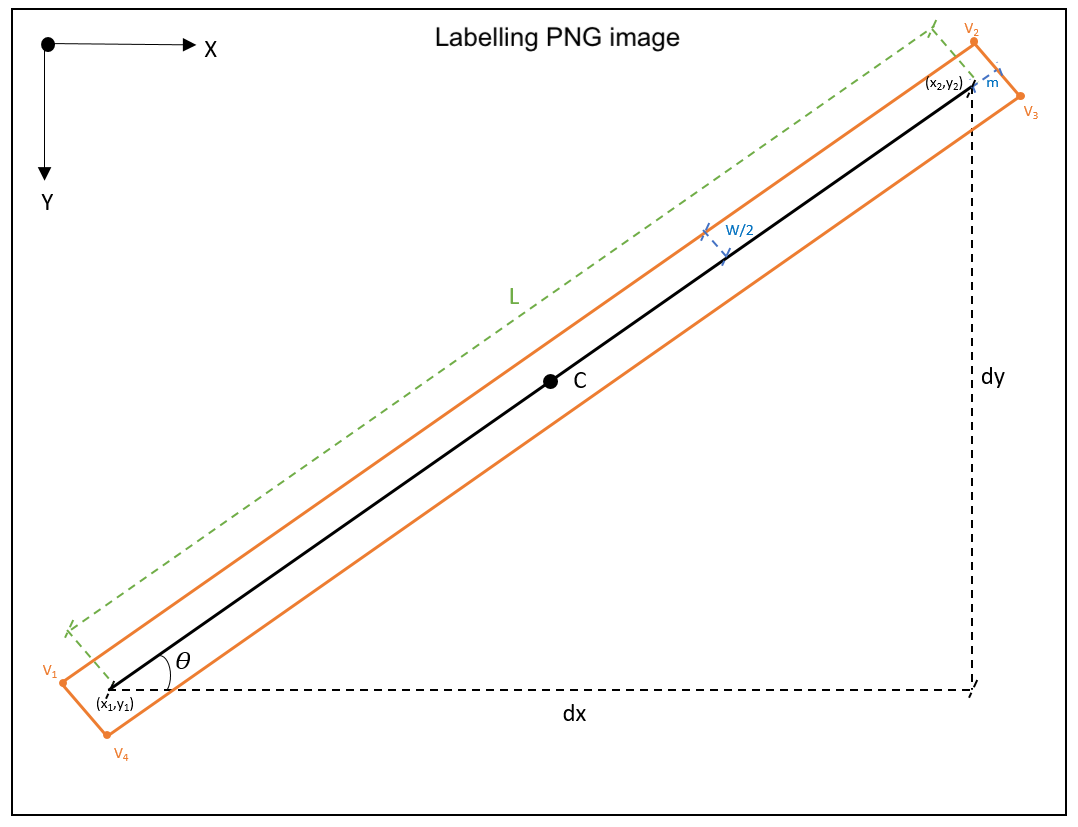
After initial detection, the system performs geometric refinement on the motion blur: it analyzes the photometric profile along the principal axis of the OBB, extends the bounding box to the actual start and end points of the motion blur, and then determines stable endpoints and center positions through corner clustering. Next is inter-frame correlation.**Based on the pixel velocity and direction of the motion blur, the motion blurs belonging to the same target in consecutive frames are strung together into a complete trajectory.**This ensures consistency in observations.
Finally, the detection results were converted into the MPC standard format commonly used in astronomy and cross-matched with satellite ephemeris to generate a confidence score. All data were integrated into a database, realizing end-to-end processing from raw images to structured recognition records.
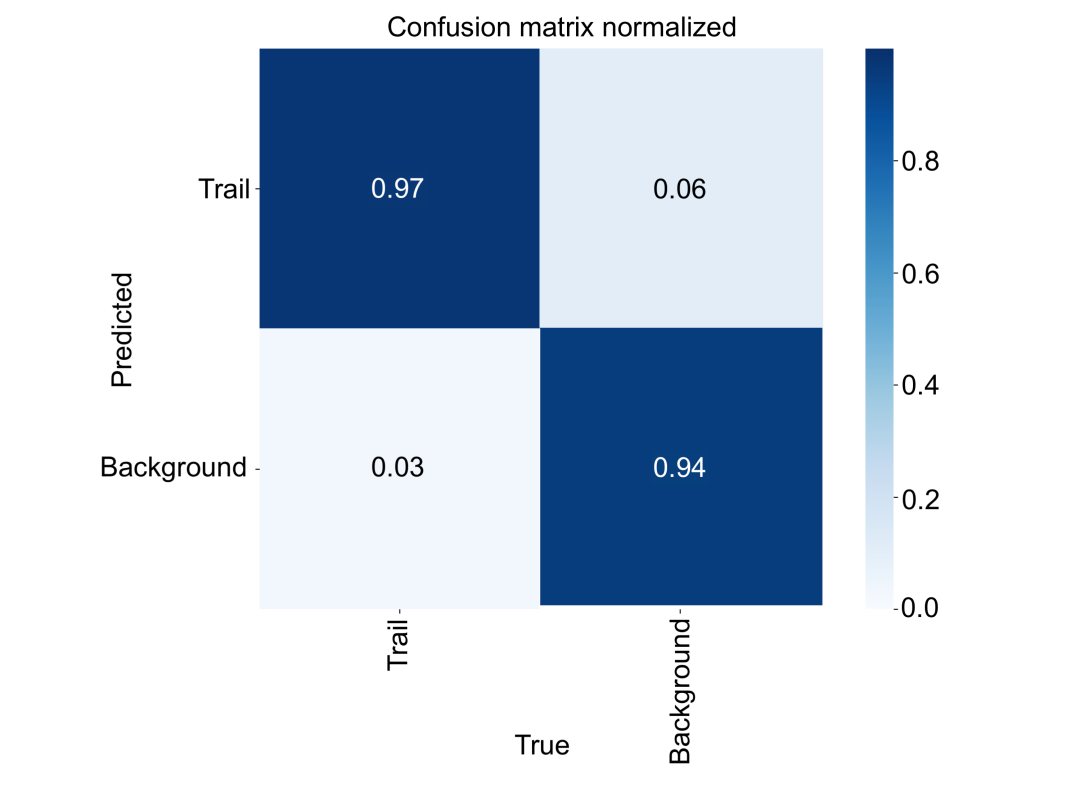
With a precision of 94% and a recall of 97%, its efficiency and sensitivity far exceed those of manual inspection.
To verify StreakMind's effectiveness in real-world observations, the research team conducted a series of experiments on an independent test set. Key evaluation metrics included precision, recall, and F1 score, supplemented by manual visual inspection.
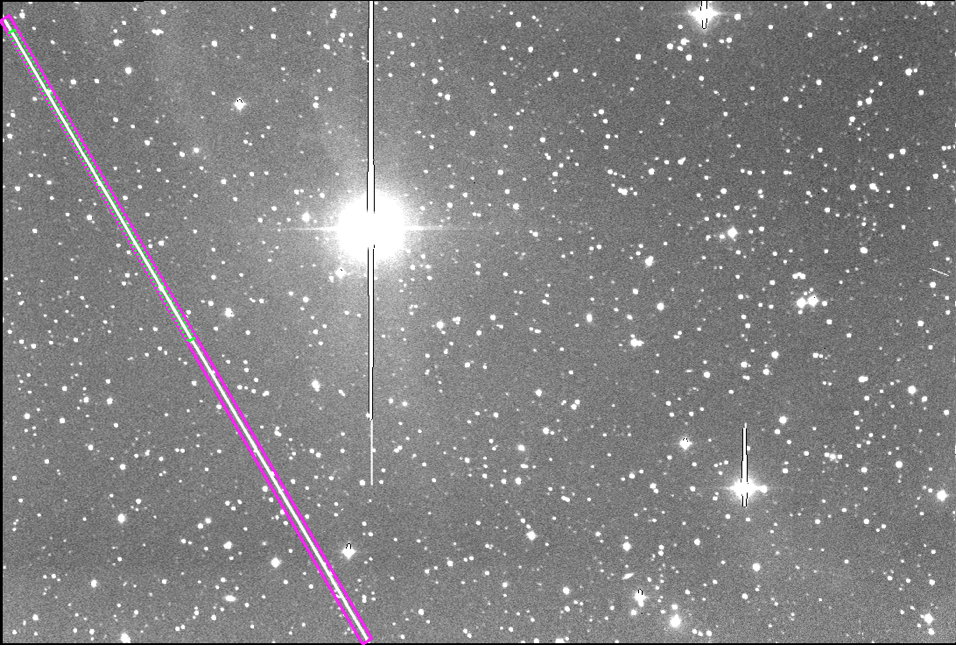
The model was run on 273 test images with an input resolution of 640 pixels, a confidence threshold of 0.25, and an IoU threshold of 0.45. (See the figure below.)After 100 rounds of training, the model achieved a precision of 94% and a recall of 97% on the test set, successfully detecting 107 out of 110 real ghost images.
Final Thoughts
StreakMind demonstrated the feasibility of automatically identifying linear trails in large-scale sky survey imagery, providing an efficient solution for near-Earth object and satellite monitoring. By fusing real and synthetic data, directional bounding box detection, and a sophisticated trajectory analysis process, the system can automatically complete the entire process from raw images to structured database records, providing reliable support for astronomical research and space environment monitoring.