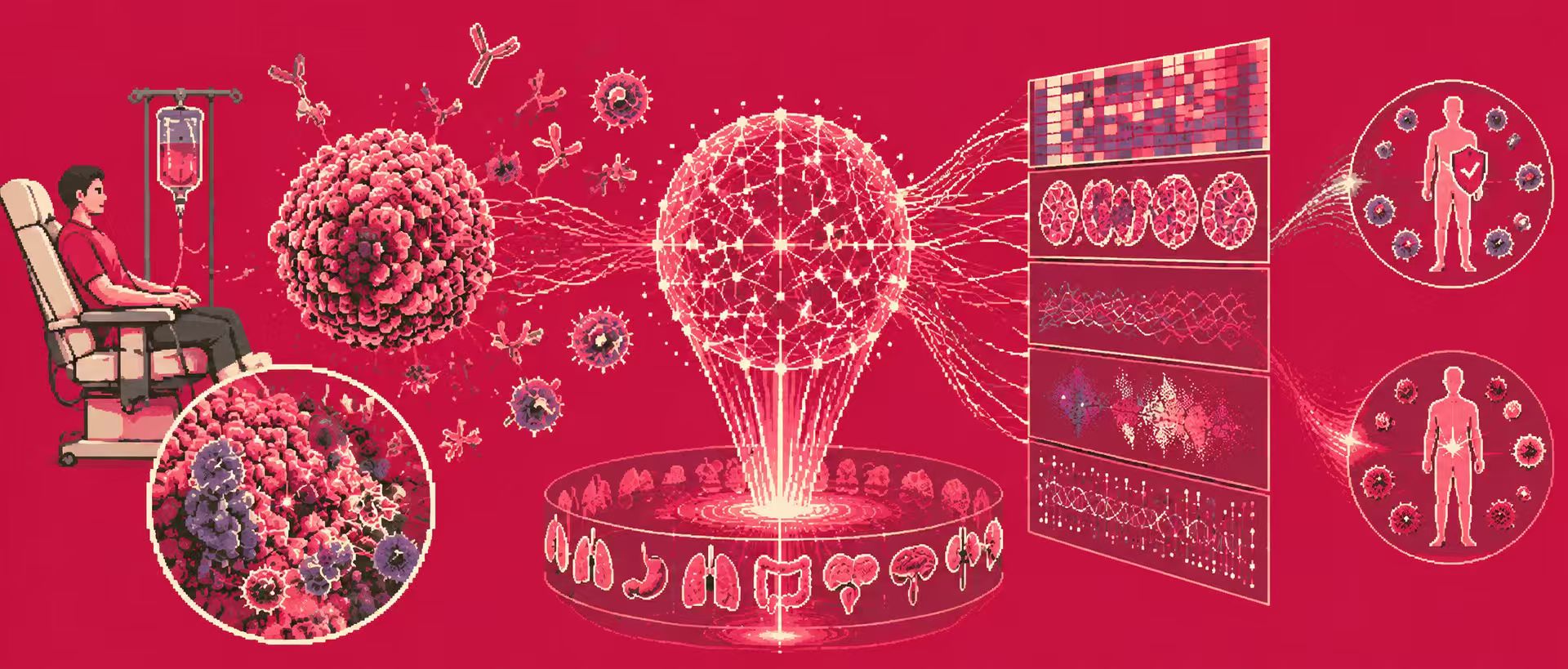
VenusREM is now available on the HyperAI tutorial section. Follow the tutorials to complete the entire process from environment configuration and model deployment to mutation effect prediction and result visualization.
Mage-Flow is now available on HyperAI (hyper.ai), helping developers experience high-quality image generation and editing at a lower cost. Interested users can explore it with a single click!
A research team from the U.S. Geological Survey has bypassed the traditional approach of "locating the earthquake first and then estimating its magnitude" and proposed a binary magnitude classification method based on machine learning.
Nanbeige 4.2-3B is now available on HyperAI (hyper.ai), helping developers explore native intelligent agent applications at a lower cost. Interested users can explore it with one click!
A team from Stanford University and others developed an "AI X-ray scientist" system and deployed it on a real beamline at the Stanford synchrotron radiation source.
A research team at Argonne National Laboratory in the United States has proposed a smart agent system called ChemGraph, driven by a large language model.
Training data is becoming a key variable in the competition for large models. When the number of parameters is no longer the sole barrier, the quality, structure, and task suitability of the data begin to determine the model's true performance in inference, coding, and interaction. NVIDIA's Nemotron series of datasets are built precisely to meet this trend [...]
This article compiles 10 datasets related to AI Agent capability assessment, which can be used online and cover different capability areas such as long-range memory, multi-step reasoning, and tool invocation.
Meta proposed the Autodata general framework. This framework allows intelligent agents to act as "data scientists," building high-quality data through generation, analysis, and iteration.